Few writers have come to write about it — and to it — more directly than the novelist, poet, and environmental activist Wendell Berry (August 5, 1934–August 31, 2026), who describes himself as “a farmer of sorts and an artist of sorts.” In his wonderful and wonderfully titled essay collection What Are People For? (public library), Berry addresses with great elegance our neophilic tendencies and why innovation for the sake of novelty sells short the true value of creative work. Novelty-fetishism, Berry suggests, is an act of vanity that serves neither the creator nor those created for: Works of pride, by self-called creators, with their premium on originality, reduce the Creation to novelty — the faint surprises of minds incapable of wonder. Pursuing originality, the would-be creator works alone.
In loneliness one assumes a responsibility for oneself that one cannot fulfill. Berry paints pride and despair as two sides of the same coin, both equally culpable in poisoning creative work and pushing us toward loneliness rather than toward the shared belonging that true art fosters: There is the bad work of pride. There is also the bad work of despair — done poorly out of the failure of hope or vision.
Despair is the too-little of responsibility, as pride is the too-much. The shoddy work of despair, the pointless work of pride, equally betray Creation. For despair there is no forgiveness, and for pride none.
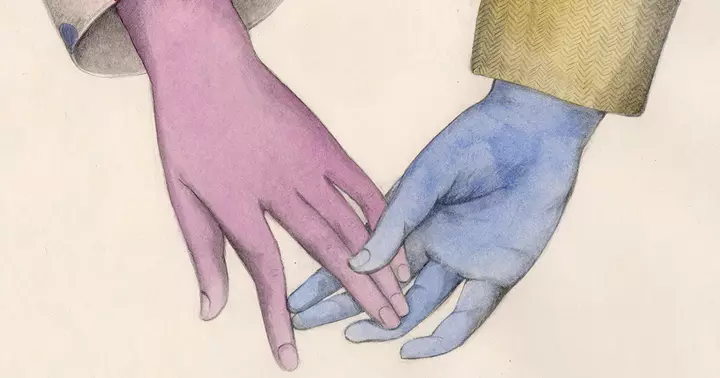
Who in loneliness can forgive? Good work finds the way between pride and despair. It preserves the given so that it remains a gift. we clasp the hands of those who go before us, and the hands of those who come after us; we enter the little circle of each other’s arms, and the larger circle of lovers whose hands are joined in a dance, and the larger circle of all creatures, passing in and out of life, who move also in a dance, to a music so subtle and vast that no ear hears it except in fragments.
Echoing Thoreau’s ode to the woods and psychoanalyst Adam Phillips’s assertion that cultivating a capacity for “fertile solitude” is essential for creative work, Berry extols the ennobling effects of solitude, the kind gained only by surrendering to nature’s gentle gift for quieting the mind: We enter solitude, in which also we lose loneliness… True solitude is found in the wild places, where one is without human obligation. One’s inner voices become audible. One feels the attraction of one’s most intimate sources.
In consequence, one responds more clearly to other lives. The more coherent one becomes within oneself as a creature, the more fully one enters into the communion of all creatures. The return from such humanizing solitude, Berry cautions, can be disorienting: From the order of nature we return to the order — and the disorder — of humanity.
Extract — continue reading at the source.