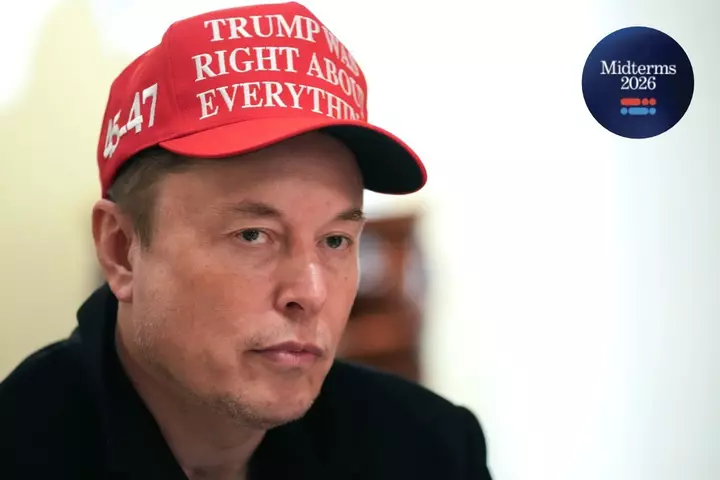
Elon Musk left California for Texas, hoping to put Democratic regulators behind him. But after Tuesday's election, the Tesla CEO may find that the political climate he moved to escape is catching up with him in the state he now calls home. Democrats won every statewide executive office in Texas, flipped the state House for the first time in more than two decades and elected Gina Hinojosa governor, the first Democrat to win the office since Ann Richards in 1990.
State Representative James Talarico beat Republican Ken Paxton in the U.S. Senate race by more than 12 points. Musk, the richest man in the world and largest Republican donor this cycle, spent heavily to stop it.
He gave nearly half a billion dollars to Republican groups nationally, with at least $168 million going to ads backing Paxton. Governor Greg Abbott's campaign alone got $5.5 million from him. Hinojosa now inherits the office that oversaw more than $1.6 billion in tax incentives for Musk's companies, and she has promised to freeze data center approvals.
Newsweek contacted Hinojosa's campaign and Musk through Tesla for comment Wednesday. Musk began moving operations in 2020 after clashing with California over pandemic restrictions at Tesla's factory there. In 2024, he shifted SpaceX and X to Texas, citing a gender identity law signed by Democratic Governor Gavin Newsom.
His companies now employ more than 20,000 people in the state. SpaceX builds and launches its Starship rocket at Starbase, a company town incorporated as a city last year. It is also starting work on Terafab, a Grimes County chip plant that SpaceX has said could eventually cost $119 billion.
Abbott's office oversaw tens of millions of dollars in grants as well as the tax incentives, most of them for Terafab, the Houston Chronicle reported. Hinojosa's lawsuit against Abbott counted more than $54 million in state grants to SpaceX. After a Delaware judge voided Musk's Tesla pay package, he reincorporated Tesla and SpaceX in Texas, and lawmakers followed in 2025 with a law letting companies require shareholders to own up to 3 percent of their stock before bringing certain suits against directors.
Extract — continue reading at the source.