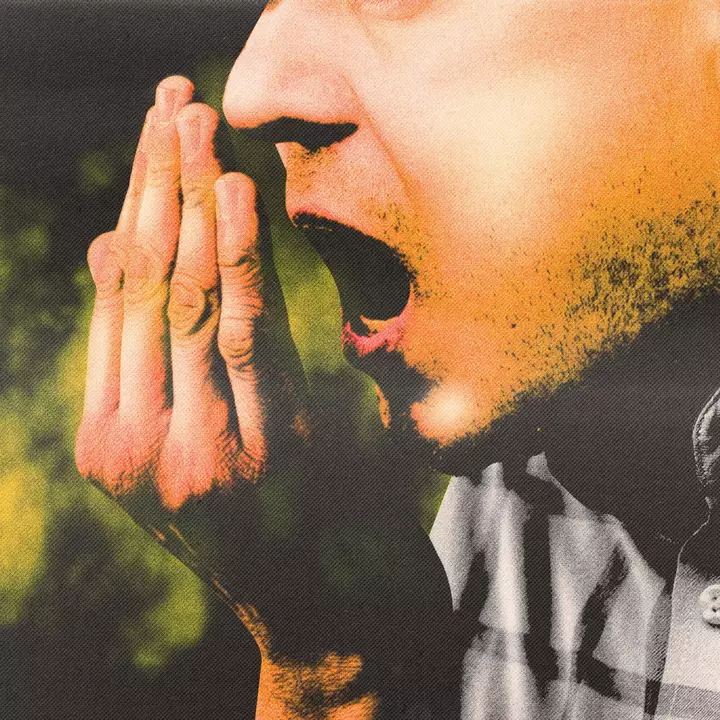
The cupped-hand breath check and a trusty pack of mints aren’t exactly foolproof—and the last thing you want is your breath to sabotage an important meeting or a first date. Here’s the annoying part: You might have your oral hygiene routine fully dialed in and still deal with some funk. Ahead, experts explain what causes bad breath, how to get it under control, and when it’s time to call in a pro.
About 80 to 90 percent of bad breath (aka halitosis) originates in the mouth. The back of the tongue—which many people don’t clean thoroughly—is prime real estate for buildup. According to Glosman, this area “is practically a five-star resort for odor-producing bacteria: warm, moist, and an endless buffet.” How appetizing.
Saliva—your mouth’s built-in cleaning crew—also helps determine how fresh or funky your breath smells. As Fischgrund explains, it helps regulate bacteria, neutralize acids, and wash away food debris. When saliva production drops, odor-causing bacteria can thrive.
Mouth breathing, dehydration, smoking, and certain medications can all contribute to dry mouth. It’s also why morning breath is pretty universal (and perfectly normal): “Saliva production drops while we sleep, giving bacteria more opportunity to misbehave,” says Dr. Your diet can also leave its mark, though it’s usually temporary.
Familiar offenders include coffee, alcohol, garlic, and onions. But if odor sticks around, it could point to a bigger problem, like gum disease or an untreated dental infection, says Fischgrund. Tonsil stones, sinus problems, and acid reflux can also contribute, Glosman adds, though these are less common.
How to fix bad breath First, nail down the basics: Brush your teeth twice daily, floss at night, and stay hydrated throughout the day. Replace your toothbrush or brush head every three to four months, or sooner if the bristles begin to fray. And you don’t need fancy flossing gadgets to get the job done: traditional string floss can clear away the plaque and debris your toothbrush misses.
Extract — continue reading at the source.