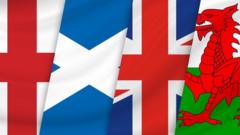
What does devolution mean and how does it work across the UK? Jennifer ClarkeandKate Merry,Political Research UnitBBCMillions of voters will head to the polls on 7 May, for local elections in England and national parliamentary elections in Scotland and Wales. The UK has had devolved governments since the late 1990s, which work alongside the Westminster Parliament.Different types of devolution are in place across Scotland, Wales and Northern Ireland, as well as in parts of England.What is devolution?Devolution means the transfer of power away from central government.For many years, England, Wales, Scotland and Northern Ireland were run by the UK parliament, based in Westminster in London.
However, there were growing demands for greater economic, social and political freedom.This led to public votes about devolution in Scotland and Wales in 1997, and on both sides of the Northern Irish/Irish border in 1998 as part of the Good Friday Agreement.This led to the creation of three elected institutions:the Scottish Parliament, in 1999the National Assembly for Wales (now called the Senedd), in 1999the Northern Ireland Assembly, in 1998A number of mayoral posts have also been introduced in England, with varying powers and responsibilities.What powers does the UK government still have?EPAThe UK government in Westminster remains responsible for policies which affect only England.It is also in charge of overall UK policy in a number of areas.These include:defence and national securityforeign policyimmigrationcitizenshiptax - although Scotland, Wales and Northern Ireland have some tax-raising powersHow does devolution work in Scotland?Adam ElderDesigned by Catalan architect Enric Miralles, the Scottish Parliament building was officially opened by Queen Elizabeth II in October 2004The Scottish Parliament sits at Holyrood in Edinburgh. There are 129 elected Members of the Scottish Parliament (MSPs).Scotland already had its own legal and education system. After devolution, it became responsible for many other areas, including:agriculture, forestry and fishingeducationenvironmentfire serviceshealthhousingjustice, policing and courtslocal government and planningsome transporttaxes including income tax, stamp duty and air passenger dutytourismsome welfare powersIts powers were extended in 2012, after the 2014 referendum on whether Scotland should become independent, and again in 2016 through the Scotland Act.The Scottish National Party (SNP), which has formed the Scottish government at Holyrood since 2007, continues to argue for full independence.The evolution of devolution: 25 years of the Scottish Parliament A simple guide to the Scottish Parliament election 2026How does devolution work in Wales?Getty ImagesDesigned by architect Richard Rodgers, the Senedd building was officially opened on St David's Day in 2006Since May 2020, the National Assembly of Wales has been known as the Senedd Cymru (Welsh Parliament).
It meets in Cardiff Bay, and is currently made up of 60 elected Members of the Senedd (MS). Following the creation of 16 new constituencies, the number of members will rise to 96 after the 7 May election.The Senedd's responsibilities include:agriculture, forestry and fishingeducationenvironmenthealth and social carehousinglocal governmenthighways and transportsome control over income tax, stamp duty and landfill taxWelsh languagetourismWhat does the Senedd do?How will the new Senedd voting system work?A simple guide to every new constituency in Wales - and all the election candidatesHow does devolution work in Northern Ireland?Getty ImagesThe Parliament buildings at Stormont were opened by Edward, Prince of Wales (later King Edward VIII), in 1932The Northern Ireland Assembly sits at Stormont in Belfast. There are 90 elected Members of the Legislative Assembly (MLAs).The Northern Ireland Executive consists of nine government departments, each responsible for specific areas of policy and public services.Devolution in Northern Ireland is different to Scotland and Wales, with government powers divided into three categories:transferred powers, which are controlled by the Northern Ireland Assemblyreserved powers, which remain with Westminster, but could be transferred in the future if the Northern Ireland Executive wants themexcepted powers, which cannot be moved to Stormont without special laws being made in Westminster.
These include elections and national defenceThe assembly's main transferred powers include:agricultureeducationemploymentenvironment and planninghealth and social servicessocial securitylocal governmentjustice, policing and prisonscontrol over air passenger dutytransportculture, language and sportThe power-sharing agreement between the nationalist and unionist communities in Northern Ireland is also key.The first minister and deputy first minister - one representing each of the two largest parties in power - jointly lead the government in a mandatory coalition. Despite different job titles, they have the same powers.Since its establishment in 1998, the Northern Ireland Assembly has been suspended a number of times. Most recently, in February 2022, the DUP withdrew from the power-sharing coalition in protest against post-Brexit trade agreements.
Two years later, devolved government was restored when the DUP agreed to return after a new trade deal was reached with Westminster.How NI changed the face of the UK constitutionIs the Northern Ireland Executive dysfunctional? How are the devolved governments funded?The UK Treasury allocates annual financial grants to the Scottish and Welsh governments and the Northern Ireland executive to fund devolved public services.It uses something called the Barnett formula to calculate how much these so-called "block grants" change every year, rather than the total amount.It aims to give each nation the same pounds-per-person change in funding as is provided to comparable public services in England.
Extract — continue reading at the source.