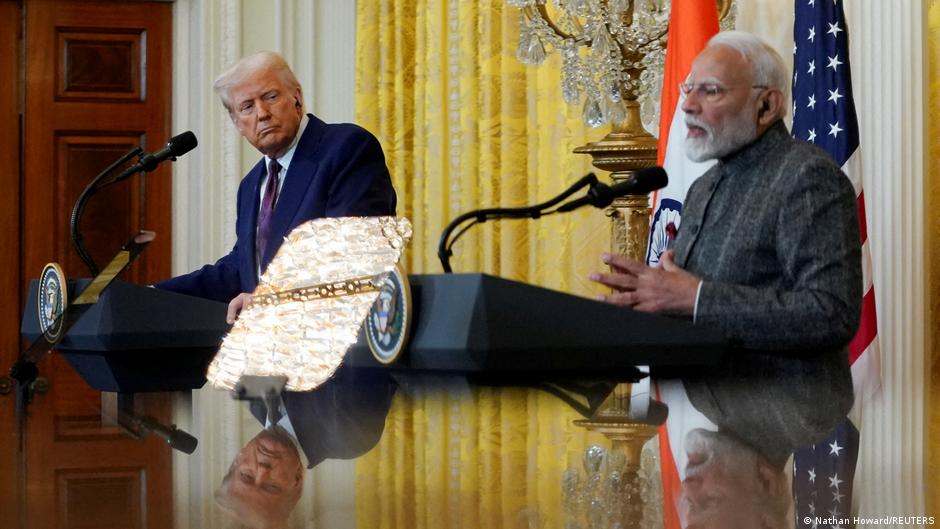
With the US Democrats scoring a resounding midterm victory and taking control of both chambers of Congress, the Republican administration led by Donald Trump is set for a new level of scrutiny until the end of Trump's term. Trump is likely to face pushback on his controversial foreign policy, which saw the US alienate most of its allies and get entangled in yet another unpopular war in the Middle East. At the same time, the Trump administration has also taken a slew of less conspicuous but still highly controversial moves on the global stage, including a series of confrontations with India.
The ties between New Delhi and Washington are still strained by a stalled trade agreement, restrictions on immigration, and disagreement over India buying Russian oil and weapons, despite the US granting an oil ban waiver in March 2026 and Trump waving some of the Russia sanctions in October. And while the new US Congress can choose to pressure Trump over issues such as tariffs and immigration, the president still wields significant authority on foreign policy. The immediate test for Trump's India policy is trade.
India and the US have yet to formalize the interim framework discussed by Trump and Prime Minister Narendra Modi in February, with the two nations still at odds over market access and other trade commitments. To view this video please enable JavaScript, and consider upgrading to a web browser that supports HTML5 video Shanthie Mariet D'Souza, founder of the Mantraya Institute of Strategic Studies, expects the new Congress to apply "increased scrutiny of protectionist measures" pushed by the Trump administration. The US lawmakers could push for "stronger trade oversight and clearer standards for environmental and labor issues," she told DW.
For India, whose largest export market is the US, this could offer some breathing room. She also emphasized that "the fundamental pillars of the India-US strategic partnership are expected to remain strong" and "the long-term goal of deepening economic ties is likely to continue." Immigration presents a different challenge. The administration's tightening of H-1B visa rules, including imposing a $100,000 (€88,761) payment for certain new petitions, has alarmed Indian professionals and tech companies that rely on the visa program to secure jobs in the US.
A Democratic majority could increase scrutiny on that issue as well, but would not automatically reverse measures introduced by Trump's executive action. "Both parties have bigger issues to grapple with," said Rajkrishna Iyer, a California-licensed immigration lawyer. "For the last 25-plus years, Congress has done nothing for immigration," he added.
Iyer believes that legal immigration itself is not a major priority for voters. Nevertheless, he sees the midterms' result as a message to Trump about his immigration policies. "A rational president would not spend time imposing further restrictions on legal immigration.
Extract — continue reading at the source.