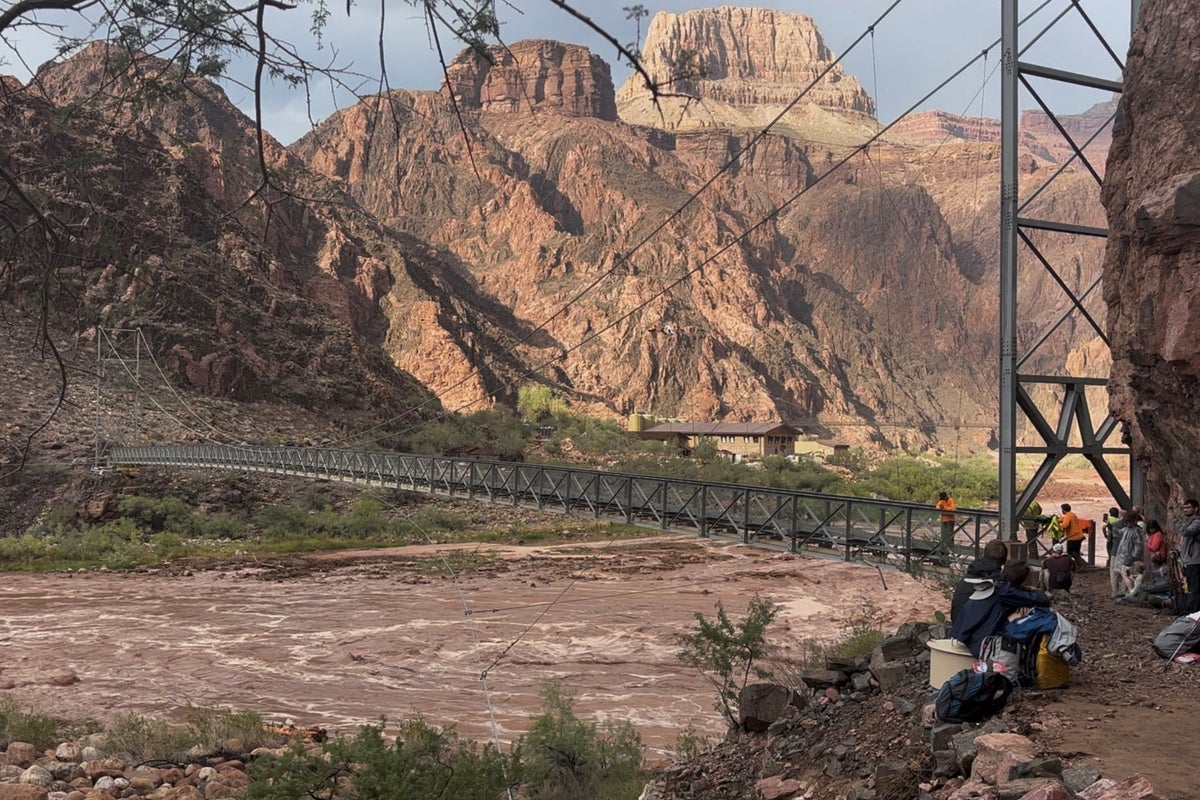
At least two people are dead and 15 others still missing in Arizona’s Grand Canyon National Park after flash flooding from a storm that dropped nearly an inch of rain per hour this weekend. Torrential downpours lasted for three hours Saturday afternoon, washing out popular hiking trails and leaving the historic Phantom Ranch Lodge cabins in the Bright Angel Canyon area under five feet of water. The rains overwhelmed areas already saturated by downpours from earlier that day.
It resulted in debris flows that took many park-goers by surprise and led to helicopter rescues for more than 60 people. The search for the missing continues. The body of a 46-year-old man was recovered near Crystal Rapids along the Colorado River Sunday night, and at least one other body has been recovered, according to a Monday statement by the park.
Neither of the deceased individuals have been identified. The Bright Angel Canyon area remains closed as the risk of flash flooding, debris flows, rockfalls and changing trail and river conditions continues Monday. The National Weather Service has a flood watch in place through Monday evening for northern and central Arizona.
The deluge also seriously damaged the only water pipeline in the canyon. It has led to water restrictions for local communities, and hotel accommodations in the area are closed starting Monday night. Grand Canyon National Park remains open for daytime visitors.
Monsoon rains, driven by shifting winds, are a typical feature in the region during the warm summer months. So are flash floods, which killed four people last September in Arizona’s eastern-central Gila County. But dangerous flooding is also part of the larger story of a super El Niño climate pattern that has developed this summer.
El Niño occurs when winds shift over the Pacific Ocean, allowing warm water to flow eastward. This change often brings wetter weather to the American Southwest. El Niño’s effects combined with a marine heat wave, worsened by human-caused climate change, helped contribute to the flooding, according to The Washington Post’s meteorologist Ben Knoll.
Extract — continue reading at the source.