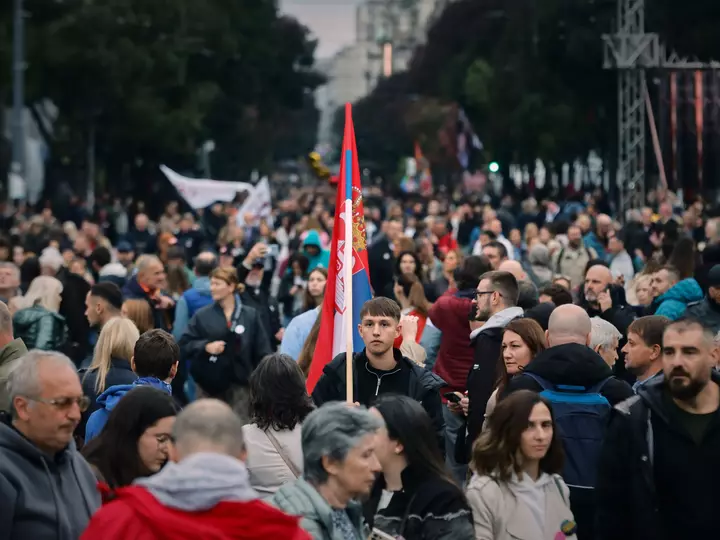
While Europe was asleep over the past two years, Serbia was wide awake. A nationwide student movement shook the foundations of a deeply entrenched government and on Sunday, it dealt it an unprecedented electoral blow – something opposition parties had failed to do for more than a decade. Until the election results came out, the Serbian student movement was largely ignored by international media.
The students were seen as naive, irrelevant, disaffected youth. That they were underestimated by the world and by President Aleksandar Vucic was perhaps to their advantage. But Serbian students did not just rely on their opponent’s overconfidence.
For almost two years, they built and practised an alternative model of politics that soon became visible and eventually triumphed at the polls. Although the student protests were triggered by one particular incident – the death of 16 people in a train canopy collapse at a newly renovated station in 2024 – their anger had much deeper roots. Students and their families had been squeezed from all sides: by local elites whose corruption and mismanagement eroded the standard of living and plunged them into precarity; and by international corporations, which fed that corruption, while offering substandard jobs with little prospect of social mobility.
The protests the students started were not the first against Vucic and his government. But what was different this time is that they remained independent: neither aligned with any domestic political party nor any of the four superpowers Serbia is dealing with – Russia, China, the European Union and the United States. Students managed to sustain the pressure because they did not join existing politics.
Most Serbian opposition parties are small, centralised and increasingly detached from the crises people face daily. They are also vulnerable to corruption in a country dependent on foreign investment and credit. Associating with them would have been damaging to the movement.
Instead, the students created their own alternative political scene. Across the country, they blockaded and took over universities, bringing higher education to a standstill. They filled squares with peaceful protests and vigils.
Extract — continue reading at the source.