sözaltı news World
World
EN AZ
What is Ebola and why is stopping the latest outbreak so difficult?

What is Ebola and why is stopping the latest outbreak so difficult?

bbc.com 19.05.2026 16:24 20 baxış
An outbreak of Ebola in DR Congo involves a rare strain and is in an area affected by conflict.

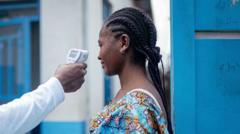
What is Ebola and why is stopping the latest outbreak so difficult? James Gallagher,Health and science correspondentandEmery Makumeno,BBC Africa, KinshasaGetty ImagesThe current Ebola outbreak in the Democratic Republic of Congo continues to spread fast and has been described as the third-worst on record by the head of the World Health Organization (WHO), Dr Tedros Adhanom Ghebreyesus.Getting the spread of the deadly virus under control is challenging because it involves a rare species of Ebola for which there is no vaccine, and the epicentre is in an area affected by conflict.What is Ebola and what are the symptoms?Ebola is a rare but deadly disease caused by a virus.Ebola viruses normally infect animals, typically fruit bats, but outbreaks among humans can sometimes start when people eat or handle infected animals.It takes two to 21 days for symptoms to appear. They come on suddenly and start like the flu or malaria, with fever, headache and tiredness.

As the disease progresses, vomiting and diarrhoea develop and it can lead to organ failure. Some, but not all, patients develop internal and external bleeding.The virus spreads from one person to another by contact with infected bodily fluids such as blood or vomit.Ebola outbreaks used to be small and contained to remote rural areas. However, urbanisation is pushing larger populations closer to these natural reservoirs of Ebola and increasing the risk of transmission.Why is this Ebola outbreak different and is there a vaccine?This outbreak is caused by the rare Bundibugyo species of Ebola, which had not been seen for over a decade.

Named after a district in Uganda where it was first detected, Bundibugyo has only caused two previous outbreaks - in 2007 and 2012. One study showed that it killed about a third of those infected, far less than the more common Zaire (66.6%) and Sudan (48.5%) species. About 38% of those known to have been infected in the current outbreak have died.Initial blood tests for Ebola in the affected areas were negative as they were designed to identify the more common form of the disease.In July, the UK's medicines regulator, the MHRA, said it had given permission for the first human trials of a vaccine for Bundibugyo to go ahead.It was created by a team from the University of Oxford based on the same technology used in the Oxford-AstraZeneca Covid vaccine.

It took scientists just eight weeks to develop the new jab after plugging in genetic code from the Bundibugyo species of Ebola.It will now be tested on 50 volunteers from Oxford aged 18 to 55 to see whether it triggers the correct antibody response without causing significant side effects.Three other groups are also developing different vaccines for Bundibugyo although they have not yet entered clinical trials.While treatments are available for other species of the Ebola virus, no drugs have been specifically approved to treat those infected with Bundibugyo.The WHO is sponsoring a separate clinical trial in the DRC to see whether two existing antiviral therapies can improve survival rates.The two drugs selected as the most promising are an experimental monoclonal antibody called MBP134 and remdesivir, an injection into a vein, which is also used to treat Covid. A further complication is that the outbreak is taking place in a conflict zone, with a quarter of million people displaced from their homes and people moving across porous borders into neighbouring countries.Trish Newport, from medical charity Doctors Without Borders, who is heavily involved in efforts to tackle the outbreak, told the BBC World Service that territory constantly changed hands between different armed groups, making it difficult for emergency response teams to simply drive to Ebola hot-spots. She pointed out that a further problem was bad roads, with a 90km (56-mile) journey from Bunia city to Mongbwalu, one of two gold-mining towns where the majority of cases have been reported, taking more than three hours.

However, the WHO's declaration in May that this outbreak was a public health emergency of international concern did not mean we were in the early stages of a Covid-style pandemic. The risk Ebola poses outside Central and East Africa is minimal.Recovery of Ebola patients offers rare moments of joy at epicentre of outbreakHow health workers in DR Congo are treating Ebola and staying safe'Speed, money and compassion' - lessons from an Ebola survivor and other expertsHow did the current Ebola outbreak start?The first known case was a nurse who developed symptoms on 24 April, which means the virus had been spreading undetected for weeks.The nurse died in Bunia, the capital of eastern DR Congo's Ituri province, according to Congolese Health Minister Samuel Roger Kamba.The victim's body was repatriated to Mongbwalu.Kamba said one of the reasons the virus spread so quickly was the number of people exposed to the body during the funeral ceremony.Africa's public health agency, the Africa Centres for Disease Control and Prevention (Africa CDC), told the BBC World Service that funerals were a particular concern, as they also helped spread the disease during previous outbreaks. Africa CDC director Dr Jean Kaseya said public health information campaigns were "providing information on how to handle funerals" and the importance of basic hygiene and sanitation, as well as providing protection measures for health workers.

Kamba said there had been delays in reporting Ebola cases because infected communities believed the disease to be "witchcraft" or a "mystical illness", resulting in people seeking treatment from prayer centres and witchdoctors rather than hospitals.'I buried my parents one day after the other' - Ebola mourners learn how to grieve safelyHow many Ebola cases have been reported and where are they? On 16 July, officials said there had been 2,073 confirmed cases and 796 confirmed deaths from the virus in DR Congo. There have also been 377 recoveries

Extract — continue reading at the source.

Read full story