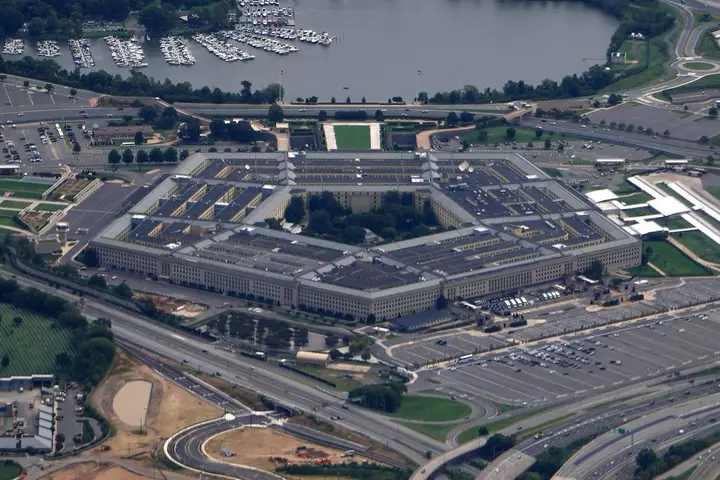
Most U.S. military bases will need to be able to run independently for at least three months should they be cut off from external supplies in the event of a conflict, Defense Secretary Pete Hegseth wrote in a recent memo. Hegseth unveiled the so-called Federal Operations for Resilience, Troop Resources, Energy, Supply, and Survivability (FORTRESS) initiative on September 30, dubbing it "the nation's insurance policy" to make sure the U.S. would still be able to obtain the materials it needs and carry out operations if traditional supply chains were cut off. The defense secretary wrote in his memo that the initiative is based on five pillars: energy independence; supply chain and defense industrial base resilience; a strategic defense reserve; installation hardening and cyber resilience; and resilience in space and spectrum.
Hegseth added that FORTRESS will make sure the country cannot be "starved out, shut down, or cut off." The Russia-Ukraine war, which began in February 2022, has thrown the importance of civilian power stations and electrical grids into sharp focus, both for the general population and for military operations during a full-scale war. NATO countries in Europe have also reported a surge in so-called "hybrid warfare" attacks often attributed to Russia, which frequently target logistics or sabotaging vital infrastructure like data cables and pipelines. Meanwhile, Ukraine's strikes on Russian oil refineries have compounded global concerns about fuel supplies, pushing up gas and diesel prices already elevated by the U.S.-led war with Iran and the effective closure of the Strait of Hormuz, an international waterway where one-fifth of the world's oil transits.
It's not clear how expensive the project will be or how long it will take, but a senior U.S. defense official has conceded some parts could take years to slot into place despite some programs already being in motion, Air & Space Forces Magazine reported. The Center for Strategic and International Studies (CSIS), a Washington, D.C.-based think tank, described some of the FORTRESS goals as "extremely ambitious." U.S. military bases will be prepared to keep functioning without external support for at least 90 days as part of this plan, Fox News Digital reported on Sunday. This includes keeping electricity flowing, having enough fuel and water to operate and being able to communicate for military operations, even if civilian infrastructure is taken out, according to the report, which added that all major U.S. military facilities in the continental U.S. will be held to this 90-day standard.
Newsweek has reached out to the Pentagon for comment via email. "FORTRESS is strategic deterrence in action, ensuring our defenses are hardened, proactive, and ready," Pentagon chief spokesperson Sean Parnell wrote on X on Sunday. "I created FORTRESS America because we can no longer rely on two oceans to protect us.
That outdated assumption no longer reflects the threats we face." He added: "President Trump and Secretary Hegseth understand this and have already paved the way with Golden Dome and a renewed focus on the Western Hemisphere, including Greenland and Panama. All of it reflects a fundamental shift in how we defend America. War has evolved, the threats have evolved, and our defenses must evolve with them." Hegseth's September memo ordered Pentagon teams to carve out a dedicated office within 30 days, or by October 30.
The FORTRESS office will report to the Pentagon's Under Secretary of War for Acquisition and Sustainment, Michael Duffey. As part of the plan, military bases may have portable nuclear reactors, large battery stores and smaller grids able to unpair from the civilian electrical grid, Fox News Digital reported. "The next conflict will likely be fought on multiple fronts," Parnell told the outlet.
Extract — continue reading at the source.