The Justice Department is investigating whether five major television networks violated federal antitrust law when they briefly suspended pooled coverage of President Donald Trump after CNN was barred from White House grounds. ABC, CBS, CNN, NBC, and Fox News were contacted by Justice Department officials on Friday and asked to provide communications and other materials related to the White House television pool, The New York Times first reported. The pool is a longstanding arrangement under which participating networks share responsibility for covering the president and distributing footage to other outlets.
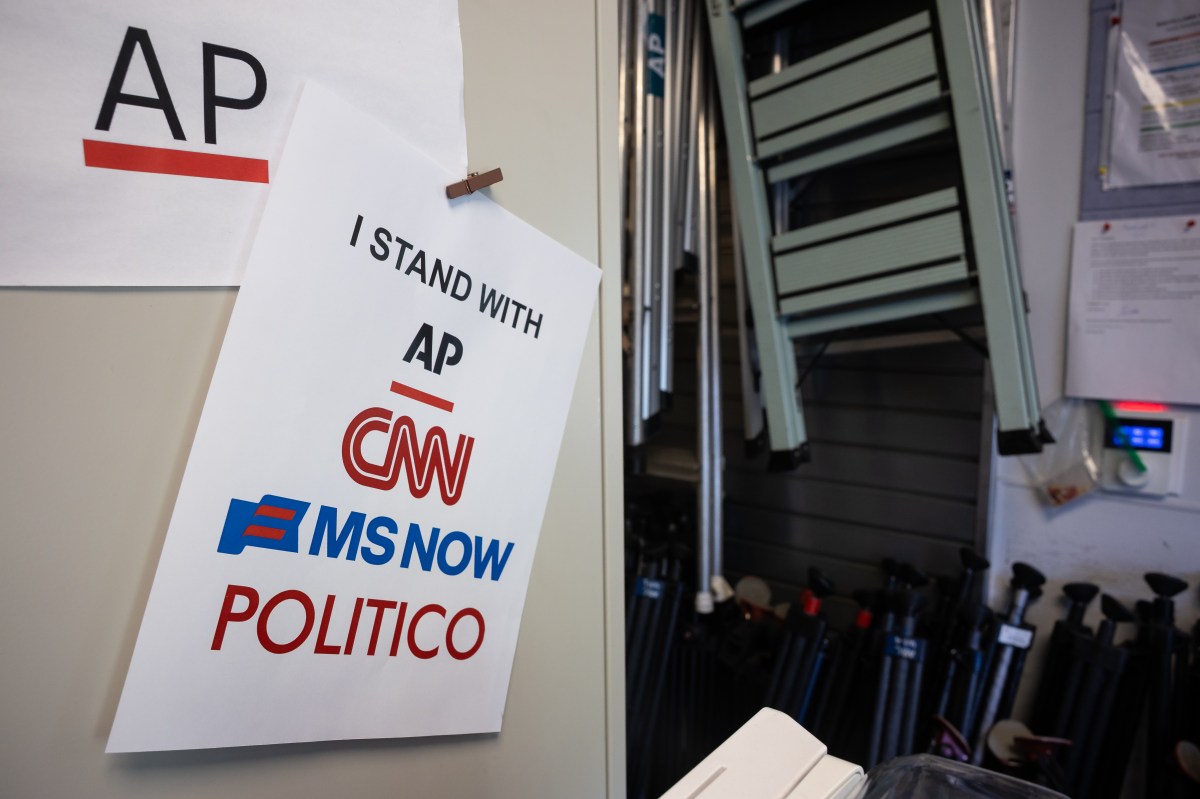
The inquiry stems from the networks' decision last month to halt pooled coverage for several days after the Trump administration barred CNN journalists from the White House, preventing the network from participating in the pool. The networks later coverage after U.S. District Judge Timothy Kelly issued a temporary restraining order on September 24 requiring the White House to restore access to CNN, MS NOW and Politico.
The Justice Department publicly acknowledged the Sherman Act inquiry on Saturday. "Members of the television press pool have proudly boycotted covering White House events. Group boycotts among commercial competitors can violate the Sherman Act.
The Antitrust Division is investigating to determine whether these news organizations have violated the antitrust laws," a Justice Department spokesperson told Newsweek. Newsweek has also reached out to ABC, CBS, CNN, NBC and Fox News for comment. The Sherman Antitrust Act, signed into law in 1890, is one of the cornerstone laws governing competition in the United States.
The statute broadly prohibits agreements that restrain trade and bars efforts to monopolize markets. According to Cornell Law School's Legal Information Institute, the law outlaws contracts, combinations, or conspiracies that restrict interstate commerce and prohibits monopolization or attempts to monopolize a market. The act's two principal sections address different forms of anticompetitive conduct.
Section 1 targets agreements among competitors that restrain trade, while Section 2 prohibits monopolization and attempts to monopolize. Violations can lead to civil enforcement actions and, in some circumstances, criminal prosecution by the Justice Department. The Sherman Act has been used in some of the country's most significant antitrust cases.
Extract — continue reading at the source.