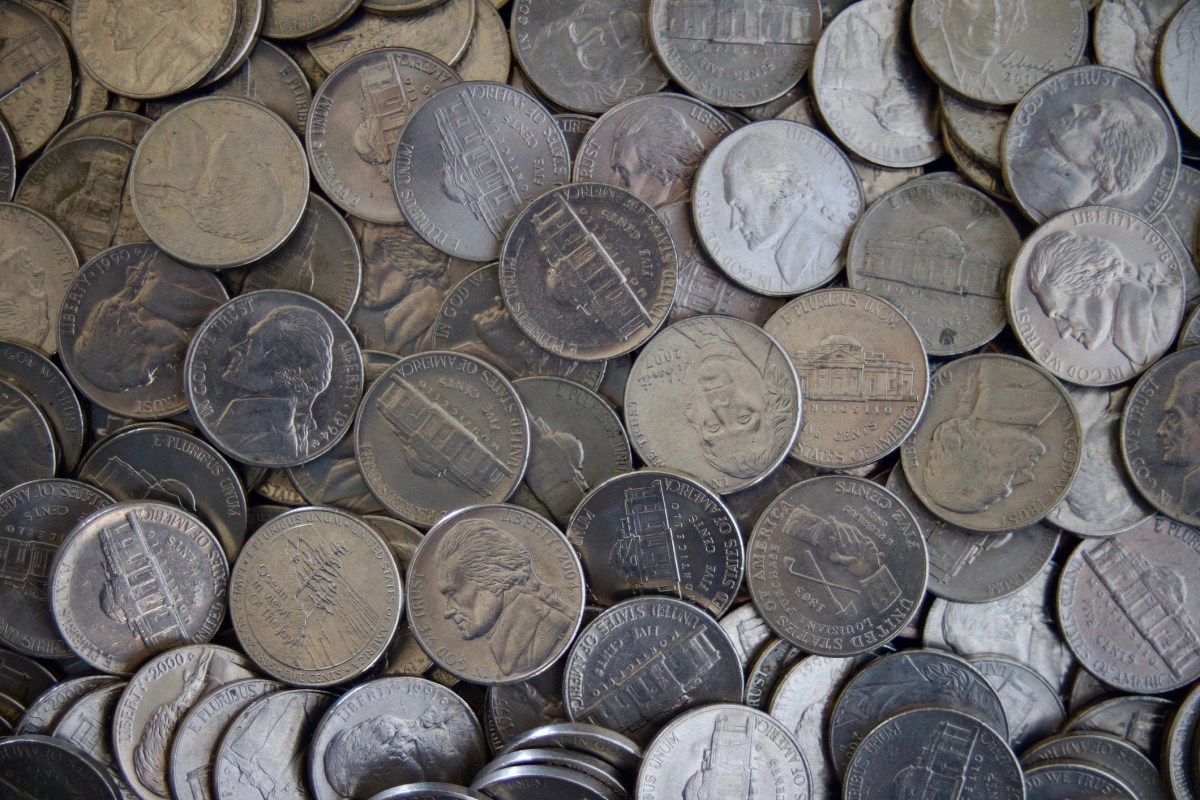
America's smallest coins are becoming increasingly expensive to keep in circulation, and with penny production now over, attention is turning to whether the nickel could be next. The nickel has been part of American pocket change for 160 years. Introduced in 1866, the copper-and-nickel coin is worth five cents, or one-twentieth of a dollar, and has carried Thomas Jefferson on its face since 1938.
But now, the future of one of the country's longest-running coin denominations is coming under scrutiny as the U.S. rethinks the role of small change. The Mint stopped producing pennies for general circulation in November 2025, ending a 232-year run after rising production costs and changing consumer habits made the one-cent coin increasingly difficult to justify. Existing pennies remain in circulation, but the decision has left the nickel as the smallest denomination still being regularly produced.
Ending production of the five-cent coin would save the government money: the U.S. Mint spent 13.31 cents to produce and distribute each nickel in fiscal year 2025, meaning it cost more than two-and-a-half times its face value. But scrapping it would also represent a more consequential change to physical money, making the dime the smallest unit available for settling most cash transactions.
That could accelerate an emerging divide in the U.S. payments system. Card and electronic purchases can still be settled to the exact cent, while cash purchases would increasingly depend on rounding. The result would not necessarily be the end of cash, but a version of it that is less precise, and potentially less convenient, than its digital alternatives.
Cash use has declined dramatically in recent decades, but it's still far from disappearing. The Federal Reserve reported this month that cash accounted for 14 percent of consumer payments in 2025. Four in five consumers had used it during the previous 30 days and 90 percent said they intended to continue using cash.
The question comes as Washington is already wrestling with the future of cash. Congress is considering ways to make the nickel cheaper to produce rather than eliminate it, while separate bipartisan legislation seeks to protect consumers' ability to pay with cash at brick-and-mortar businesses. The final circulating U.S. penny was struck in Philadelphia on November 12, 2025, ending a 232-year production run.
Extract — continue reading at the source.