On Friday the White House announced President Trump was cutting $810 million of congressionally approved spending related to minority groups, immigrants and research programs using a controversial legal tactic called a pocket rescission. A similar technique was used by Trump last year to block $4 billion in spending, including $3.2 billion for the U.S. Agency for International Development (USAID), in a case that ended up before the Supreme Court.
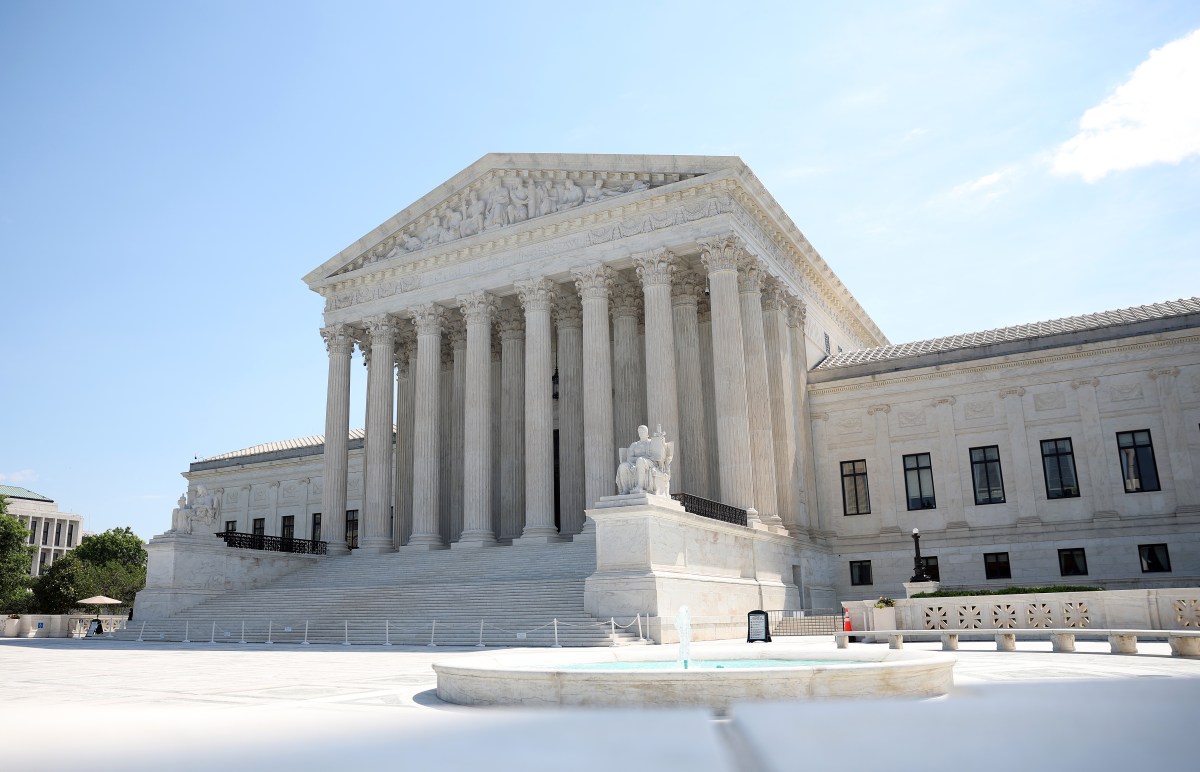
While the Supreme Court didn’t rule on the legal merits of the case it did overturn an injunction imposed by the U.S. District Court for the District of Columbia that would have required the billions to be distributed as Congress intended. The Trump administration’s use of a controversial power, that critics say is illegal, shows its determination to cut spending it deems “wasteful” even if it risks a legal showdown over spending powers historically held by Congress.
If normalized it would significantly expand the power of the president compared to Congress over government spending. Newsweek contacted the White House for comment via email on Saturday outside of regular office hours. In its statement the White House said Trump was using a pocket rescission, which it described as a “long neglected” presidential power given by the 1974 Impoundment Control Act, to “cut wasteful and harmful government spending that does not benefit American citizens.” Targeted spending included funding for nongovernmental organizations that support migrants and offer housing assistance, and programs that bring foreign academics and students to the United States.
Under the Impoundment Control Act the president has the right to temporarily withhold spending Congress has authorized while he asks Congress to reconsider its position. This gives Congress a 45-day window to accept or reject the president’s proposal. However, the fiscal year ends on September 30 and the House is not expected to return until after the November midterm elections, meaning it won’t have the time to respond.
There must be at least 45 days before the end of the fiscal year to allow Congress to overturn the president’s temporary block on spending. As a result the spending is likely to remain blocked in what is called a pocket rescission. This is controversial as it allows the president to block spending without permission from the legislative branch, which is granted the power of the purse in Article One of the constitution.
The Trump administration used the same tactic in 2025 when he withheld $4 billion in spending from USAID and the State Department, as part of his crackdown on foreign aid spending, shortly before the fiscal year ended in September meaning Congress didn’t have time to overrule him. This move was condemned as “unlawful and not permitted by the Impoundment Control Act” by Senator Susan Collins, the Republican chair of the Senate Appropriation Committee, and was challenged in court by groups deprived of funding. District Court for the District of Columbia issued a preliminary injunction requiring the $4 billion in spending to go ahead as set out by Congress.
Extract — continue reading at the source.