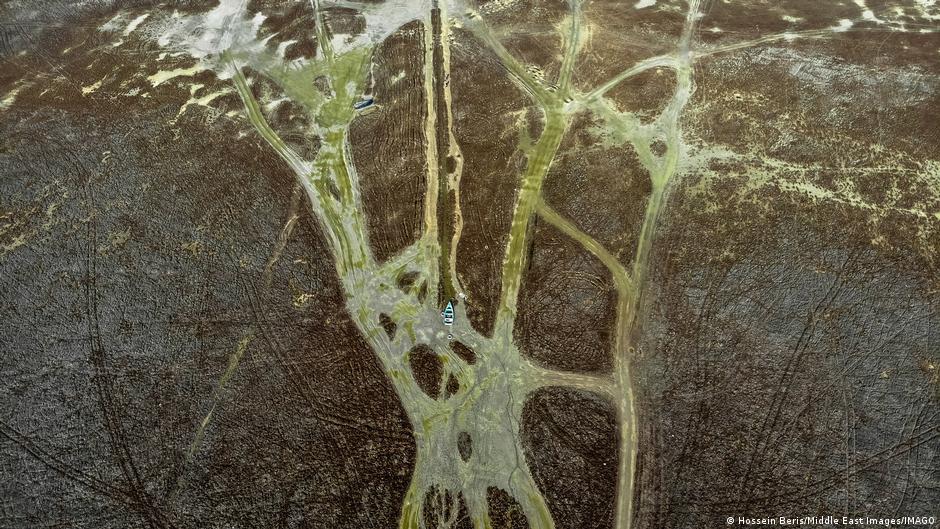
Some of the world's largest lakes could shrink substantially within this century, with far-reaching consequences for ecosystems and roughly a quarter of the global population living in affected regions. Although restoration efforts have proved successful in some cases, many inland bodies of water face extreme challenges. Despite its name, the Caspian Sea is actually a lake.
Bordered by Iran, Russia, Azerbaijan, Turkmenistan and Kazakhstan, it is the largest inland water body on Earth. But its surface area has been rapidly receding since the 1990s. This shift is partly due to the use of dams and water-management practices in the Volga River basin.
But hotter conditions driven by burning fossil fuels to power societies is also a contributing factor. Rising temperatues increase evaporation rates. Scientific models project that water levels could fall up to 21 metres (68 feet) by 2100.
Even a decline of ten metres could leave large parts of the shallow northern basin dry, eliminating nearly one-third of the lake's current surface area. The consequences are already becoming apparent. Ports require increasingly extensive dredging, fish stocks and wetlands are coming under growing pressure, and habitats used by the endangered Caspian seal are drying out.
Scientists also warn that exposed lakebeds could release dust and pollutants. Joint conservation efforts among the five coastal states remain politically challenging. Like much of Europe, lake Constance has been impacted by high temperatures this summer.
Bordered by Germany, Austria and Switzerland, the 63km-long lake has experienced high evaporation rates that have caused water levels to fall significantly in some places. In the late 1970s, however, low water levels were not the main concern. At the time, the lake was suffering from severe nutrient pollution and was at risk of ecological collapse.
Extract — continue reading at the source.


