The nationwide backlash against the AI buildout promises to play a decisive role in a handful of Senate races this year, and could in turn determine who will control Congress for the second half of Donald Trump’s presidency. Evidence is mixed when it comes to which party voters trust on the issue, though Democrats seem to be maintaining a slight advantage. Recent NBC News polling found that they held a 12-point lead when it came to “dealing with data centers”—32 percent to 20 percent—though 19 percent said both parties were “about the same” and a quarter responded that neither could be trusted.
Republicans, however, had a two-point edge on the more general matter of artificial intelligence in a New York Times/Siena poll published last week—within its margin of error. But among voters, opposition to their construction has emerged as one of the only positions drawing bipartisan support this cycle. In June, 64 percent of respondents told a /Ipsos survey that they disagreed with constructing data centers at scale and pace, and the latest NBC News poll found that the same share of registered voters would be less likely to support a candidate who backs building these facilities in their community.
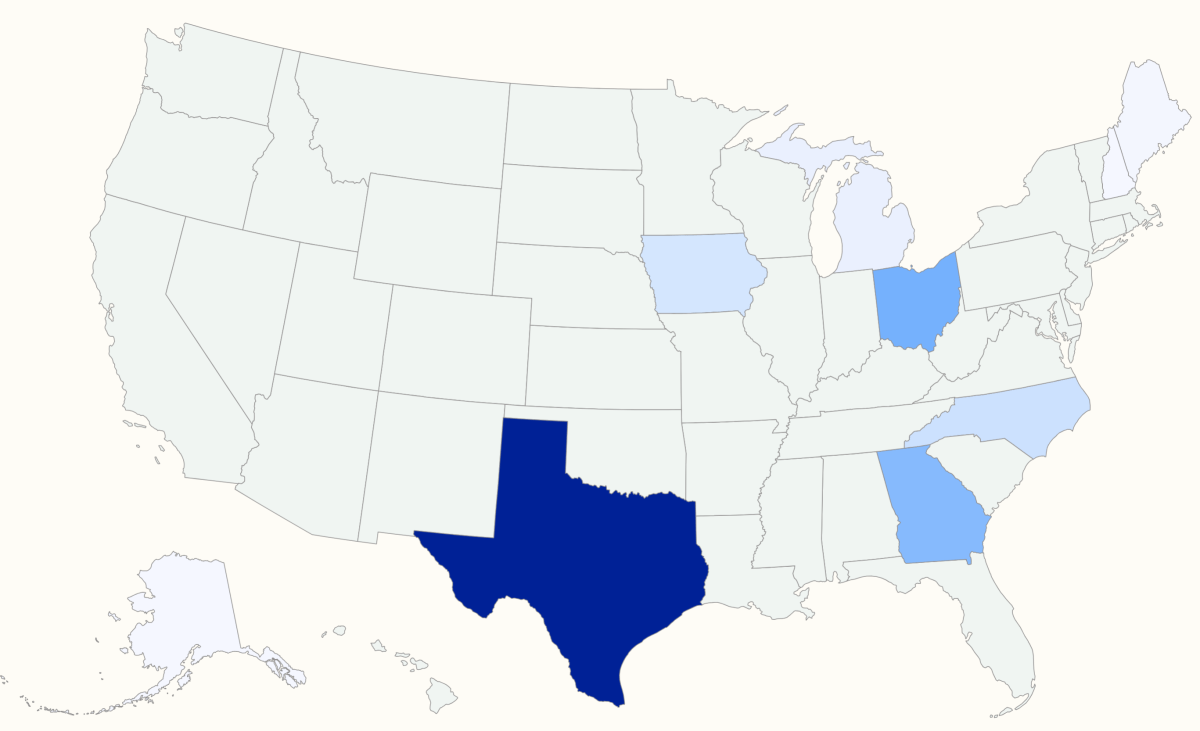
The sleeper issue has become a potentially election-deciding matter, formerly pro-development politicians are now vocal skeptics of an unchecked development push, and campaigns for the House and Senate increasingly read like competitions for who can appear more anti-AI, with Republican strategists telling Newsweek candidates are now “fleeing” from their initial stances on the buildings given alarming levels of local opposition. Given this, Newsweek charted the tight Senate races that are taking place in states with significant numbers of planned data centers. According to the nonpartisan Cook Political Report’s latest update, seven races are currently considered “toss ups,” with two that “lean Democrat” meaning a total of nine could be considered close.
Of these, the power-infrastructure tracking website Cleanview.co shows that eight have at least one planned data center—i.e., formally proposed or documented in records but not yet operational. This includes closely watched contests like Maine, where the incumbent Republican Susan Collins is taking on the Democrat Troy Jackson, and where three data center projects are currently planned. Alongside Virginia, Texas is leading the data center development push—with over 300 data centers in the works, per Cleanview.
And this has now shown signs of becoming a key attack line in the contest between Democratic State Representative James Talarico and his Republican rival, Texas Attorney General Ken Paxton. "Ken Paxton has taken nearly half a million linked to the data center industry,” Talarico said in a recent CBS News interview, in which he called Paxton “bought and paid for” by the industry and bragged that he himself receives no center-linked campaign donations. And in Ohio, where 155 data centers are currently planned, Senate candidate Sherrod Brown, a Democrat, recently began running ads which hail the incumbent Senator Jon Husted as the “face of data centers” A memo first published by Axios last month revealed that Republican leadership were concerned that data centers—and the party’s apparent proximity to the industry—were becoming a burden for GOP candidates in the midterms.
The memo made specific mention of the Ohio race and Brown’s AI-focused strategy. He pointed to the fact that the Republican governor of Texas, Greg Abbott, has been among the most notable buildout skeptics both rhetorically and legislatively in 2026. However, Republican political consultant Mike Madrid said that examples like Texas show that Republicans are “fleeing from early support of data centers”—a pivot perhaps delayed by Trump’s overt backing of a rapid and nationwide development push.
Extract — continue reading at the source.