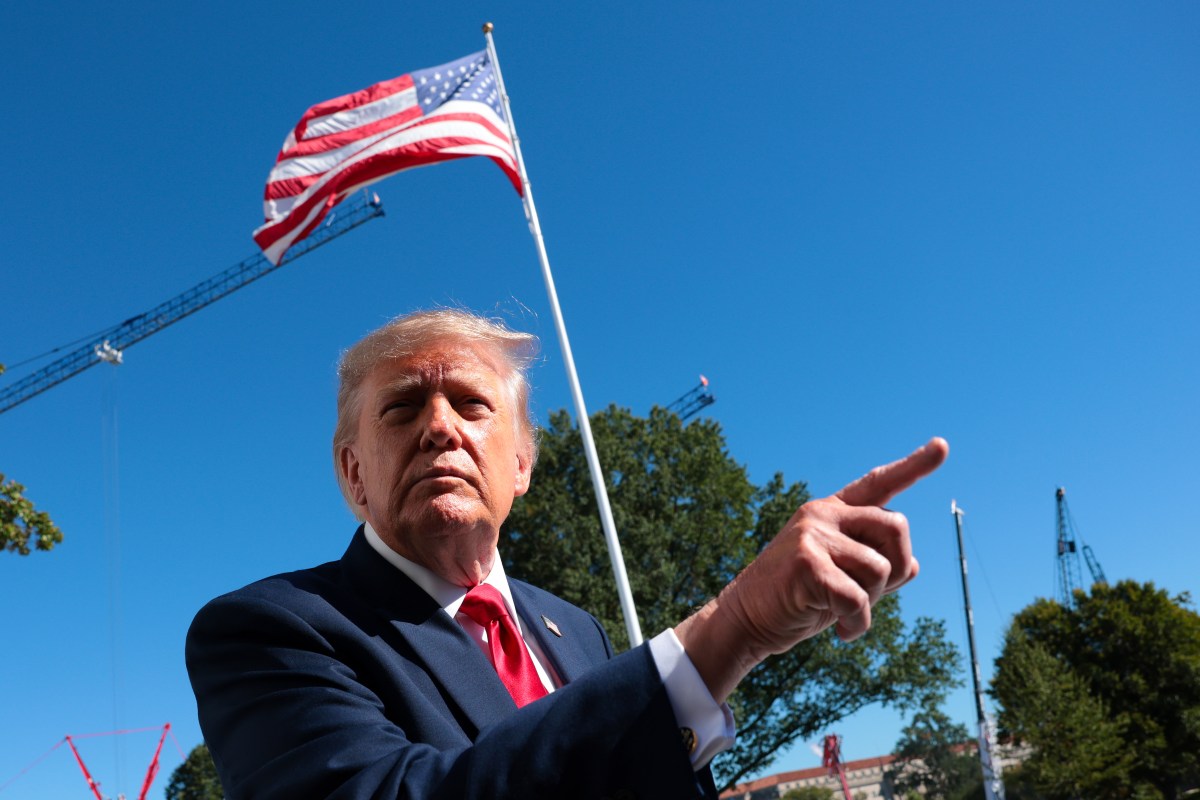
The White House denied Tuesday that President Donald Trump would reimburse taxpayers for ads his administration aired as public service announcements, despite a social media post from the president appearing to claim he would. Trump shared on Truth Social Monday evening that he would "pay for them myself" after facing backlash over the ads, one of which ran during his 2024 presidential campaign. "The Radical Left is upset with the fact that I am taking Ads, which I consider to be a positive promotion for our Great U.S.A., and paying for them with U.S.A. money," Trump said.
"This is a rather standard thing to do but, rather than doing that, although nothing will make them happy, I have decided to do the Patriotic Ads, among others, and pay for them myself, and with money I raised for MAGA, Inc." A White House official told Newsweek on Tuesday that Trump was not referring to reimbursement in his post, but did not clarify what the president meant. The official also pointed to what the Trump administration views as similar campaigns by previous administrations, including wartime messaging and health care PSAs by the Obama and Biden administrations. Earlier in the day, a reporter asked Trump outside the White House whether he would be paying taxpayers back, and he responded, "We'll decide." The first ad to spark the recent controversy used the song "Love Me" by JMSN, and the singer later took to social media to say permission had not been given to use it.
The ad featured shots of the president and key policy messages, including "largest tax cuts in history," "reigniting American manufacturing," and "defend law and order and police." A message reading, "paid for by the U.S. government," appeared over the images, sparking pushback from Democrats and later some Republicans, who felt using taxpayer funds for the campaign violated government rules. The later reported that the first ad cost at least $443,000 to air, while another cost over $300,000. This is a breaking news story.
Contact Newsweek editors on this story: Gabe Whisnant and Sam Wilson.
Extract — continue reading at the source.