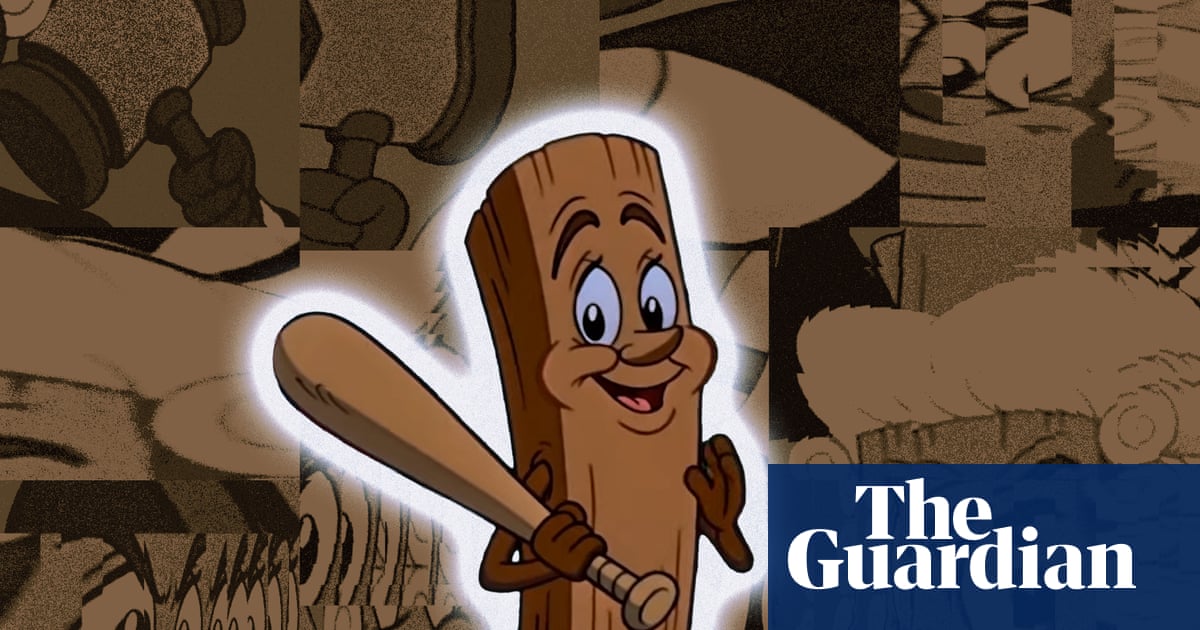
One of the most beloved characters in an absurdist genre of online video content has become the center of an international legal battle that could determine where human creativity ends and artificial intelligence begins. Tung Tung Tung Sahur, also known as Triple T, was created in 2025 by an Indonesian teen who goes by the username Noxa, using OpenAI’s image-generation tool. Based on a kentongan – a type of drum used to wake south-east Asian Muslims for their pre-dawn meal during Ramadan – the character is an anthropomorphized version of the instrument with a broad smile and a vacant stare.
He sits under the umbrella of “Italian brain rot” internet videos. Since his creation, Triple T has become a global sensation: YouTube and TikTok host dozens of videos with hundreds of millions of views starring the character. People dress like Triple T at cosplay conventions and lovingly create fan art and animations of the stick-like creature, and his likeness appears on plushies, perfume and stickers.
The character has generated a great deal of money and stands to create much more – he will soon be joining Fortnite as a skin. But who should benefit from this virality? That question is at the heart of a lawsuit filed in the US district court’s northern district of California, where a games company is suing the French creative agency Mementum, which represents Noxa, over the right to use Triple T as a character in a popular Roblox game.
Eben Jeda, co-founder of Mementum Lab, said he started the agency with the goal of modernizing economic infrastructure around internet-native works, the creators of which are often completely cut out of any resulting profit. Opponents argue no one person should own a meme whose ultimate value has been amplified by the online collective. Fabian Mosele, a self-described “Italian brain rot expert” who has made several Tung Tung Tung Sahur videos, said they see brain rot as collectively owned.
Having been part of making the virality of these characters, to gatekeep it to the original prompter of this character doesn’t seem right.” Tung Tung Tung Sahur is one of many characters that have emerged as part of the Italian brain rot genre of meme – a universe of strange, AI-generated characters beloved by generation Alpha and younger members of gen Z. These include the likes of Ballerina Cappuccina (a ballet dancer with a coffee cup for a head), Tralalero Tralala (a shark wearing sneakers), and a variety of other intentionally bizarre creations. Capitalizing on the virality of these mascot-esque characters, video game company Do Big Studios released a game populated by recognizable personae in May 2025 called “Steal a Brainrot”, which quickly became one of the most-played games within Roblox, where users can create minigames.
But in September 2025, Spyder Games LLC and Speedy Simulator Gaming LLC – the owners of Do Big – received a cease and desist letter from Mementum regarding the use of Tung Tung Tung Sahur in the game. Do Big initially pulled the character and attempted to negotiate a resolution with Mementum, but ultimately Spyder and Speedy sued the company instead, stating in a complaint: “Mementum’s claimed rights do not exist. Under established law, copyright protection requires human authorship, and AI-generated material does not qualify.” Copyright law in the United States applies only to human-made creations – but AI is challenging the interpretation of that rule.
Extract — continue reading at the source.