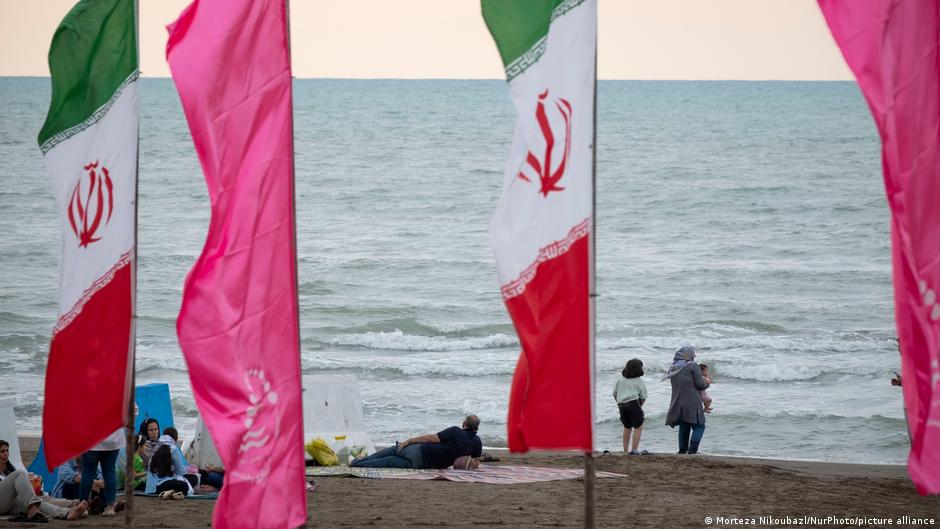
For decades, debate in Iran over the Caspian Sea has often centered on a deceptively simple question: What percentage belongs to the country? Iran, Russia, Azerbaijan, Kazakhstan and Turkmenistan all border the body of water. But the Caspian is treated neither as a conventional sea nor simply as an international lake.
Instead, the five countries have developed a special legal regime governing navigation, territorial waters, fishing, security and seabed resources. The most important step came in 2018, when the five presidents signed the Convention on the Legal Status of the Caspian Sea in Aktau, Kazakhstan. It established territorial waters of up to 15 nautical miles and an additional 10-nautical-mile exclusive fishing zone for each country.
But it did not divide the entire Caspian into five fixed national shares. Before the Soviet Union collapsed in 1991, Iran and the Soviet Union were the only two countries bordering the Caspian. The 1921 Russo-Persian Treaty of Friendship restored Iranian navigation rights restricted under Imperial Russia.
A 1940 treaty further regulated trade and navigation. None of the agreements, however, awarded Iran 50% of the Caspian. Ahmad Vakhshiteh, director of the Moscow-based Center for Strategic Research on Developing Relations with the Middle East, says that this distinction is central to understanding the dispute.
"None of these treaties specified a percentage for either Iran or the Soviet Union," he told DW. "They emphasized common use rather than dividing the sea into ownership shares." To view this video please enable JavaScript, and consider upgrading to a web browser that supports HTML5 video After the Soviet collapse, Azerbaijan, Kazakhstan and Turkmenistan emerged as independent states, turning a bilateral legal arrangement into a five-country negotiation. Some Iranian politicians argued for a 50% share since it had previously shared the sea with the Soviet Union alone; others called for 20%.
So far, neither claim has gained international recognition. "The Caspian is neither completely a sea nor completely a lake," Vakhshiteh said. "The 2018 convention created a special legal regime that distinguishes between the water, seabed, security and resources," he added.
Extract — continue reading at the source.