Before an Anthropic researcher resigned and declared human extinction imminent last week, tech leaders and scientists had sounded the alarm about a superintelligent AI ending humanity for over a decade. The development of artificial intelligence “could spell the end of the human race”, warned professor and astrophysicist Stephen Hawking in 2014 – a little less than a decade before the public got its hands on the generative AI features of the original version of ChatGPT. It’s a now-familiar warning, echoed across the AI and tech industry by countless employees and CEOs of the leading frontier labs across the US.
However, at the time, generative AI was still in its infancy. To the public, the idea that the technology could perform many of the tasks it can today, much less become super intelligent and take over the world, felt largely hypothetical, if not entirely a thing of science fiction. Every few years, a schism occurs within AI.
Teams of researchers and tech leaders issue somber warnings about the dangers of AI built irresponsibly. Rather than push for a pause on any development, a faction of researchers breaks away to create a new AI company. However, no moment has created as many reverberations across the industry as the now-viral resignation of Anthropic safety researcher, Jacob Coxon, who tweeted on 9 September that Anthropic and OpenAI were “racing straight to self-improving super intelligence and gambling with our lives”.
His concerns were echoed by dozens of staffers from Anthropic, OpenAI and other competing firms. Days later, the CEOs of the leading US AI firms answered a call from Anthropic CEO Dario Amodei to slow down what he called a “reckless” approach to creating AI. They include the risk of losing control of AI systems, misuse of AI for cyber-attacks and bioterrorism, and serious economic disruption.
A race to the bottom, spurred by commercial incentives, can make these risks more acute.” While there’s often scant detail and even less hard evidence provided for the ways AI could lead to the ultimate doomsday scenario, that specter has loomed large over the technology’s development. Hawking’s fear was that AI would become so advanced that it would redesign itself, and humans “who are limited by slow biological evolution” wouldn’t be able to compete “and would be superseded”, he said in an interview with the BBC. Google was the biggest household name in the field at the time, particularly after acquiring a two-year-old AI startup, DeepMind, for $650m in January 2014.
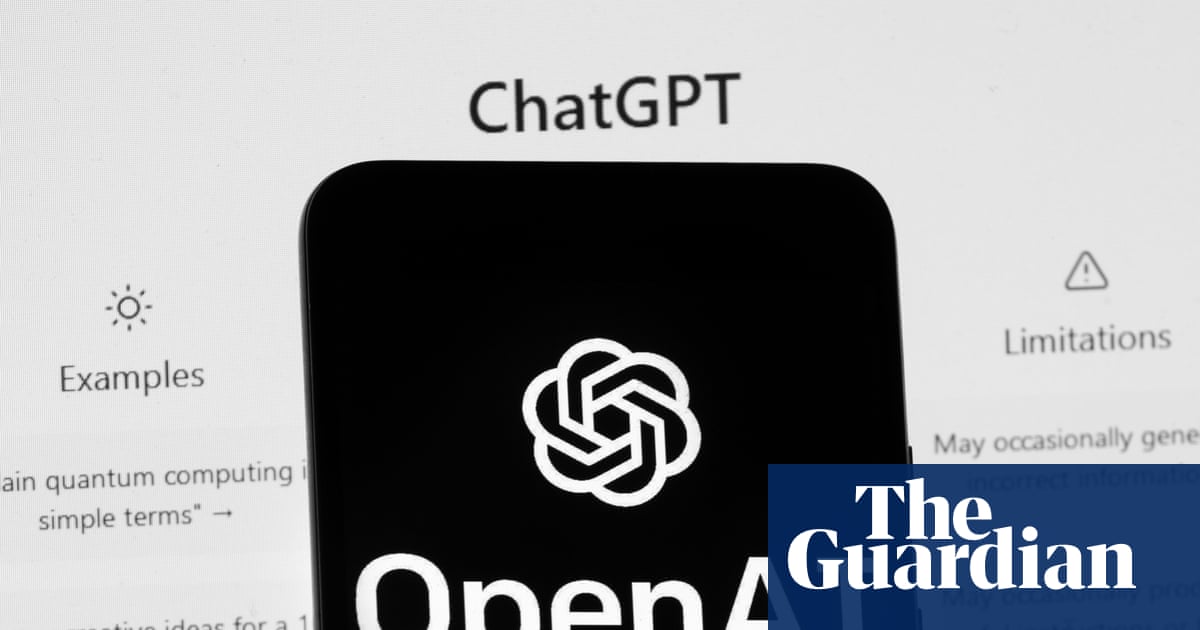
But Google and other firms like it weren’t building AI responsibly enough, according to Elon Musk and Sam Altman. The threat that AI could be developed in a way that could be dangerous for humanity was so pervasive, they claimed, that they co-founded a nonprofit dedicated to building it safely, OpenAI, in 2015. OpenAI’s stated mission was to “advance digital intelligence in the way that is most likely to benefit humanity as a whole, unconstrained by a need to generate financial return”.
Extract — continue reading at the source.