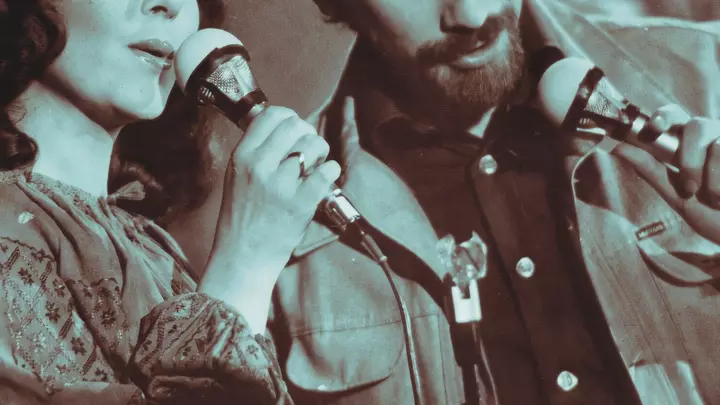
Why is it so necessary that we would go to any length to do it, even in the face of repression? Linda Ronstadt suggests people do it for the same reasons the birds do: “They sing for a mate, to claim their territory, or simply to give voice to the delight of being alive in the midst of a beautiful day. They sing so that subsequent generations won’t forget what the current generation endured, or dreamed, or delighted in.” The fact is we mark all sorts of occasions with song: we sing at school, on birthdays, and at religious services; we sing to mourn, to express sadness, to protest, to impress, to connect with one another.
Some love to sing while others really don’t; some people think they can’t and so avoid it at all costs, while some people think they might be able to but are afraid to try. Some of us can’t stop singing, regardless of whether we’re any good, and god bless. No matter where we fall into these different (by no means exhaustive) categories, we all sing, or need to navigate occasions when it’s required.
Our singing voices are our least socialized voices, and therefore the most vulnerable; even the most trained singer has their secret everyday voice, the one that comes out while they’re doing the dishes, or stripping the beds. (What a lovely, earnest sound, the sound of a voice singing for no one but itself.) Singing can build solidarity, linking individuals into community, a form of protest and hope. Singing is a crucial part of my life, not as necessary as eating or breathing, but certainly as showering or drinking coffee. Most of us have felt that amazing joy at joining our voice to someone else’s, even just someone on the radio, and it turns out there’s a reason it feels so good—because it quite literally is good for our bodies.
Scientists have discovered that singing, especially in a group, has all kinds of benefits, from stabilizing mental health to reducing stress hormones, bolstering our immune systems, increasing lung capacity, helping postpartum depression, and stimulating the memories of people suffering from dementia. We should all be singing! But we humans “are the animal with a problematic relation to corporeality,” as my philosopher friend Emily Laurent-Monaghan recently remarked to me, and as such we have a unique capacity to agonize over the productions of the body, torturing ourselves attempting to perfect them.
When she retired in 2016, the New Zealand soprano Kiri Te Kanawa couldn’t point to a single ideal performance. I always thought there was a mistake in it.” It seems like a healthy approach to singing, or art making in general, to be able to walk away from those mistakes without wishing for a do-over; to let them go. A gesture of care for the imperfect voice, the imperfect body.
Always striving for the best, always keenly aware that we’ve fallen short of what we set out to do. But unlike writing, which is at least partly for other people, I’m not singing to be heard. In fact I’d rather not be.
Extract — continue reading at the source.