Terms such as "cycle syncing" and "going luteal" have become part of everyday vocabulary for many young women. From periods and hormones to PMOS (polyendocrine metabolic ovarian syndrome) and fertility, a growing number say they now understand their bodies better than previous generations did. But while campaigners welcome greater awareness, questions remain about misinformation and health anxiety.
We spoke to women, parents and experts about the changing conversation around menstrual health. 'People don't expect disabled people to have sex' In pictures: Eclipse, elephants and wedding cow Man, 90, with Parkinson's walks 90 miles for charity Iqra Wasim from Fishponds in Bristol has struggled with PMOS symptoms such as painful acne since the age of 11. PMOS affects about one in eight women. It is a major cause of female infertility and symptoms can include irregular periods, excessive hair growth and weight gain.
Wasim, who learned more about it through asking doctors questions and social media, said she now educates her mum, who also has PMOS, on ways to manage symptoms. "My mum was going through heavy bleeding with her PMOS and didn't know what birth control was," she said. "I told her about it and she thought I was talking about being sexually active, but I explained there's so much more to the medicine - that showed the main knowledge gap between us.
"My mum's generation did have knowledge, but it only stayed between women, families or doctors and now someone can talk about their period and PMOS online and millions of women can relate to it. "Our generation is more willing to ask whether something is normal. "But I don't think that social media is a replacement for a medical professional," Wasim added.
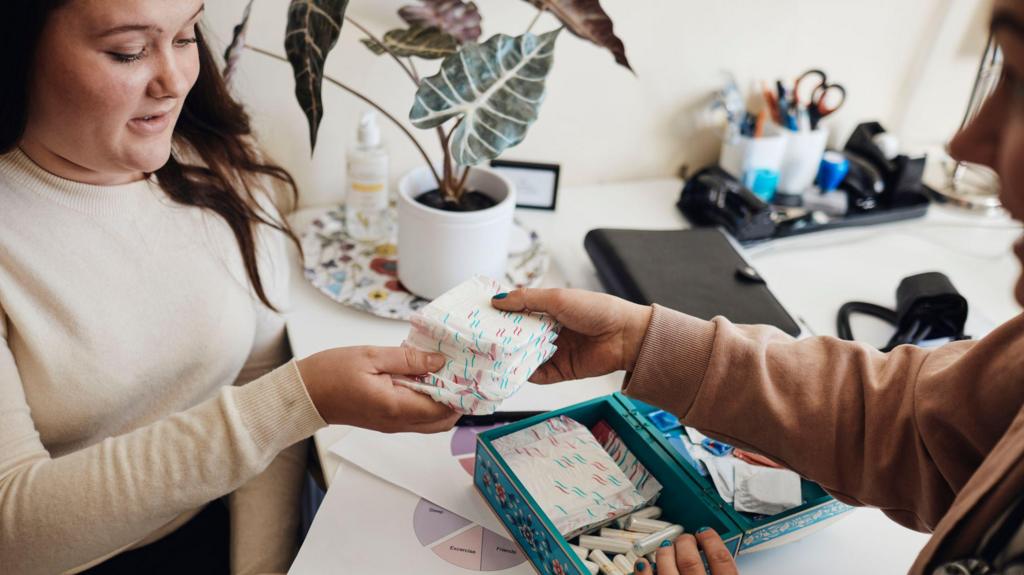
Caroline Herman founded 'All Yours Period Box, external' with her daughter, which operates in Wiltshire and donates boxes with period products to foodbanks. She said there is still "a huge amount of work to be done" to improve menstrual health education. "We have a generational gap in the country," she said.
"We have generations like mine where we weren't taught anything to do with our periods and then there's our parents - there was this layer of silence that we've had to fight our way through." Herman said she had to educate herself after suffering from a stroke believed to have been caused by a hormonal imbalance. She celebrated the increase in information that is now available to people on social media, but warned it should "come with a caution". "Is it high-quality, unbiased?
Extract — continue reading at the source.