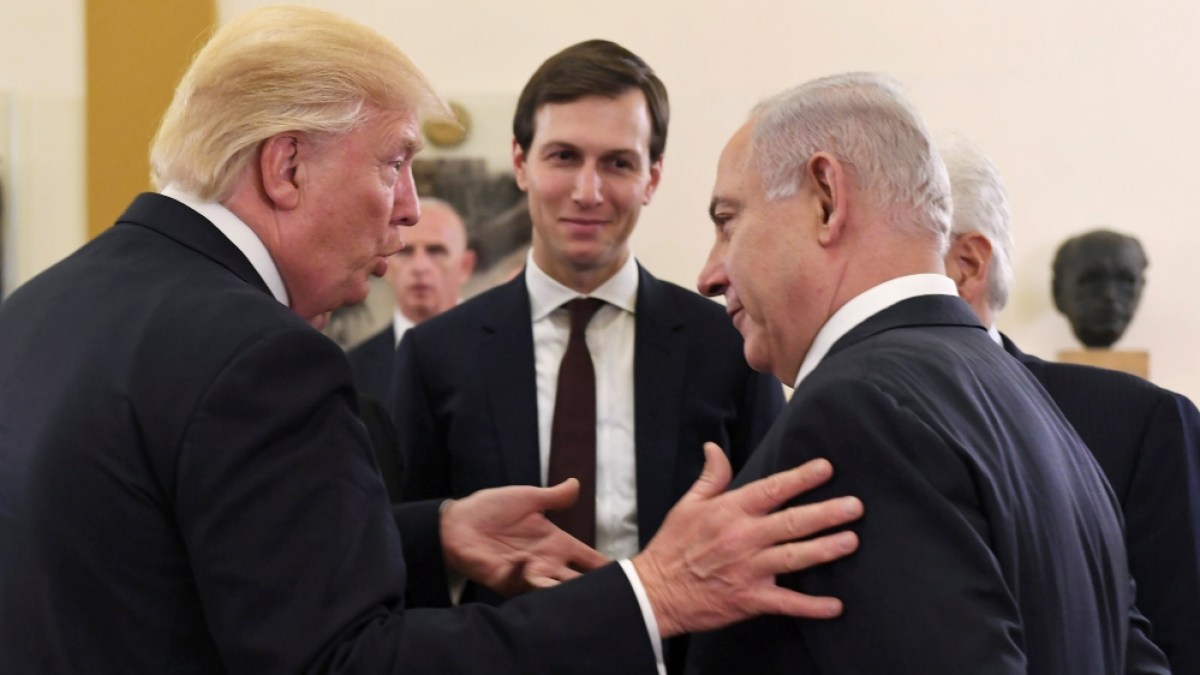
United States envoy Jared Kushner is set to meet Israeli Prime Minister Benjamin Netanyahu on Monday for high-stakes talks in Tel Aviv, following intensive diplomatic sessions in Cairo, Egypt, aimed at advancing the second phase of the Gaza ceasefire roadmap. Kushner, accompanied by Board of Peace Director-General Nickolay Mladenov and former British Prime Minister Tony Blair, held an unprecedented meeting lasting more than two hours with a Hamas delegation. The news agency reported that Hamas leader Khalil al-Hayya headed the team.
The diplomatic push comes as Washington seeks to implement a 15-point roadmap for Gaza — approved by US President Donald Trump’s Board of Peace. However, Netanyahu has publicly rejected the framework, insisting that Israeli forces will not withdraw until Hamas is fully disarmed, while Israel continues military operations in Gaza and expands its illegal settlements in the occupied West Bank. Here is what we know about Kushner’s meeting with Hamas leaders, what he is expected to do next, and what these developments mean for the 15-point plan for Gaza.
Officially, the US describes Hamas as a banned, “terrorist” organisation. Unofficially, the US has long engaged with the Palestinian group, mostly through mediators. Political analysts view the direct engagement between the US envoys and the Hamas leadership as a pivotal recognition of political realities on the ground.
Mahjoob Zweiri, a lecturer and expert in Middle East politics at Doha Institute for Graduate Studies, told Al Jazeera that the meeting represents a “type of American submission to the fact that Hamas is a political force in Palestinian society that cannot be ignored”. He noted that despite Israeli attempts to sideline the group, Washington recognises that Hamas remains an indispensable actor for any lasting settlement. Adel Shadid, an expert in Israeli affairs, echoed this assessment, describing the direct Cairo talks as a profound strategic shift that he said would be deeply unnerving for the Israeli leadership.
He added that Washington now views the movement differently, indicating that “Hamas is no longer the problem in the American reading, but rather part of the solution”. Shadid emphasised that this dynamic “contradicts one of the most important goals of the war, represented by the eradication of Hamas, not only militarily but also politically”. Ahmed Atawna, director of the Istanbul-based Vision Center for Political Development, told Al Jazeera that Palestinian factions currently hold a solid tactical negotiating posture alongside Egyptian, Qatari and Turkish mediators.
The Israeli newspaper Yedioth Ahronoth reported that US officials are increasingly frustrated that Israel is “trying to buy time, introduce new reservations, and change the sequencing set out in the roadmap”. Citing sources familiar with the discussions, the newspaper reported that Washington feels “Israel is playing games”. According to the daily, Kushner’s mandate during his Monday meeting with Netanyahu is not to reopen negotiations, with one source stating that he “is not coming to Israel for another round of diplomatic ping pong” but rather “is coming to close”.
Extract — continue reading at the source.