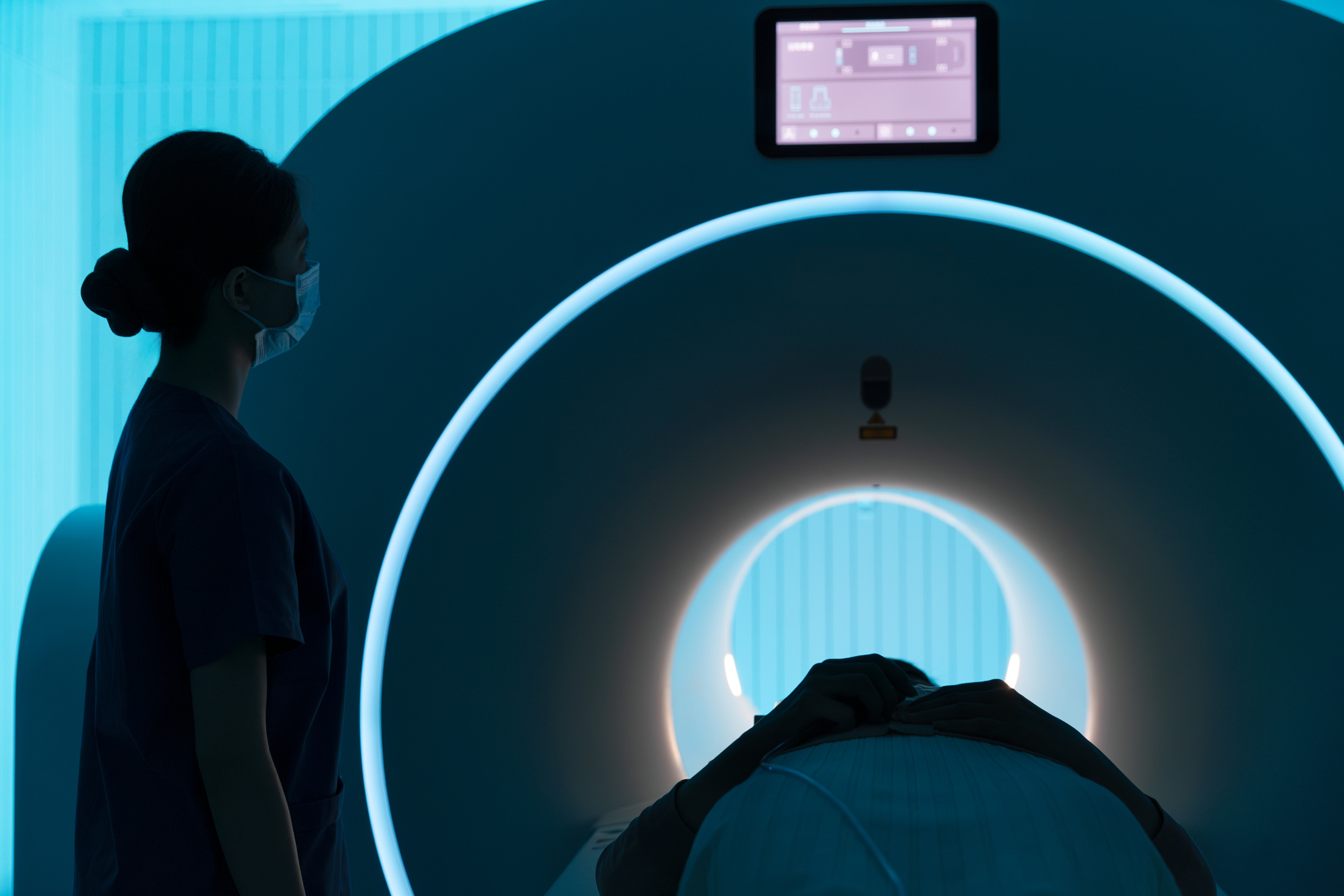
Today, if you wish, you can go get a staggering amount of granular data about your health without your doctor’s involvement. All on your own, you can get an MRI of your entire body, a CT of your coronary calcium, an ultrasound of your blood vessels, and maybe someday an immersion ultrasound in a spa. Direct-to-consumer medical imaging tests are a huge and growing business worth billions of dollars.
Over 100,000 Americans are already customers. But do these test results actually make us healthier? As a radiologist, a doctor specialized in the alchemy of turning information into health, I translate data hidden in images into words that motivate behavior to promote healthier, longer lives.
Because it is central to what we do, radiologists have grappled for decades with the question of whether and how information improves health. It turns out to be surprisingly complicated. In order to make a difference in someone’s health, the test must accurately predict or diagnose a condition, resulting in a change in mindset and behavior, and that change in mindset and behavior must produce a better outcome than not doing the test.
For example, whole-body MRI of the general public, a test not recommended by any medical guideline, medical society, or payer, creates information by taking a picture of your body. That information is accurate for some diseases but not others. It might change your mind by finding something you didn’t know about, like a small mass in your kidney or thyroid gland, which then might change what you or your doctor does.
For example, your doctor might order another test to better understand if the mass is important or perform surgery to take it out. But the reason whole-body MRI of the general public isn’t recommended while other screening tests are is because in the absence of evidence, it is believed to be unlikely to produce a better outcome than doing nothing at all. Many people think, as I once did, that early diagnosis always improves health.
That logic is especially intuitive for an early diagnosis of cancer. But in many cases, that intuition, however understandable, can be wrong. Finding something with a diagnostic test might not help, despite creating an illusion that it does.
Extract — continue reading at the source.