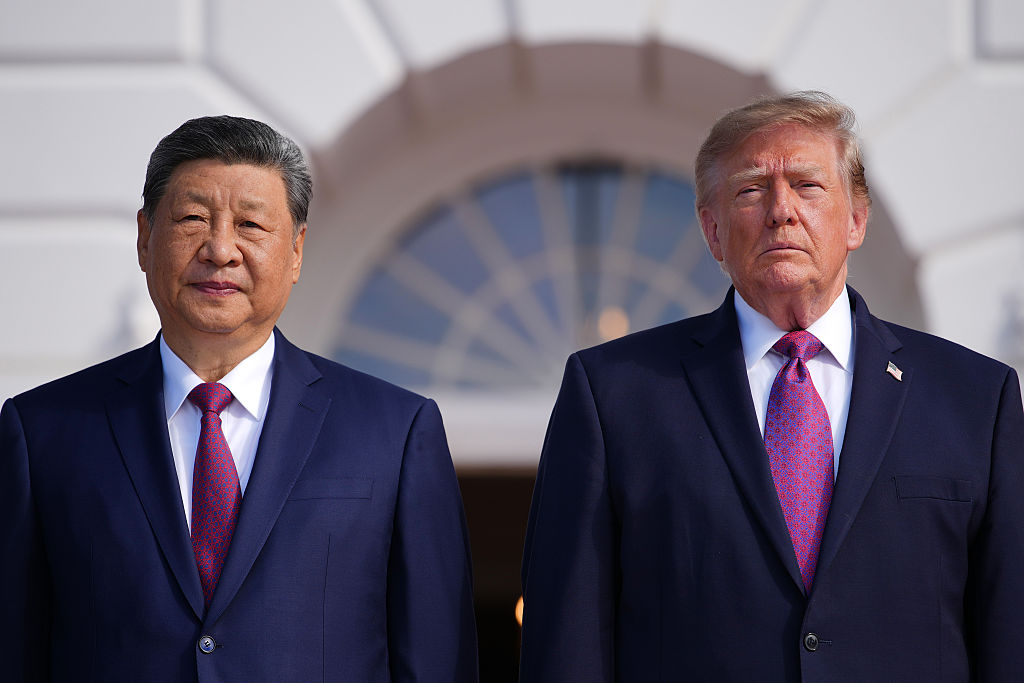
Last week, President Donald Trump hosted Chinese President Xi Jinping at the White House. It's their second meeting this year, following the May summit in Beijing. This visit, the stakes were even higher.
We have learned about security incidents from nearly every major AI company, American and Chinese, built on both open and closed models. The leading AI labs are openly debating whether to pace their frontier model development, and the government is working out what role it plays in that decision. I spent four years as Secretary of Commerce focused intently on America’s economic, technological, and security competition with China—instituting first-of-its-kind export controls on the sale of chips and chipmaking equipment to China to protect our national security, and leading implementation of the CHIPS Act to onshore chip manufacturing.
I also created the AI Safety Institute so we could accelerate our AI development responsibly and safely. I have sat across the table from China, and I have an understanding of how they think about AI. I believe AI companies are right to want to pace the frontier.
But we need to stay ahead of China while we pace, because a world where China leads the global AI competition threatens America’s interests. The challenge is this: We need to outcompete China on the technology itself, while also working with China on addressing the risks posed by AI. Competition and cooperation are often in tension, but the stakes are too high in this case to pick only one.
China has its own reasons to take AI safety seriously. The Chinese Minister of State Security recently said publicly that the greatest risk advanced AI poses to China is the risk it poses to the stability of the Chinese Communist Party (CCP). Beijing is no more interested in powerful AI systems wreaking socio-political havoc than Washington is; both countries have incentives to align on certain safety standards or even just a shared understanding of AI risks.
It is in neither country’s interest for companies to lose control of their AI systems or for AI to be used to create bioweapons by rogue actors. Treasury Secretary Scott Bessent’s announcement of a possible AI dialogue with Chinese counterparts after his meeting with Chinese Vice Premier He Lifeng is a tangible sign that China sees at least some space for cooperation here. I would argue that now is the moment to fully establish that dialogue and keep the momentum going.
Extract — continue reading at the source.