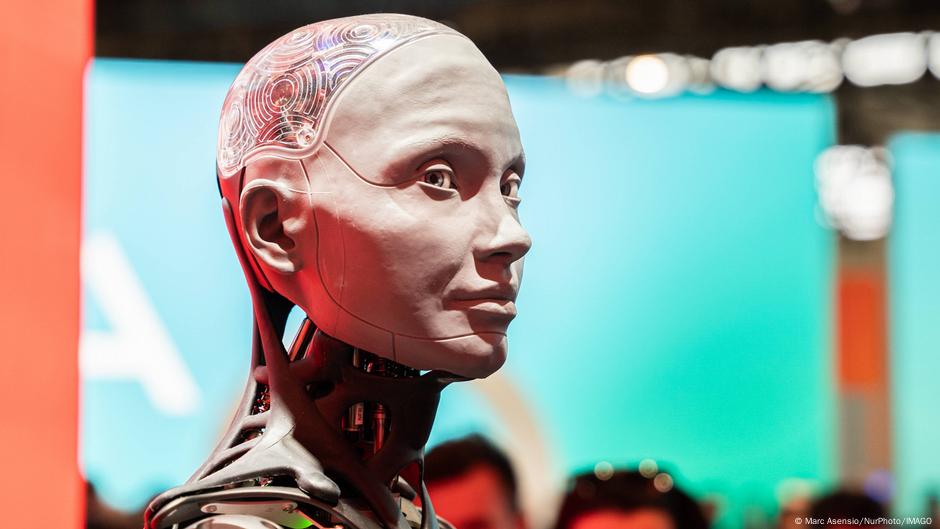
Dramatic warnings about the existential risks posed by artificial intelligence to humanity are nothing new. As early as in the 1940s, the renowned scientist and science fiction author Isaac Asimov explored potential risks and unintended consequences of intelligent machines. In 1991, Hollywood blockbuster "Terminator 2" imagined a dystopian 2029 in which an out-of-control military AI called Skynet directs killer robots in a war against humanity.
If the warnings of several of the biggest names in AI are to be believed, a similar scenario could become a reality — even before 2029. "The people building AI earnestly believe that it could kill us all by the end of the decade," AI researcher Jacob Coxon posted on X last week, without exactly explaining how it might happen. "No other human activity poses this level of danger," he added.
Coxon also revealed that he had quit his job at Anthropic, a US-based AI company, in protest against what he saw as an irresponsible race among AI companies to develop an ever better, self-improving superintelligence. He warned that algorithms could begin to analyze and improve their own source code independently, which could shrink development cycles from several months to just a few minutes and thus make them uncontrollable. Coxon is not an isolated voice.
Nobel Prize-winning physicist Geoffrey Hinton, often called the "Godfather of AI," has been warning for years about the serious consequences of artificial superintelligence. In 2023, he left his job at Google to publicly warn of the dangers of AI technologies he helped pioneer. Yoshua Bengio, a pioneer of artificial neural networks and deep learning, has also expressed concern about current developments and called for government regulation.
As recently as July 2026, more than 1,000 employees of leading AI companies warned in an open letter of an imminent loss of control if the race for "superintelligence" were not subject to significantly stricter regulations. Despite the growing warnings, US President Donald Trump's administration has clearly shifted its AI policy toward minimizing regulatory hurdles and accelerating AI development. In his X post, Jacob Coxon indirectly criticized the consequences of this policy: "At OpenAI, many have not deeply internalized the civilizational stakes.
At Anthropic, the stakes are well-understood, but they are locked in a race to get there first — they believe no one else will act responsibly, so they must do it themselves, despite the risk." Coxon, who had moved from OpenAI to Anthropic in early 2026, is familiar with both corporate cultures. In an interview with The Wall Street Journal, he said that under the "most aggressive scenarios," things could spiral out of control as early as the end of 2027. To view this video please enable JavaScript, and consider upgrading to a web browser that supports HTML5 video Anthropic CEO Dario Amodei, for his part, is currently calling for a coordinated, industry-wide slowdown in development to buy time to address the risks and prevent any misuse of AI.
Extract — continue reading at the source.