As President Donald Trump's party reels from a substantial blow in the midterm elections, the U.S. leader may turn to an unlikely place to reinvigorate his legacy. North Korea's Kim Jong Un, armed with the very kind of nuclear weapons Trump seeks to deny another supreme leader in Iran, has been the subject of a presidential charm offensive in recent months. The campaign has only picked up steam in the lead-up to the vote that ultimately handed Democrats control over both chambers of Congress earlier this week.
But the president's comments mark just one of several indications that maneuvers are brewing behind the scenes. Signs of real strategy shifts have emerged from the U.S. and South Korea, where President Lee Jae Myung is also setting the stage for new overtures across the DMZ. And with his final midterm elections now in the rear-view mirror, Trump may be more empowered than ever to pursue the kind of ambitious, unconventional diplomacy that could unlock a deal with Pyongyang and, with it, a major milestone in U.S. foreign policy.
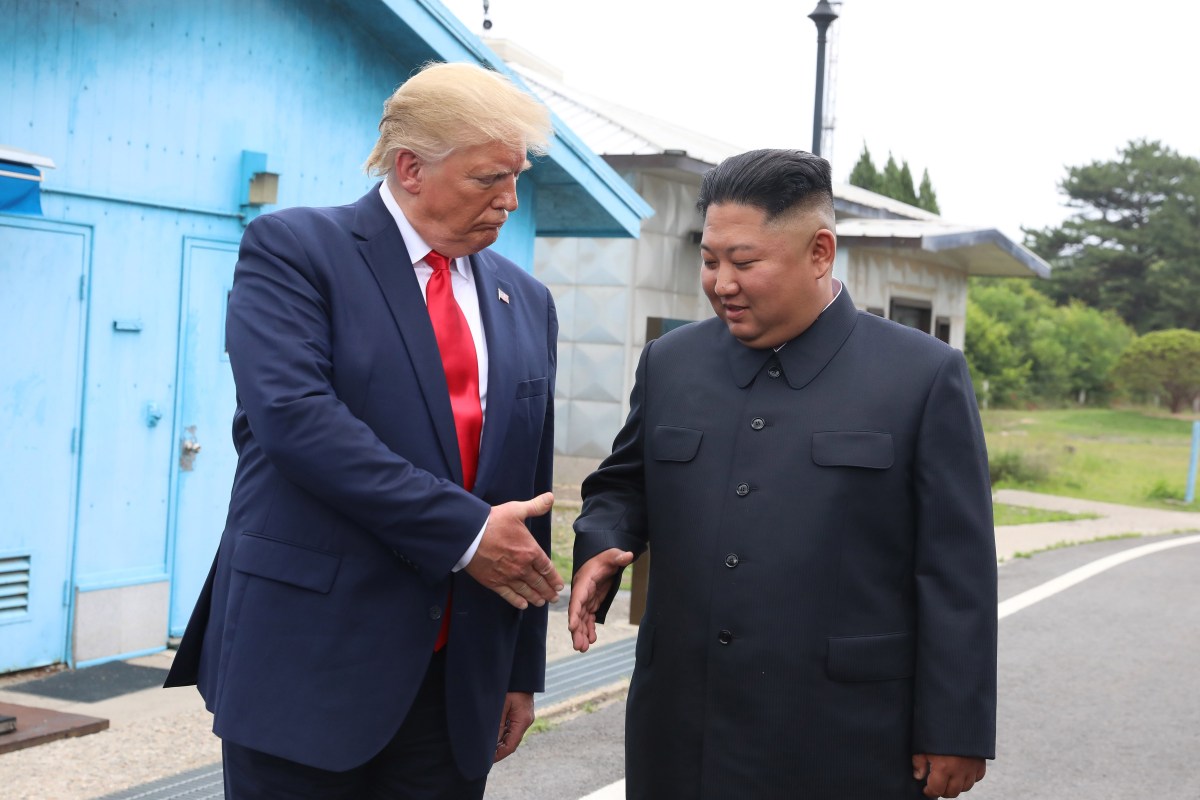
"I think that in his last two years, Trump will be inclined to undertake big legacy projects," Victor Cha, president of the Geopolitics and Foreign Policy Department and Korea chair at the Center for Strategic and International Studies who has served in a number of U.S. official roles overseeing North Korea policy, told Newsweek. "This includes things like the arch and renaming Dulles Airport, but I think it also means, in foreign affairs, potentially trying to do a deal with North Korea to end the Korean War," Cha said. "Whether this actually results in denuclearization is a very open question, but Trump clearly wants the Nobel Peace Prize, and we probably see achieving some sort of peace as an important step in that direction." Trump has not been shy about his enthusiasm to secure a new sit-down with the North Korean leader with whom he made history in 2018 at the first-ever summit held between the two nations still technically in a state of war since their bloody 1950s confrontation.
The U.S. leader's personalized style of foreign policy adds weight to the flattery. "He happens to be a friend of mine," Trump said of Kim in September. "He likes Trump, doesn't like a lot of other people.
I'm about the only person in the entire world that he likes, and I like him." Trump again praised his dynamic with Kim last month, just two weeks before a midterm election in which many saw foreign policy on the ballot amid the domestic and global backlash of the ongoing war with Iran. Trump downplayed the notion of an imminent North Korea meeting he'd previously hoped would take place before the end of the year without outright dismissing the possibility. "I get along with him very well," Trump said.
"And I'm not sure that anybody is asking for a meeting, but my relationship with Kim Jong Un is very good." Kim has spoken less frequently on the topic. But even the elusive leader has placed sentimental value in his rapport with the U.S. president, telling a top legislative meeting in September 2025, "Personally, I still have a good memory of the current U.S. President Trump." Kim said at the time he would consider renewing talks with the U.S if it first abandoned its pursuit of denuclearization and instead sought "genuine peaceful coexistence." He expressed a similar position during a high-level party congress in February, asserting that if Washington were to respect North Korea's constitution and abandon a "hostile policy," then "there is no reason why we cannot get on well with the U.S." But the most recent remarks have come from Kim's sister, Kim Yo Jong, who serves in the influential position of Korean Workers' Party Central Committee department director.
Extract — continue reading at the source.