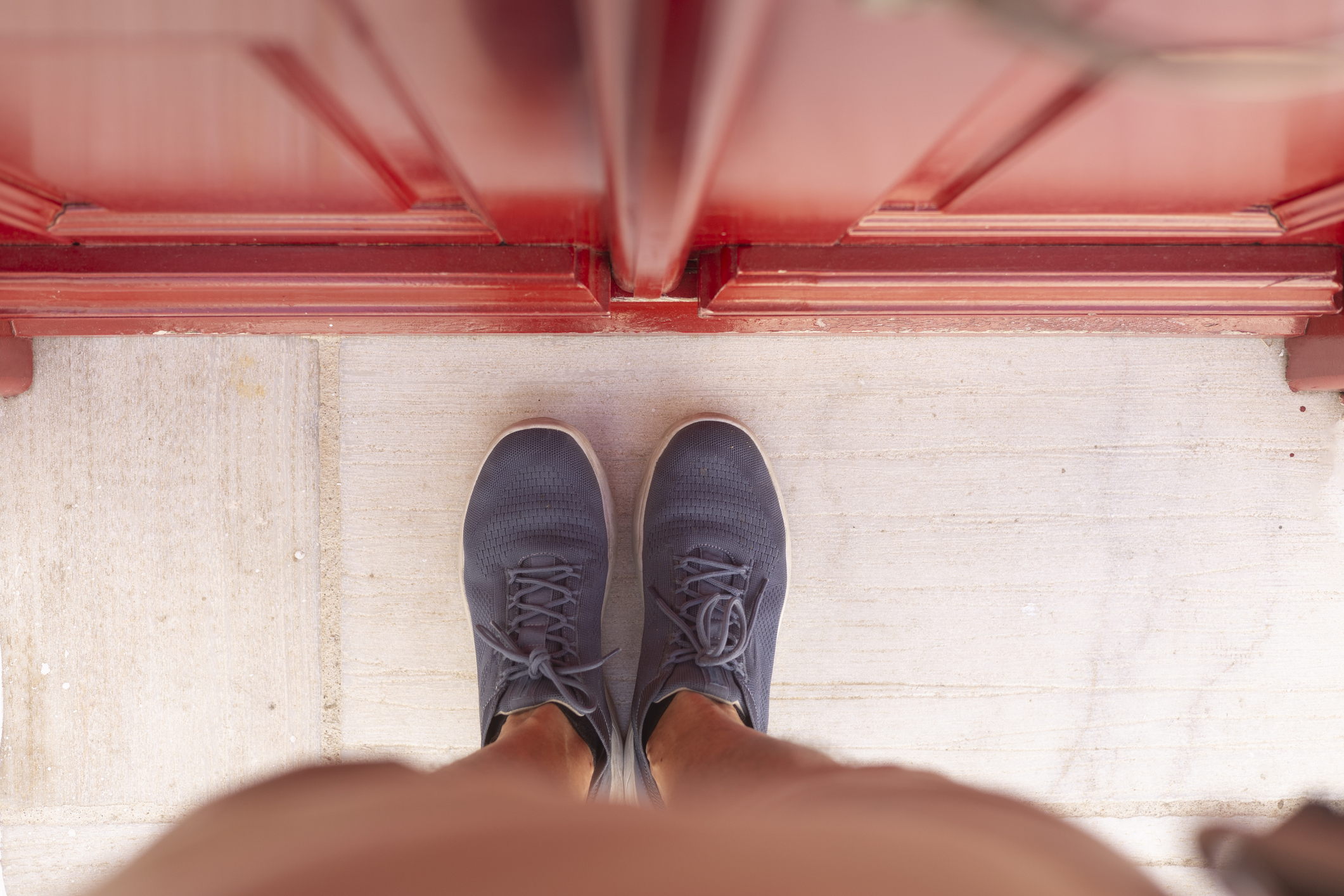
Every time you welcome a guest into your home, you may be letting in thousands of other ones as well—if you allow your visitors to wear their shoes when they enter. The world outside your door is a messy place—full of bacteria, viruses, and environmental toxins—and the soles of your shoes can pick up a lot. According to one 2023 CBS News/YouGov poll, 63% of Americans regularly remove their shoes when they get home, and 24% ask their guests to do the same.
This year, the Indiana Department of Health launched a “Shoes Free Protects You and Me” ad campaign about the benefits of a no-shoes policy at home, targeting tracked-in lead in particular. How serious is the risk that shoes pose, and should your house be a no-shoes zone? The published research on shoe contamination is not extensive, but some stands out.
In one 2008 study, Charles Gerba, professor of virology at the University of Arizona, studied 26 pairs of shoes that had been worn for three months in the outside world and came up with some alarming results. The shoes carried between 3,600 and 8 million colony-forming units of bacteria, both on the inside and outside of the shoes. E. coli, or fecal bacteria, was the most common organism being tracked around.
They may also pick them up outside, in places that dogs and birds are.” According to Gerba’s numbers, shoes are significantly more germ-ridden than public toilet seats, which have an average of 3,200 colony forming bacterial units. E. coli is not the only infectious agent that shoes carry around. According to University of Houston researchers, 40% of shoes tested carry C. difficile, an intestinal bacterium that causes diarrhea.
Health care settings are particularly germ-filled. One 2016 meta-analysis in the Journal of Applied Microbiology surveyed 13 studies, tracing where shoes have traveled and what they picked up there. A small study in that group found that after physicians did rounds in hospitals, 65% of their shoes tested positive for either antibiotic-resistant Staphylococcus aureus (MRSA) or Enterococcus faecalis, another gastrointestinal bacterium.
Another found that 48% of shoes worn in operating rooms tested positive for at least one pathogenic bacterium, most commonly Staphylococcus. Rural areas, where livestock, birds, and other animals are common, are ready sources of Salmonella and other bacteria. One 2009 study conducted in rural Alaska had people put on sterilized boots, then walk along a randomly selected outdoor path, and finally step onto a piece of sterilized linoleum and remove the boots.
Extract — continue reading at the source.


