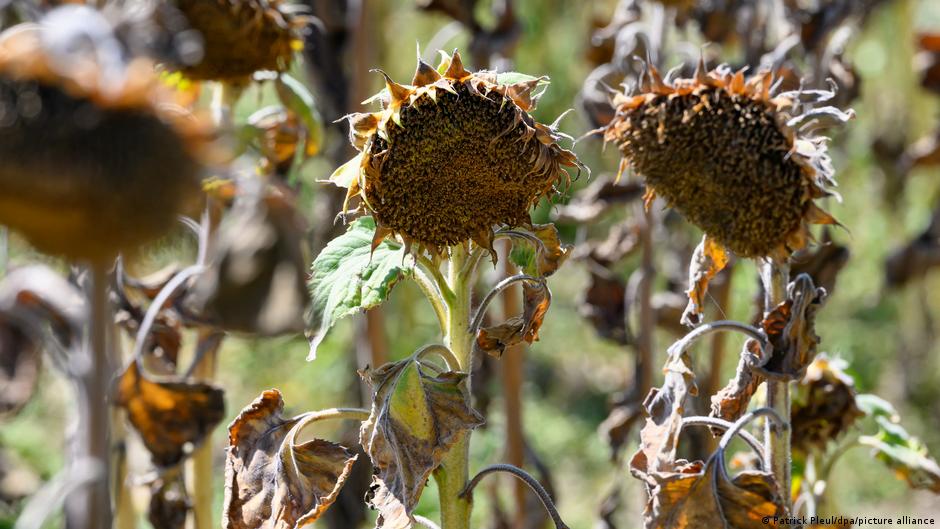
The German Farmers' Association (DBV) on Tuesday warned of a "below-average" harvest due to ongoing drought that has left large areas of farmland severely parched. In a statement, DBV President Joachim Rukwied warned that the country's grain harvest would be 7% lower than last year, blaming an "overly dry spring and a heat wave in the second half of June," which had "significantly damaged many crops." Overall grain production was expected to be 41.9 million tons this year, the DBV said, a shortfall of some 3.3 million tons compared with 2025. Rapeseed saw the largest fall, with 3.3 million tons harvested, nearly 17% lower than last year.
Barley remained at last year's level despite a lower yield, as more land was used to grow the crop. The potato crop was also expected to be below average and some regions would see a "significantly worse" harvest for sugar beet, DBV said. Rukwied noted how location played a bigger role in determining crop yields this year than usual, and pointed to poor crop yields and even crop failures, particularly in southern and western Germany.
To view this video please enable JavaScript, and consider upgrading to a web browser that supports HTML5 video Separately, Germany's Federal Statistical Office warned that the country's apple harvest was forecast to drop 18% compared with last year. Germany is experiencing a severe drought during a summer of frequent record-breaking temperatures, which has exacerbated the effects of below-average rainfall since March, according to the German Weather Service. Agriculture Minister Alois Rainer told public broadcaster ZDF on Tuesday that ministers "don't expect prices to rise immediately," leaving open the possibility of a time lag before consumers pay more for groceries.
However, Philipp Spinne, managing director of the German Raiffeisen Association (DRV), which represents 1,600 agricultural cooperatives, told DW its members had already suffered "pure losses in the field" of €600 million ($696 million). "At the moment, many areas of farming and the chain are not covering their costs," Spinne warned, describing how higher fertilizer, energy and logistics costs were adding to the pressure on farmers. Germany does have a 2 million-ton grain surplus from last year's harvest, according to government data, which could prevent a hike in bread prices.
Yet, the sharp drop in rapeseed and sugar beet production may strain domestic oil and sugar supplies, requiring imports to make up the shortfall. Local media reported last week that the drought had also caused a drastic fall in animal feed stocks in several states, particularly in southern Germany. The German Farmers' Association warned of a reduction in livestock numbers, due to “major challenges” in feed supply.
This could push up prices for meat, milk and eggs. In the hardest-hit areas of the country, potatoes and other vegetables could become more expensive as supply tightens. For most shoppers, however, the main impact is more likely to be gradual price increases rather than shortages.
Extract — continue reading at the source.