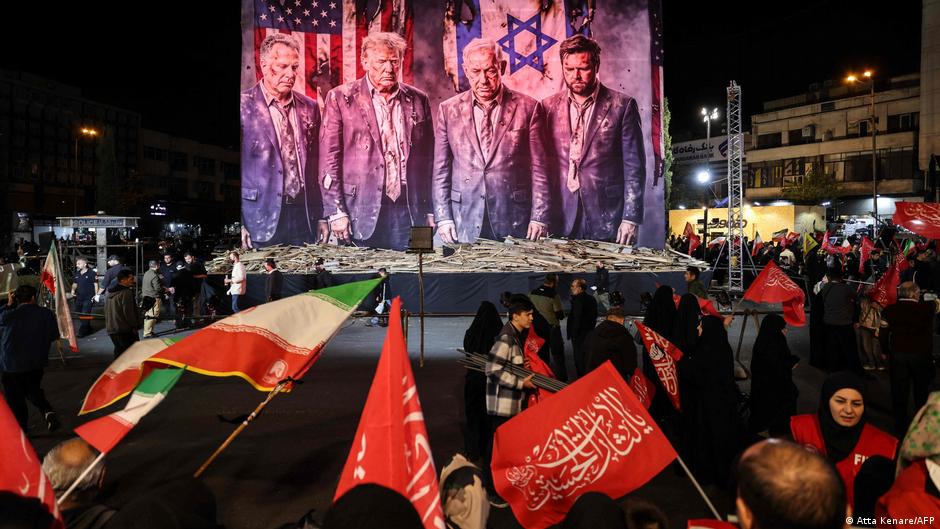
After his party's resounding defeat in the US midterm elections this week, President Donald Trump conceded that the war with Iran had likely played a part. "I think a part of it was Iran, but, at the same time, people understood the importance of what I've done with Iran," Trump told Fox News, conceding that US voters were unwilling to accept the impact of the war on gas prices. Observers say the United States and Israel had been holding off on major attacks on Iran until after both had held elections.
At the end of October, the Wall Street Journal reported that the Trump administration was already warning Gulf state governments to brace for a short, intense military campaign after the midterms. While foreign policy is a US president's purview, analysts have pointed out that a Congress controlled by the Democratic party could ostensibly withhold funding for Trump's military expeditions. However newly-elected Democratic politicians won't take their seats until early next year.
As two US professors of political science wrote for Foreign Affairs magazine this week, past American presidents, like Trump, who become "lame ducks" — that is, a president who loses control of Congress and can't run for another term — have often ramped up international interventions. "As they think about their legacy, lame ducks often turn to foreign policy, where the power of the presidency allows them to act unfettered by pesky domestic politics," they explained. And one of the places where Trump is most likely to act is Iran, the professors argued.
On the other hand, Trump also told several media outlets that he was in "no rush" to start bombing Iran again. Opinions on Iran's next moves are also divided. The Iranians have said they're ready for any attack and rhetoric from senior leaders indicates they may be willing to strike a wider range of targets than previously.
That could include regional energy and economic infrastructure and even undersea telecommunications cabling or data centers. If Iran thinks there is an existential threat to its leadership, then "all bets are off," Ross Harrison, a senior fellow at the Washington-based Middle East Institute, or MEI, and an expert on Iran, said during a virtual briefing hosted by MEI this week. "I think they will target differently in the Gulf states [this time] … so it really depends on how all this unfolds." But other experts believe Iran was deliberately holding out to pressure Trump before the midterms.
Now the election is over, the Iranians may be more willing to negotiate a peace deal. All this leaves the Gulf states, who have been the main targets of Iranian attacks since the conflict began, in a difficult position. "We find ourselves drawn within a crisis that we worked diplomatically very hard to try to avert," Anwar Gargash, a foreign policy adviser to United Arab Emirates leadership, said at a security conference in Bahrain last weekend, the Manama Dialogue hosted by the International Institute for Strategic Studies, or IISS.
Extract — continue reading at the source.