As it grew, tracing the roots of that crime in one direction and its poisoned harvest in another, the book bifurcated. The first part is, or means to be, a novel of ideas. The second turned out to be a novel of feelings.
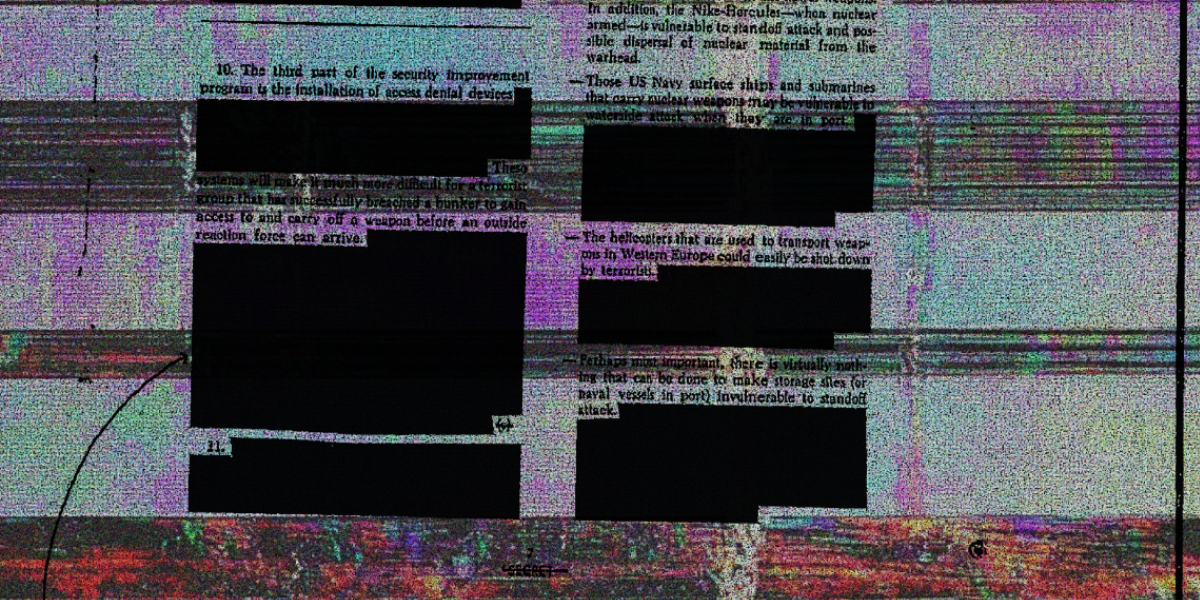
I tried to make both halves cohere, until I realized that they could not, should not—except that they must. Reader, my hope is that the densely cerebral darkness of the first part (whose memo-based narration of one CIA analyst’s semi-plausible deskbound half-century can be justified only by the patterns thus revealed) will be relieved by (1) sparkles of archival fascination and (2) S E C R E T loomings of geopolitical substructure possibly exposed, along with (3) a few fun doings of this selfsame spook and his sister-in-law Lorene. As for the second part, I worked in enough daylight, even if sometimes of a rainy sort, to carry you through several sentences and maybe even into an under-subsection. (Needless to say, the seventh floor prefers to treat both parts as one product.) I promise that A Table for Fortune is as true as I could make it.
The subject was hateful but I could not escape it. Once I was lucky enough to make friends with Juan Tomas, a poet from Equatorial Guinea, who addressed a colloquium as follows: “It is the duty of the poet to speak out not because he is a poet but because he is a member of the community.” It follows that I must speak out not because I can speak but because I am an American. (Who indeed am I to judge American foreign policy from 1966 through 2022?—Nobody, excepting an American.) I tried to represent the flow of decisionmaking over that interval as accurately as my unCLASSIFIED misinterpretations permitted; and if some of my judgments were acid, that was merely because ACIDITY SELLS. How did we get to September eleventh, and into how many feculent sloughs did we crawl from there?
My personal answer (this book) has to do with lessons not learned, with expediencies of power, of course, and most certainly with consciences disabled on all sides, but also with chance, whose effects in combination with ordinary human fallibility, particularly during crises, can be malevolent—as when the U. S. government got panicked by the atrocities of Islamic terrorists into committing torture and launching an unjust war for which it saw the possibilities. As I said, I did my best to be accurate, but let me thank Fortune that this is a work of fiction, so that my mistakes can pass themselves off as imagination!
Besides, the causes and effects of ever so many specific events remain in controversy. For instance, did the Soviets invade Afghanistan out of (a) fear of Muslim insurgency, (b) Iran-cognizant Realpolitik or (c) lust for a port on the Persian Gulf? Then come still more S E C R E T matters: What mortal can chart the ever-altering relationship between the Red Army Fraktion and the Stasi, or between Donald Rumsfeld and Saddam Hussein?
I felt obligated to at least try to figure out where we came from and where we seemed to be going. Why not maunder and meander on about it, at almost necessary length? In its CIA sections this book resembles a 1940s science-fiction novel about Venus.
Extract — continue reading at the source.