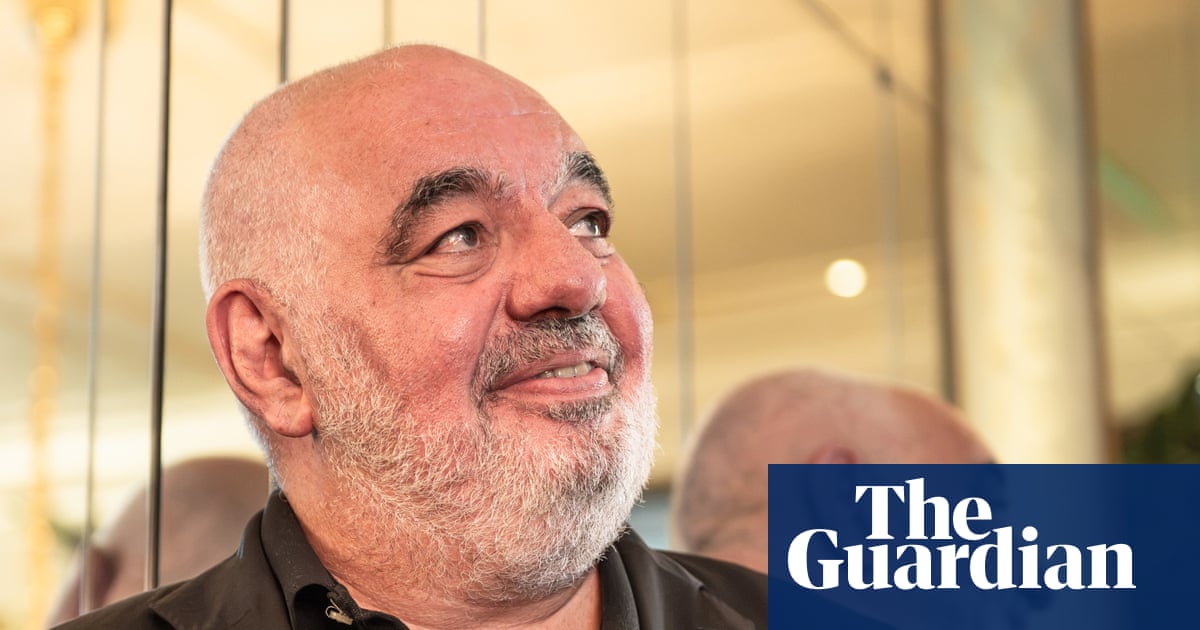
The winner of France’s most prestigious literary prize has admitted using artificial intelligence while writing his novel, barely a day after collecting an award whose jury had thrown out another book over suspected AI use. Philippe Jaenada, who won the Prix Goncourt on Tuesday for L’Inconnue du quai de Javel (The Unknown Woman of the Quai de Javel), told France Inter radio on Wednesday that he had turned to AI “three times” while writing it. The first, he said, was to slip in a sentence written by ChatGPT in order to “play with the reader”.
He said he had revealed which sentence it was only to the Goncourt jurors, on the day of the award. He also included a section of AI-generated text to poke fun at ChatGPT, which gave “completely absurd answers about a technical detail”, and for research. We can’t pretend it doesn’t exist,” said Jaenada, 62.
It has to be useful.” The admission comes after the Académie Goncourt removed Thélyson Orélien’s book C’était ça ou Mourir (It Was That or Die) from its longlist in September. The Canadian-Haitian writer’s debut had been the breakout hit of France’s rentrée littéraire – the period between late August and early November which sees many books published in France – selling more than 35,000 copies and winning the Prix du roman Fnac (Fnac novel prize), before the journalist Samuel Fitoussi ran it through the AI-detection tool Pangram and concluded that much of it had been machine-generated. However, the accuracy of AI-detection software has been called into question.
In a statement on 25 September, the academy said analyses by researchers and journalists showed the novel was “in all likelihood very largely the product of an artificial intelligence”. It said it wanted to protect the integrity of a prize that exists to honour “literature written by women and men”, and to send “a clear message” that it did not endorse texts generated with the help of AI. In an October statement, Orélien described the allegations as “slander and heresy”, adding that “not a single sentence in this book was created by a machine”.
In the same statement, he admitted plagiarism in earlier work, apologising for claiming “as my own texts that are not mine”. The following week his Canadian publisher, Boréal, said new evidence showed AI had been used in the writing process, contrary to the author’s repeated assurances, and ended its relationship with him. Jaenada had defended using AI before the award.
But he insisted AI “will never be able to write a book with its heart, its soul, its memories”. The contrast has prompted some accusations of a racial double standard online. Another said Jaenada had faced “no media lynching, no banishment” over his use of AI – “a leniency denied to Thélyson Orélien”.
Extract — continue reading at the source.