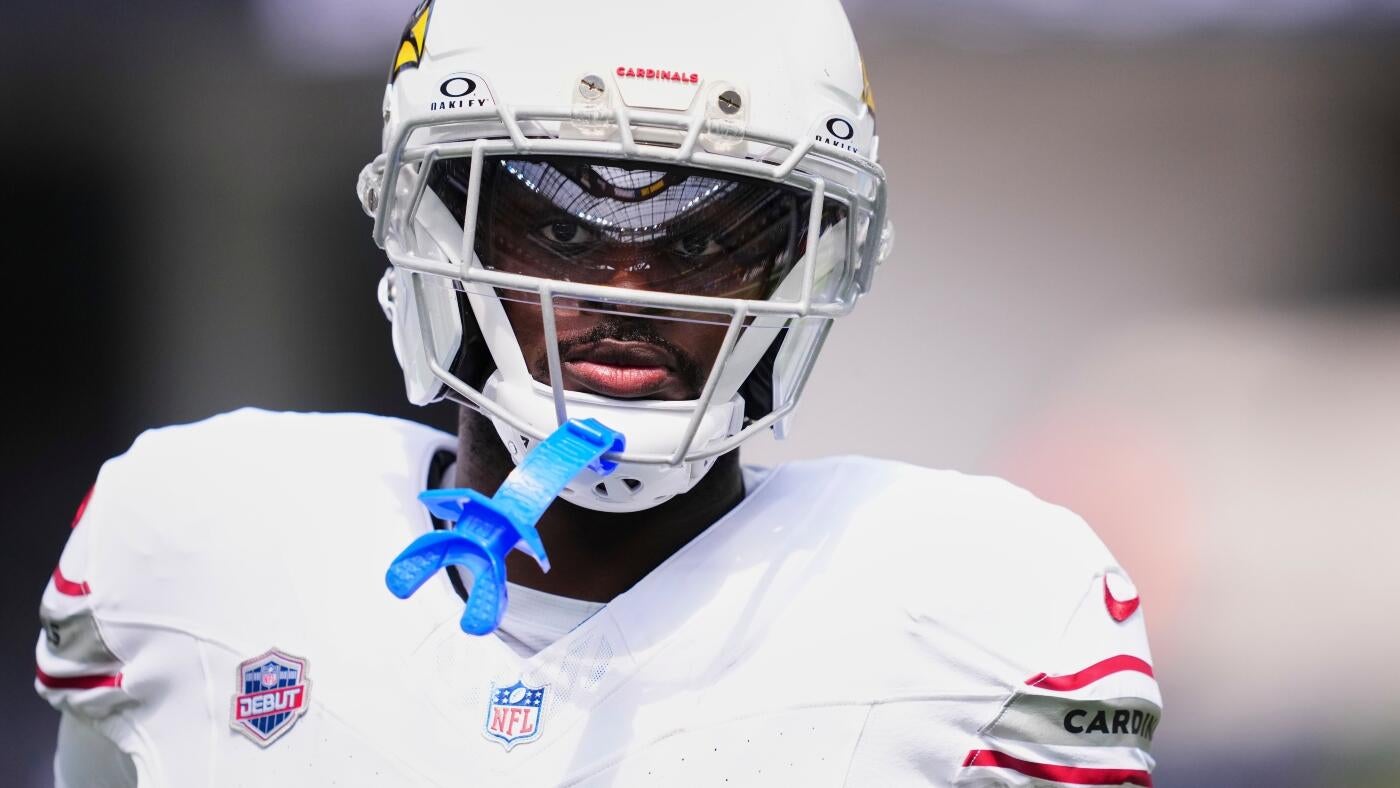
Dante Moore's season is over, and with it, his last opportunity to answer some lingering questions about his NFL future. But here's the thing: The concussion that sidelined Oregon's quarterback is not the biggest concern for teams considering investing a first-round pick in him next April. "I think they're going to have more questions about the variance in play as opposed to the concussion," former Titans general manager Ran Carthon said Wednesday on the With the First Pick podcast, which we co-host.
"The bigger question for NFL teams is going to be what happened this year at Oregon." And that's where things get complicated. Moore entered 2026 as my QB1 and the No. 1 overall prospect on my big board. He had the arm talent, accuracy and ability to make throws that easily translate to the NFL.
Had he declared for the 2026 draft instead of returning to Oregon, he would've been the second QB off the board after Fernando Mendoza, almost certainly going to the Jets at No. 2 overall. Instead, Moore returned to Eugene with a chance to cement his status as a top-five pick in 2027. Four games later, he suffered a concussion against USC, and Oregon coach Dan Lanning confirmed this week that his season is over.
Now, NFL teams face a dilemma: How much should they trust the quarterback who looked like a future face of the franchise a year ago when his abbreviated 2026 season magnified some of the questions he returned to school to answer? Moore's 2025 season was the reason so many people, myself included, were excited about his NFL future. He threw for 3,565 yards and 30 touchdowns, helped lead Oregon to the College Football Playoff semifinals and looked comfortable and confident running Will Stein's offense.
He could drive the ball into tight windows, layer passes over defenders and attack vertically with touch and precision. His downfield accuracy was among the best in college football. And when he had time to operate, he looked every bit like an NFL starting quarterback.
But as I wrote before the season, there were reasons to pump the brakes on the idea that Moore was already a finished product. He wasn't nearly as effective under pressure, and his ability to consistently work beyond his first read remained a work in progress. He could make the spectacular throw, but the routine stuff -- identifying where to go with the football when his first option wasn't available, navigating a collapsing pocket, finding answers when defenses took away his initial plan -- wasn't always as convincing.
Extract — continue reading at the source.