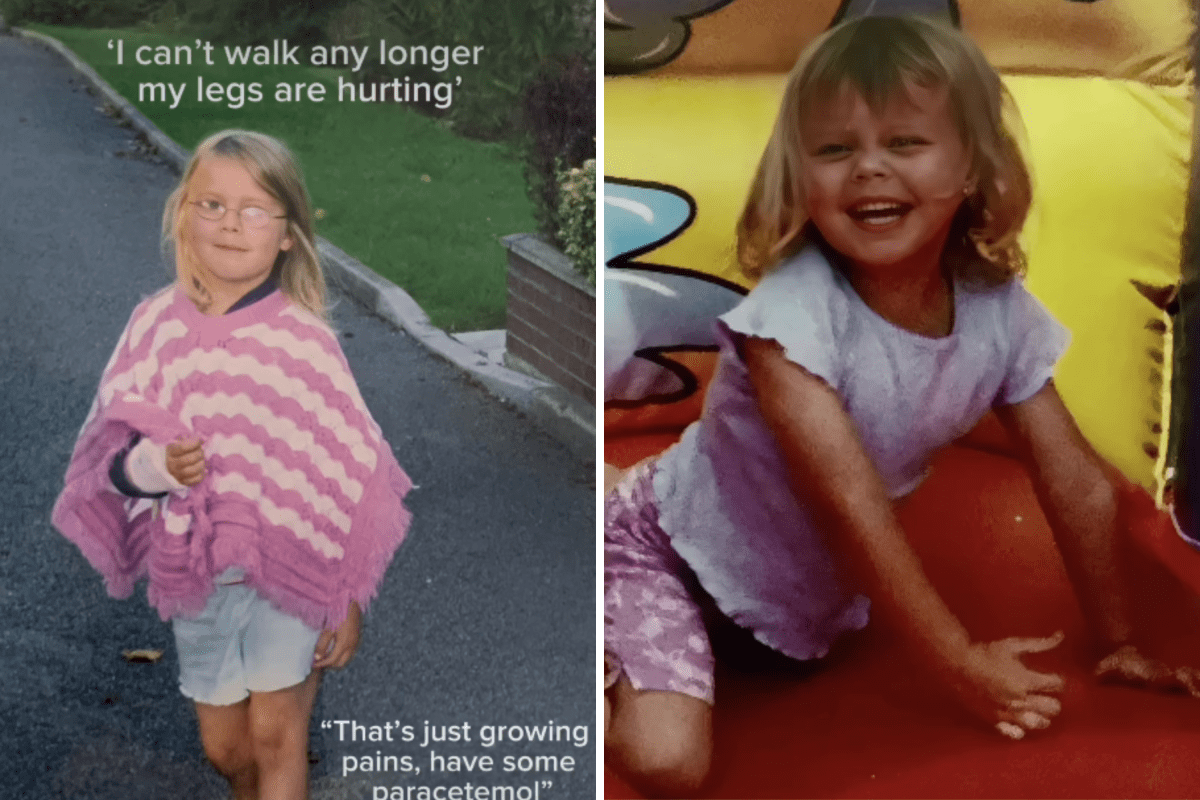
A woman has shared her story of suffering from pain since childhood and only getting a diagnosis as an adult. Leah Mattson, 28, is from Hereford in the United Kingdom, and went undiagnosed for 27 years, despite complaining of pain since she was very young. "The experience of being undiagnosed for years was awful," she told Newsweek.
"I was constantly back and forth to the doctor with problems in my body that never had answers, bowel problems and hemorrhoids from a young age, severely heavy and painful periods, which I assumed was the norm because no one ever advocated for me." She recalls being a very young child, and complaining that she couldn't walk because her legs were so sore. But she was simply told to take over-the-counter painkiller as it was likely just growing pains. Now, Mattson says, the signs were always there, and it should not have taken so long for her to be diagnosed.
At the age of 27, Mattson was finally diagnosed with hypermobile Ehlers-Danlos syndrome (hEDS)—which she says only happened when she advocated hard for herself. "They only entertained referring me to [a rheumatology specialist] because I heavily researched it and came to them with all the information and criteria checklist to show the doctors that I met every single criteria," she wrote in an Instagram post to @leahinreallife highlighting the syndrome and her story. "It is exhausting being your own health advocate." Mattson told Newsweek that she feels awareness about EDS is "extremely important, because appropriate measures can be put in place for younger children," from physiotherapy to knowing to avoid impact sports.
And while this "doesn't help everyone, it's a start." According to the Mayo Clinic, symptoms of hEDS include overly flexible joints, stretchy and fragile skin, along with musculoskeletal pain affecting the muscles, bones, joints, ligaments or tendons. EDS is believed to be caused by changes in genes that affect connective tissue, affecting how the body makes or uses collagen. There are 13 recognized types of EDS, according to the Ehlers-Danlos Society, with hypermobile EDS the most common.
Most types of EDS are inherited from a parent, however the genetic cause of hEDS is not fully understood. It is often diagnosed based on other symptoms, rather than the results of a genetic test. Mattson, who recently spoke at a protest outside government buildings in London to raise awareness of the number of young people who struggle to be diagnosed by the National Health Service, said that her type of EDS "doesn't carry all of the same diagnostic criteria as the other kinds." "Raising awareness is so important," she told Newsweek.
"Ehlers-Danlos itself cannot be cured, but it comes with a lot of other comorbid conditions, [and] if doctors are aware you have EDS, they can treat the comorbid conditions." She said it took her two years to obtain treatment for postural orthostatic tachycardia syndrome (PoTS) as her EDS had not been diagnosed at the time. According to PoTS UK, hEDS is commonly associated with PoTS, and a 2020 survey found that 31 percent of participants with PoTS also had hEDS, while 55 percent met the criteria for being hypermobile. Contact Newsweek editors on this story: Rebecca Flood and Tony Phillips.
Extract — continue reading at the source.