Around the release of Pet Shop Boys’ 1988 album Introspective, Neil Tennant coined the term “imperial phase” to describe an era when he felt the duo “understood the essence of pop music and so we felt we could do what we liked”. For his less flowery partner in pop excellence, Chris Lowe, this was typically followed “by disappearing up your backside!”. In 2010, critic Tom Ewing fleshed out Tennant’s term by imposing three criteria: “command, permission, and self-definition”.
Command related to an artist’s willingness and ability to push boundaries in a way that would reverberate through what followed. Permission, meanwhile, connected to the public and their goodwill towards an artist as they pushed things forward. Finally, self-definition, Ewing said, is the way the imperial phase defines the rest of the artist’s career.
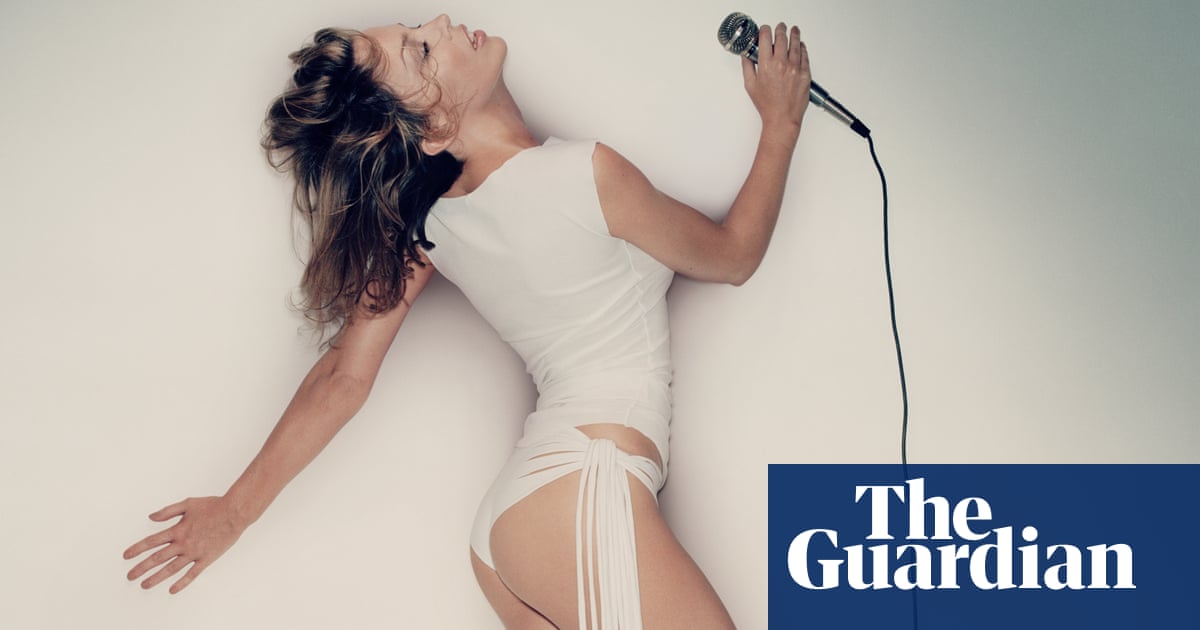
All future work will be compared with, or mentioned alongside, the output from the imperial phase. By the time Kylie’s album Fever dropped, everything in its subsequent era represented her very own imperial phase. Everything she did in 2001 and 2002 seemed to click perfectly: every video, every choice of single, the tour, the press attention, the fashion, the cohesiveness of the vision, the way she reshaped pop and nudged it forward.
And it was all led by the hypnotic weightlessness of the downright odd Can’t Get You Out of My Head. The song was born one autumn weekend in 2000 in a garage studio in Surrey belonging to former Mud guitarist Rob Davis, who had been encouraged by manager and impresario Simon Fuller to write some songs with the excellent pop star turned songwriter Cathy Dennis. On the Sunday, using Cubase on a Mac computer to create a drum loop before adding some guitar, the seed of Can’t Get You Out of My Head was planted.
While Dennis came up with the title hook – the song, as she noted, doesn’t really conform to a typical verse-chorus structure, with each line almost acting as its own chorus melody – it was Davis who added the “‘la la la” section. The demo was finished in three hours, while Dennis’s vocals were laid down by 7pm that same day. The demo was played to Fuller down the phone.
He later played it for S Club 7, but they passed on it. The song was also presented to Sophie Ellis-Bextor, but again it was deemed unsuitable. It was Fuller’s idea to send it to Kylie.
Extract — continue reading at the source.