Ukraine’s President Volodymyr Zelenskyy has defended the leaders of Finland and Norway for reaching out to Russian leader Vladimir Putin as part of efforts to reach a peace deal. In a 90-minute call on Tuesday, Finland’s President Alexander Stubb and Norwegian Prime Minister Jonas Gahr Støre urged Putin to end his war on Ukraine. But some European leaders felt the call was a mistake, criticizing Stubb and Støre for undermining Europe’s unity in dealing with Russia’s president, who has been largely frozen out after launching his full-scale invasion of Ukraine in February 2022.
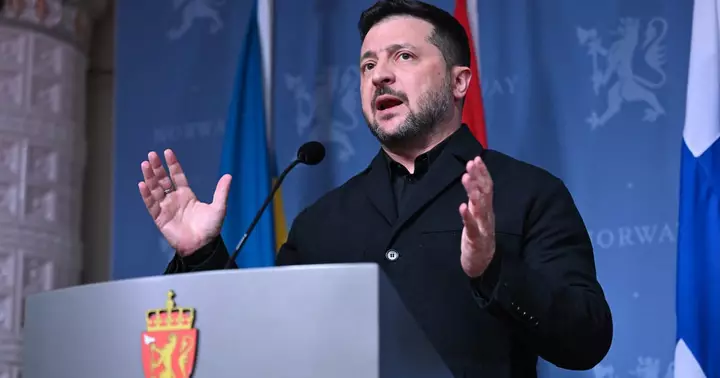
Speaking to reporters Tuesday, Zelenskyy praised the two Nordic leaders for their help, saying he had a “positive” view of them. They truly help,” Zelenskyy said. The Ukrainian leader said Putin had been taken out of diplomatic isolation last year when U.S.
President Donald Trump met him in Alaska. Finland and Norway are showing that they want to open another channel of communication, so that Europe can receive information not only through the United States and Russia can hear certain things directly,” Zelenskyy added. The question of whether — and how — Europe should talk to Putin is a sore subject for officials and diplomats among Ukraine’s allies in the EU and beyond.
On Tuesday, Danish Prime Minister Mette Frederiksen said she was “very skeptical” about the Finnish-Norwegian joint call and Swedish Prime Minister Ulf Kristersson said peace must come through “strength” rather than “appeasement” of Russia. One official from a national capital, granted anonymity like others to speak candidly about sensitive issues, said formats like the E3 (Germany, France and the U.K.) worked well. Fracturing the unified European voice by letting each country start its own talks with Moscow would be a bad thing, the official added.
The Italian government was irked by Stubb and Støre’s call with Putin, with officials saying it exposed Europe’s failure to agree who should represent the region in peace talks. A government official from Rome warned that separate national initiatives and constantly shifting diplomatic formats risk further eroding influence, saying Europe “cannot continue to act randomly and in formats that change from week to week.” Rome wants the urgent appointment of representatives with a shared European mandate to defend the continent’s interests and security. The reaction from the Brussels institutions to the Norway-Finland initiative has been muted so far, while hinting at the sensitivity of the subject.
Extract — continue reading at the source.