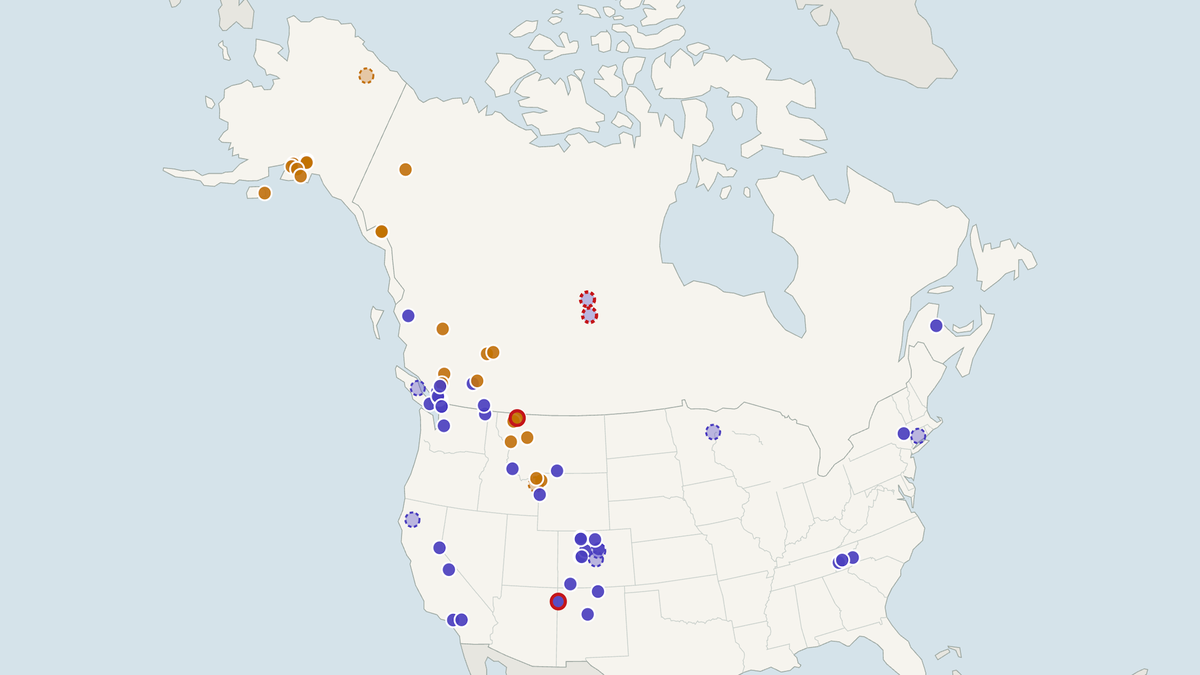
In 2026, at least 73 black or grizzly bear attacks have been documented across North America ( d 3:30 A.M. on October 7, a black bear sow and her two cubs broke into a man’s house near Salmon, Idaho. To protect his two sleeping daughters and wife, the man, Brian Heidemann, tackled the mother bear and put it in a chokehold. Heidemann suffered bite wounds and deep gashes on his head, torso, and shoulder.
Eventually, state officials euthanized the three bears. The incident is another example of how bear-human encounters seem to be on the rise in 2026, as drought and food shortages have driven animals into neighborhoods and towns in search of food. Yet, quantifying encounters and even bear attacks on humans is surprisingly tricky.
No national database tracks bear attacks on humans across the U.S. Instead, state agencies tally this data independently. This information gap is where Mike Dickerson, 71, saw an opportunity.
A Texas outdoorsman and writer, Dickerson noticed what he said seemed to be an uptick in reports of bear attacks and encounters across North America. Of the 73 total encounters, 64 were bear attacks that resulted in an injury or death. Bear experts describe an attack as any time a bear physically injures a person.
A bear encounter, meanwhile, is when a person comes into contact with a bear. Dickerson said his list wasn’t meant to distinguish these nuances, but to document reported interactions, such as a bear bluff-charging a person, and direct attacks. Outside sent the list to Chris Servheen, the former national grizzly bear recovery coordinator for the U.S.
Fish and Wildlife Service, who crunched the numbers. According to Servheen, more than two-thirds of the incidents on Dickerson’s list involved black bears, while dogs were involved in a quarter of all bear attacks. Furthermore, he noted that: “Remember that these are usually reported due to an injury or a serious event,” Servheen told Outside.
Extract — continue reading at the source.