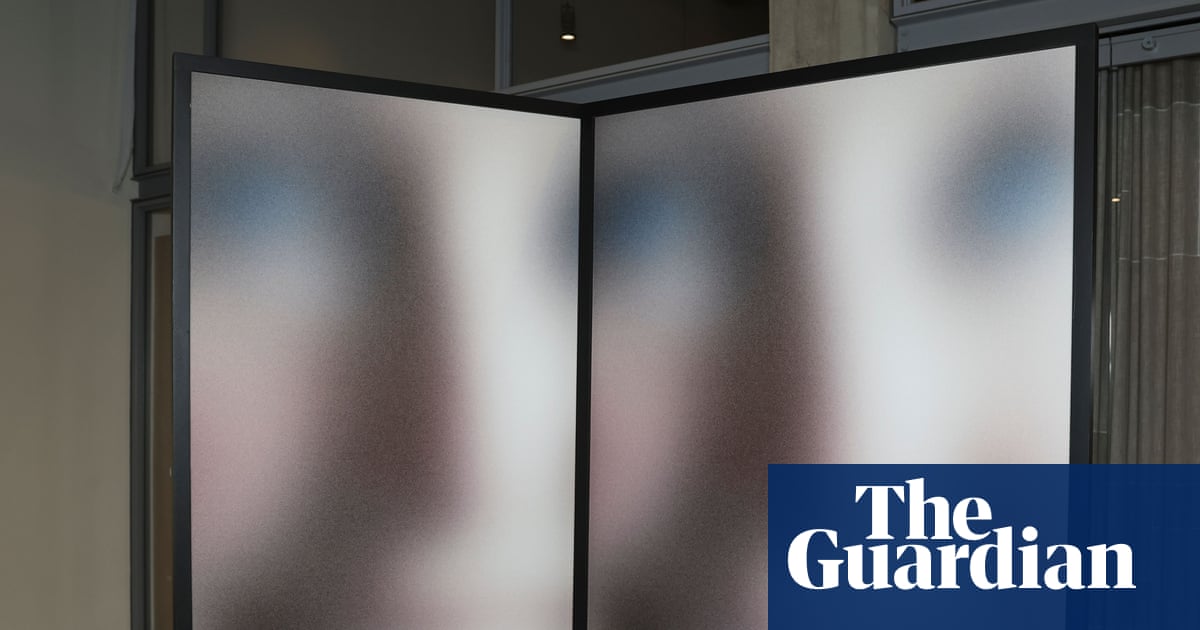
When I see a film a second time during its theatrical run, it’s typically to take someone else who hasn’t yet seen it, at least in part hoping to witness their reaction to a piece of art that excited or moved me in some way. Seeing Lance Oppenheim and Nathan Fielder’s You Can See Everything a second time in New York City on a Saturday night was that impulse writ larger. This is a movie garnering a surprisingly sizable audience, and outsized audience reactions to go along with it; rewatching it in a full 300-seat auditorium offered the opportunity to re-experience that sense of discovery.
Perhaps more to the point, almost everyone I knew had seen it already; all I could do was observe strangers. This documentary, peering into (and helping to create) a hall of mirrors around the famed med-tech scammer Elizabeth Holmes, has become the box office story of the fall, actually rising 25% on its second weekend to gross another $19.5m – a rare feat even given its expanded screen count. With over $45m in North America, it’s already one of A24’s biggest movies ever; it could wind up in the company’s top three, and way up on the list of the highest-grossing nonfiction features.
If You Can See Everything isn’t quite an Obsession-level cash cow, it’s probably even more surprising that a three-hour documentary whose existence was only announced about eight weeks ago is on track to make more money than high-profile new releases like Practical Magic 2, Verity and Street Fighter, among others. It’s also outgrossed co-director Oppenheim’s fellow A24 surprise hit Primetime, which has the benefit of genuine movie star Robert Pattinson. A few of the viewers I spoke with following the 8pm showing of You Can See Everything at New York’s AMC Empire (typically one of the highest-grossing venues in the country for any number of new releases, where Everything is currently showing on three to five screens depending on the time of day) had also seen Primetime, aware of the connection between the two films.
Just as many, however, were not high-frequency moviegoers, at least not by New York standards. Despite an obviously youthful demographic – perhaps owing to the high tolerance for hustle and/or bustle required to trek out to Times Square, I couldn’t find anyone over 30 – there were several viewers who hadn’t been to the movies in months. (The answer to the question of what movie they last saw in theaters ranged from the month-old Primetime to the obligatory summer mega-blockbuster The Odyssey to, yes, Obsession.) Hardly anyone claimed to be a documentary aficionado, either; no one cited a recent documentary they had seen in theaters, saying they were more likely to catch that sort of thing on streaming, if at all. So what drew them to a big-screen experience featuring both an entertainer (Nathan Fielder) and a subject (Elizabeth Holmes) more closely associated with television?
Most of the twentysomethings I spoke with had some combination of familiarity with Fielder’s more overtly comic work – one woman said this seemed “on brand” for him – and awareness of the notoriety of Holmes, the latter usually stemming from the non-documentary TV series The Dropout, which also figures into the film. Each seemed to provide a surprise hook for a big-screen feature – like a more thoughtful version of seeing a movie because it has Anne Hathaway or Spider-Man (not that there’s anything wrong with following either of those into the dark). To a cinema diehard, this seemed almost counterintuitive; were people really being enticed into theaters by faces they knew largely from couch-bound TV binges?
Was this effectively serving as a three-hour crossover between The Dropout and The Rehearsal? There was a sense that this unexpected team-up was part of the sell, with the WTF nature of that idea intact. The extra promise, though, seemed to be that You Can See Everything would offer something more surprising and less easily spoiled than a typical streaming event.
Extract — continue reading at the source.