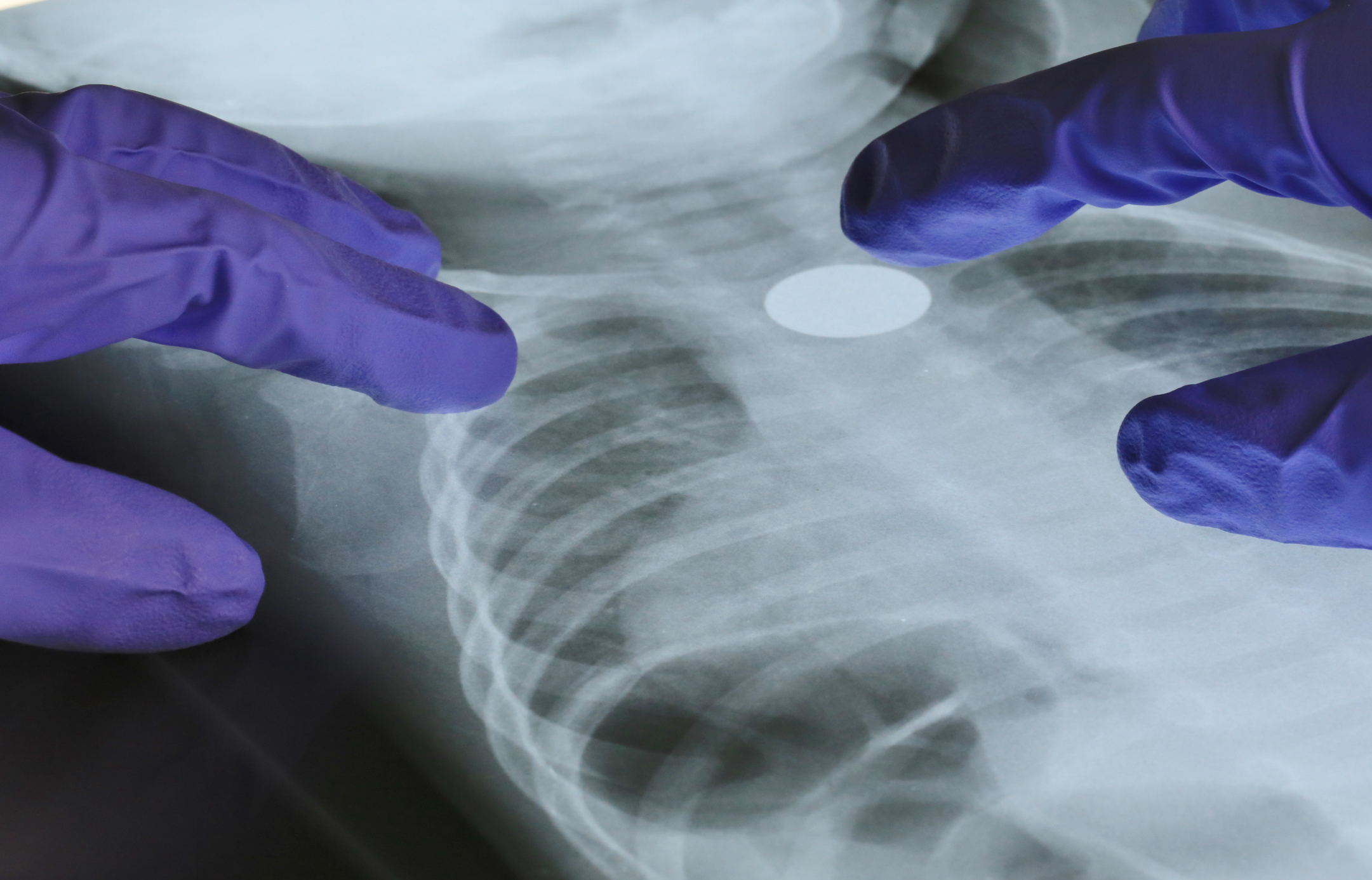
Smoking is one of the biggest contributors to lung cancer, but anywhere from 10-20% of cases in the U.S. each year are diagnosed in people who never smoked. In a new study published in Science, researchers report that for some of those cases, an inherited genetic mutation might be involved. Jaclyn LoPiccolo, an attending physician and lung-cancer researcher at Dana Farber Cancer Institute, found that people with a mutation in the EGFR gene had a 25-fold higher risk of developing lung cancer compared to people without the mutation, regardless of whether they smoked.
When the researchers looked just at nonsmokers, the risk was even higher: carriers of the mutation had a 60-fold higher risk compared to nonsmokers who didn't have the mutation. Since nonsmokers have a lower chance of developing lung cancer than smokers, this jump in risk reflects how strongly this genetic mutation might impact risk, LoPiccolo says. The findings add to growing knowledge about what is driving lung cancer in people who don’t smoke.
A handful of genetic mutations have been linked to lung cancer in nonsmokers, including some that appear to be more prevalent in Asian people who get lung cancer, as well as inherited mutations like BRCA2, but they aren't well understood. While the specific EGFR mutation in question, called T790M, was first discovered in a European family in 2005 with members who hadn't smoked but had developed lung cancer, it wasn’t clear how much the mutation, which is rare, actually contributed to lung cancer. LoPiccolo and her team used a large data set of genetic samples from the genetics company 23andMe to determine how much of an impact the mutation has on lung cancer.
The findings open to door to considering how genetic testing might fit into lung-cancer screening. Currently, screening—in which people receive a low-dose radiation CT scan to look for lung cancer—is only recommended for people with a heavy smoking history who are above a certain age. A personal trainer in Virginia Beach, McKenna was diagnosed with lung cancer in 2016, despite never smoking or working in areas where he might have been exposed to environmental risk factors like radon.
His doctor ordered a genetic test of fluid drained from his lung and learned he carried the EGFT T790M mutation. A biopsy from his lung lesion confirmed the mutation, and he started on a targeted therapy, which he continues today, designed to specifically neutralize his mutation. But I could feel my life coming back.” A few months later, his daughter, who is now 33, was diagnosed with melanoma in her ear and was asked about her family history of cancer.
She joined a study and provided samples to look for markers of cancer, and while she did not carry many common cancer mutations, she did carry T790M. But for now, there are no evidence-based recommendations to follow when it comes to how she should be monitoring her lungs for signs of cancer. "If something were to appear, she can catch it at an early stage, perhaps Stage I, and not go through Stage IV, because there are not as many options, and the outlook is not as positive.” LoPiccolo is conducting a study, called INHERIT, which includes people from across the country with any inherited genetic risk for lung cancer, including the EGFR T790M mutation.
Extract — continue reading at the source.