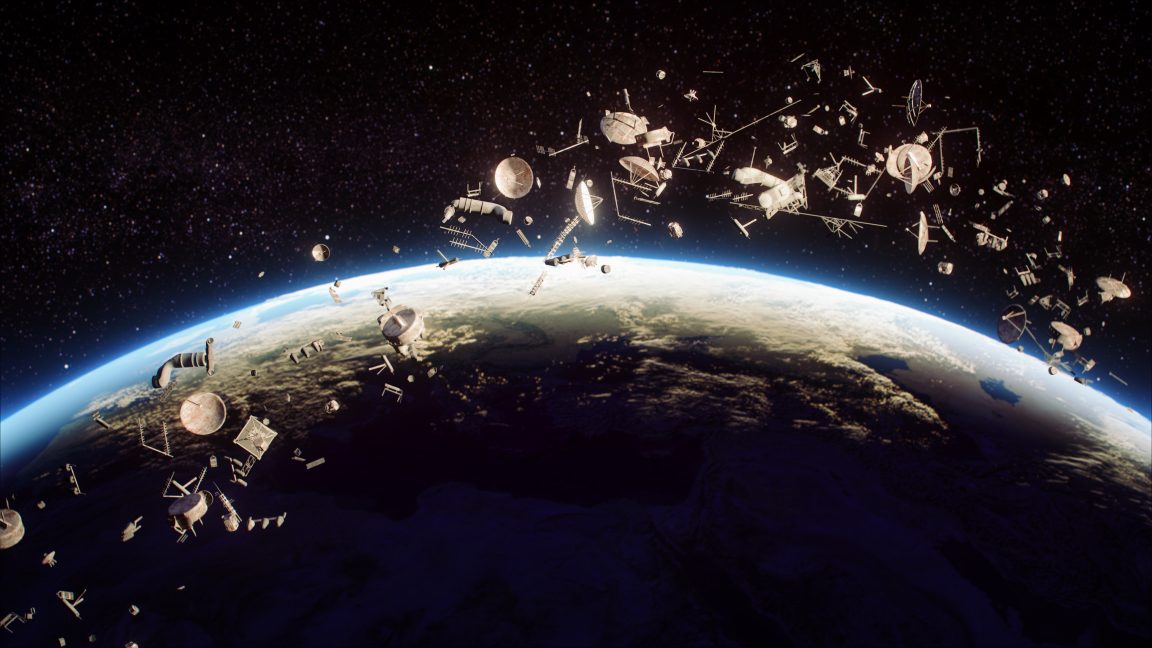
The 2013 sci-fi blockbuster film Gravity, starring Sandra Bullock and George Clooney, popularized the notion of the Kessler syndrome. In the movie, Russia shoots down a defunct satellite and creates a cloud of debris, leading to serious tension in orbit. The movie is fantastic, a true thriller, and while some liberties were taken with the depiction of outer space, the basic premise of a cascading series of collisions rendering orbits too cluttered with debris to be usable is valid.
The idea was first proposed by NASA scientists Donald Kessler and Burton Cour-Palais nearly half a century ago. Still, the movie was science fiction, right? Well, a lot has changed since Gravity‘s release.
At the time that theatergoers were sitting on the edges of their seats and watching Bullock dodge debris, there were only about 1,000 active satellites in orbit. Today, that number is closer to 17,000, according to CelesTrak. The preponderance of this growth has been driven by SpaceX’s Starlink constellation, which now has approximately 11,000 satellites in orbit, with many thousands more on the way.
And SpaceX is not alone in the race to provide Internet from space. Amazon has launched hundreds of satellites, with thousands more to follow. Multiple Chinese Internet constellations are likewise in progress.
Then there are the orbital data centers, which may produce hundreds of thousands of satellites. We’ve written a lot about these constellations, and they have generated a bunch of questions. Most prominent among them: Just how sustainable is all of this?
Will we see the Kessler syndrome play out in real time? It depends on who you ask, so let’s start with the glass-half-empty and glass-half-full outlooks.
Extract — continue reading at the source.