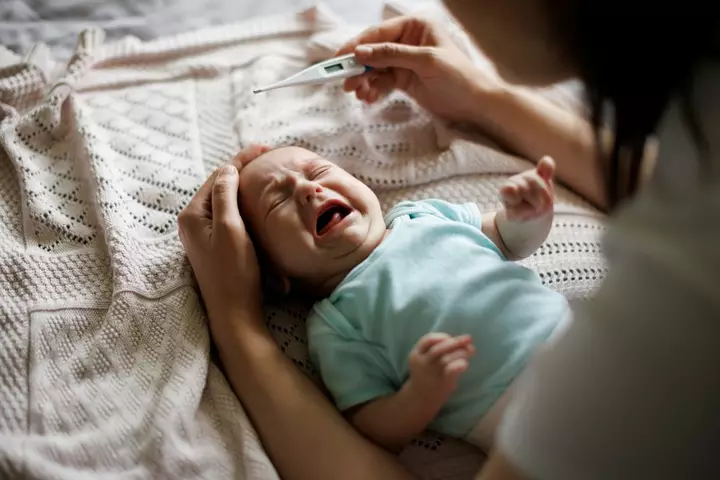
Mona Amin explains why RSV hits babies harder, which symptoms mean it’s time to call the doctor, and what to ask at your next pediatrician visit. If you're a parent or soon-to-be one, you've undoubtedly heard of RSV. But if you're anything like me, you may still be a little fuzzy about what it really is, perhaps even filing it away in your brain as "just a bad cold." And for older kids and adults, that's often true.
For babies, though, it can be a very different (and more serious) story. The season for respiratory syncytial virus (RSV), which is common and extremely contagious, generally runs from fall to spring in the U.S. In other words, now is a great time to get informed.
Scary Mommy spoke to board-certified pediatrician Dr. Mona Amin, who has partnered with Sanofi on its RSV awareness campaign, about why RSV is a big deal for infants and the warning signs every parent should know. But for some, RSV can affect the lungs and breathing passages.
This is true for people with underlying conditions like asthma, and it’s especially true with babies. The virus causes significant inflammation in the airways, particularly in the lower airways. That can lead to conditions like bronchiolitis (inflammation of the small airways in the lungs) or pneumonia in young babies and children.
The really tricky part: There’s no reliable way to know which babies will get seriously sick. Before speaking with Amin, I was shocked to learn that two out of three babies get RSV by the time they turn one, and it’s a leading cause of hospitalization for babies under one. And of those babies who are hospitalized, more than 75% are healthy, with no preexisting conditions.
Of course, that doesn’t mean that every baby who gets RSV ends up in the hospital. But what it does mean is that parents who have healthy babies shouldn’t assume they’re in the clear. Well, one prevention option is Beyfortus, a monoclonal antibody for infants.
Extract — continue reading at the source.