Acetaminophen (APAP) is the most widely used analgesic during pregnancy, yet its effects on prenatal human brain development remain incompletely understood. Epidemiological studies have reported inconsistent associations between prenatal APAP exposure and later neurodevelopmental outcomes, underscoring the need for mechanistic evaluation in human-relevant developmental models. Here, we examined how APAP influences early cortical development using induced pluripotent stem cell-derived cortical organoids (COs) generated from six independent lines.
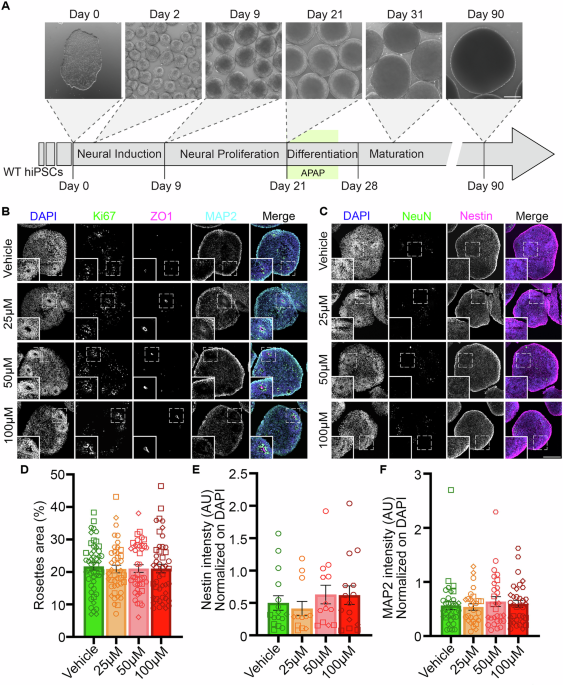
Organoids were exposed to physiologically relevant APAP concentrations (25, 50, and 100 μM) for 5 days beginning at day 21 of differentiation, corresponding to late first-trimester cortical development. We assessed organoid growth, apoptosis, differentiation, synaptic maturation, transcriptomic profiles using bulk and single-nucleus RNA sequencing (snRNA-seq), and functional network activity using multielectrode array recordings up to 4 months. APAP exposure did not affect organoid size, cytoarchitecture, or viability.
Neuronal and progenitor cell proportions, as well as synaptic puncta density were unchanged. Bulk RNA-seq revealed subtle transcriptional changes only at the highest dose (16 differentially expressed genes at 100 μM), enriched for neurodevelopmental pathways. In contrast, snRNA-seq at 3 months revealed no changes in cell type composition or gene expression.
Consistent with the limited molecular changes observed, electrophysiological measures including firing rate, burst frequency, and network synchrony, showed no significant differences from controls. Together, these results indicate that direct exposure to parent APAP at the concentrations tested produces minimal molecular perturbations. These findings reflect responses to parent acetaminophen in vitro and do not exclude metabolite-mediated or systemic effects in vivo.
Acetaminophen (APAP) is the most commonly used analgesic and antipyretic during pregnancy, reported in over half of women worldwide [1, 2]. Its popularity reflects a favorable safety profile: unlike Non-Steroidal Anti-Inflammatory Drugs (NSAIDs), it does not increase gastrointestinal or cardiovascular risks, and unlike opioids, it carries no risk of dependence or respiratory depression [3, 4]. For decades, APAP has therefore been considered the drug of choice for managing pain and fever in pregnancy.
Concerns have increased, however, because APAP easily crosses the placenta and enters the fetal brain [5, 6]. Over the past decade, epidemiologic studies have reported associations between prenatal APAP exposure and neurodevelopmental disorders (NDDs) including Autism Spectrum Disorder (ASD) and Attention-Deficit Hyperactivity Disorder (ADHD) [7,8,9,10,11]. Several studies suggest exposure-response relationships, especially with long-term use or exposures during the late first and second trimesters [9, 12].
Extract — continue reading at the source.


