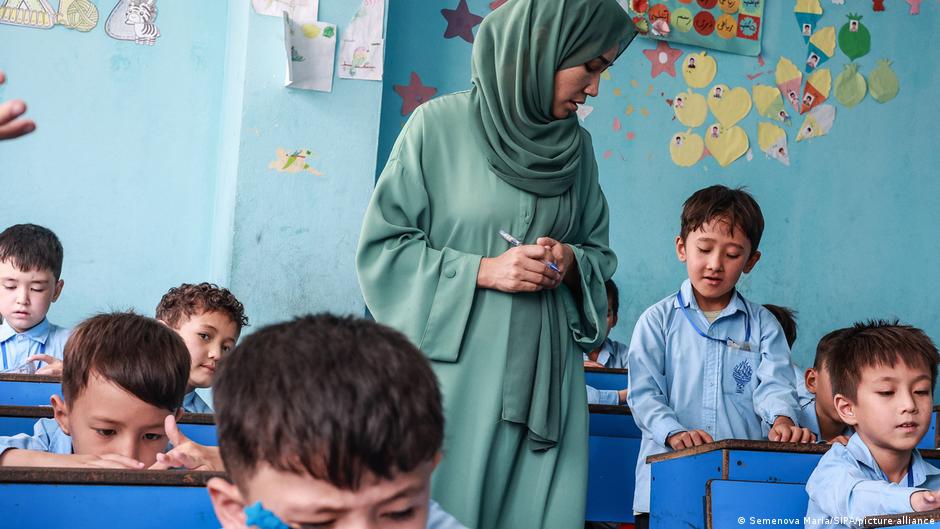
"Afghanistan is estimated to have the second lowest female labor force participation rate worldwide, at only 5.1% in 2026, against the backdrop of severe restrictions in women's access to education and employment," the ILO wrote. It called for urgent steps to counter women's "severe exclusion," also saying this was essential to buttress the Afghan economy's resilience more generally. The Taliban rapidly returned to power in August 2021 amid a pullout by the US and other NATO forces, ending a 20-year period when women enjoyed comparatively improved economic and educational liberty after years of hardline Islamist rule.
The UN organization warned of "significant demographic and institutional changes" in the labor market since 2021, many of them disadvantaging women. "Afghanistan cannot build a resilient labor market while such a large share of its population remains excluded from economic activity," said Tite Habiyakare, senior coordinator and head of the ILO office for Afghanistan. The report said that Afghanistan's labor market remained "under considerable pressure" five years after the Taliban takeover, having only moderately recovered from the crash of 2021.
Afghanistan's GDP tumbled by around 15% when the Taliban returned amid the COVID pandemic and western troops and funds flowed out. It remained deep in negative territory in 2022 and had just barely clawed its way into positive growth territory since, falling well short of returning to its pre-Taliban levels. Employment numbers have started to rise in absolute terms, but not fast enough to keep up with population growth — either domestic or as a result of emigrant returns — meaning the share of people in work is flatlining at just under one-third of the population.
The paper also called for increased investment in representative labor force data-gathering, warning that its data was reliant on modeling estimates that "are subject to considerable uncertainty and should be interpreted with appropriate caution." To view this video please enable JavaScript, and consider upgrading to a web browser that supports HTML5 video Large-scale returns of emigrants, particularly from Iran and Pakistan, have become "one of the defining labor market challenges facing Afghanistan," the report said. More than 6 million Afghans returned from Iran and Pakistan between 2023 and the end of May this year, with the surge driven "by a combination of policy, economic and security factors." The report noted World Bank projections suggesting that this could drastically halve the influence of remittance inflows into the Afghan economy, from around 4% of GDP in 2020 to around 2% of economic output by 2025. "Since February 2026, the Middle East crisis has added further uncertainty for Afghans residing in Iran, alongside the continued implementation of returns policies," the ILO said.
Finally, the ILO warned that the war in Iran posed additional risks for Afghanistan — in terms of general inflation, food and fuel prices, trade and transport disruptions, and increased potential returns from Iran. Around 70% of workers, partiularly less skilled ones, were at least moderately exposed to factors relevant to the crisis like energy prices, the report found, with roughly 30% facing only slight exposure. It noted a steep rise in inflation figures in the past 12 months, rising from less than 1% in May 2025 to around 8% by May 2026, and warned that such increases "disproportionately affect poorer households and reduce real earnings, particularly among informal workers." If you rely on our team for trusted reporting, please take a moment to select us as your Preferred Source on Google, so you'll always see our verified news first.
Extract — continue reading at the source.