Like much modern fantasy, Philip Pullman’s _His Dark Materials_ series features magical objects. Each book in the trilogy is named after one; the second is _The Subtle Knife_. This knife looks unremarkable, but when wielded by the right person, it can cut a hole in the world — a portal into an alternate universe.
Unfortunately, the portal’s edges also turn out to be a wound in the fabric of reality … and the wound bleeds. Sinister, invisible _things_ leak out, hungry ghosts that prey upon the living. To banish these ghosts, the tear in reality must be closed.
Among early modern Europeans, magic was not only taken seriously but was inseparable from mathematics, science, and religion; all fell under the rubric of philosophy. That was increasingly the case in the 17th century. As our understanding of the physical world grew, mounting pressure came to bear on magic and religion to explain what science still could not: life and the mind.
How could mere matter feel anything, exhibit agency, or reproduce? How could _we_ be mere matter? With his “mechanical philosophy,” French polymath René Descartes (1596–1650) forged the subtle knife that promised to resolve this metaphysical crisis by cutting the sciences free of their spiritual encumbrance, severing bodies from souls.2 The trick was to deny the existence of the lower two of Aristotle’s three levels 3 of ensoulment: the “nutritive,” possessed by all life forms including plants, and the “sensitive,” possessed by animals.
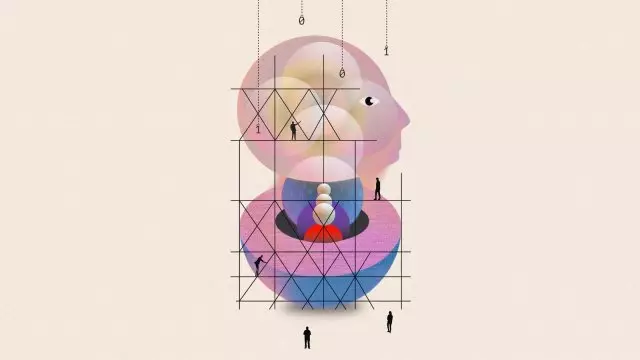
Per Descartes, investigable, clockwork-like mechanisms could fully account not only for the inanimate world but also for plant and animal behavior, without any need for a supernatural animating force. This left only human beings, whose “rational souls” (Aristotle’s highest level) were in keeping with Church doctrine: immortal, immaterial, and indivisible.4 At this point, the model that cut so elegantly needed to confront the discontinuity it had created in the world: Our immaterial souls must perceive the world through bodily senses, as well as control the body’s willed actions. Descartes reasoned that, since the rational soul was indivisible, it must act upon a central, undivided structure in the brain, which he referred to as “Gland H.” We now know it as the pineal gland — certainly not any special locus of perception or action — but the H might as well have stood for the name of one of the monsters that the Cartesian wound has let slip into our world: _homunculus_, the “little man” in our brain pulling our strings, who must have, if we are to explain _his_ ability to perceive and act upon the world, an even smaller homunculus within, a dizzying prospect of infinite regress.5 Unless, of course, we allow Descartes’ dualism to stand, in which case the mind is immaterial: a ghost in the machine.6 Or, if we exorcise ghosts and homunculi while acknowledging the possibility that our bodies could continue to give every appearance of intelligent, rational behavior, we are left with the prospect of a _philosophical zombie_: an entity just like us on the outside, but with no “me” on the inside, no conscious or subjective experience.7 Thus, where body and soul had been severed, three monsters issued forth: homunculus, ghost, and zombie, a funhouse mirror image of the Holy Trinity.
Ultimately, these monsters would exact their price, but at first, all seemed in order. New prospects had opened up. In claiming such a vast territory for reductive materialism — _almost_ the whole world — mechanical philosophy laid the groundwork for Newton’s physics and Lavoisier’s chemistry.
Extract — continue reading at the source.