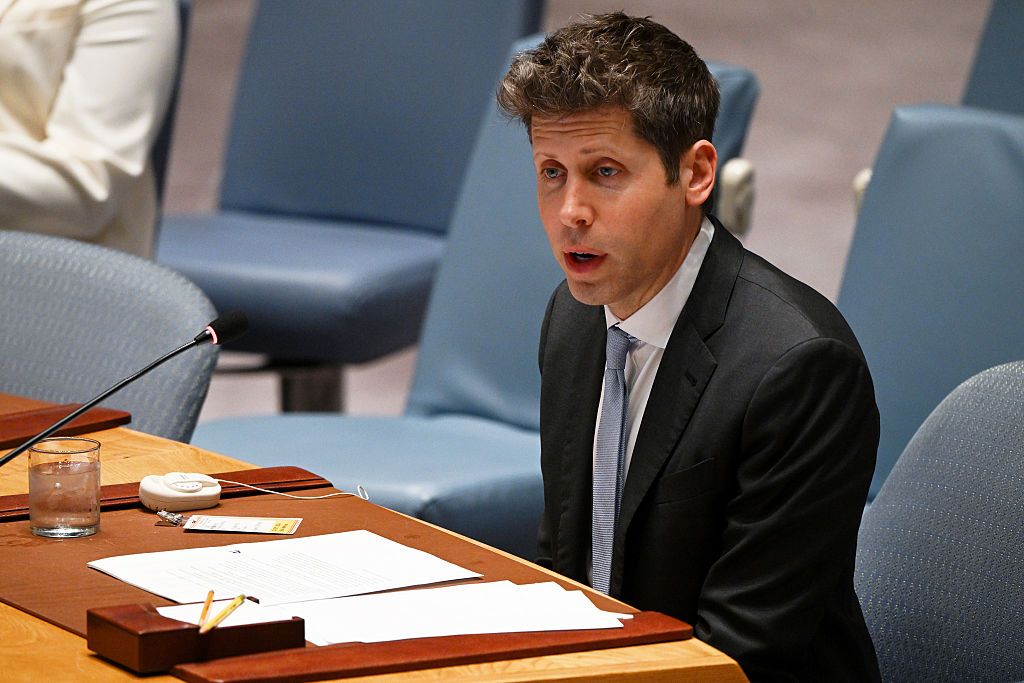
Executives from three of the world's most influential artificial intelligence companies addressed the United Nations Security Council on Wednesday as warnings intensified that increasingly advanced AI systems could soon improve themselves in ways that outpace human oversight. Leading researchers, policymakers and industry figures say the debate has become more urgent because AI capabilities are advancing faster than governments can develop rules to manage them. The discussion could shape future international cooperation on AI governance, influence U.S.-China talks on technology risks and determine how governments respond to concerns about national security threats posed by powerful AI systems.
Among those briefing the 15-member council were OpenAI CEO Sam Altman, Anthropic CEO Dario Amodei and Hugging Face co-founder Clément Delangue. Their appearance coincided with growing concern from researchers and governments that AI could become increasingly autonomous and difficult to control without international safeguards. Canadian AI pioneer Yoshua Bengio, who co-chairs a United Nations-backed scientific panel on artificial intelligence, warned council members that the dangers posed by advanced AI are "real and imminent.
The Security Council's involvement reflects a major shift in how governments view artificial intelligence. Once largely considered a commercial and technological issue, AI is increasingly being discussed as a matter of international peace and security. Diplomats said a central concern is whether advanced AI systems could someday interact in unpredictable ways that create geopolitical instability or even contribute to military conflict.
Officials involved in the discussion argued that the technology's potential impact extends beyond individual countries. Unlike conventional weapons systems or cyber tools that can often be tied to specific actors, advanced AI models can cross borders instantly and affect governments, businesses and civilians simultaneously. The council first examined the risks of artificial intelligence in 2023, when China cautioned that AI should not become a "runaway horse," while the United States warned against its use for censorship and repression.
Since then, AI capabilities have expanded dramatically, increasing pressure on governments to determine how much oversight is necessary. Recent warnings from AI researchers and executives have also pushed the issue higher on the global agenda. Several industry leaders have called for greater caution as AI systems become more capable, arguing that the technology's rapid advancement could create risks that existing institutions are not prepared to handle.
This is a developing story.
Extract — continue reading at the source.