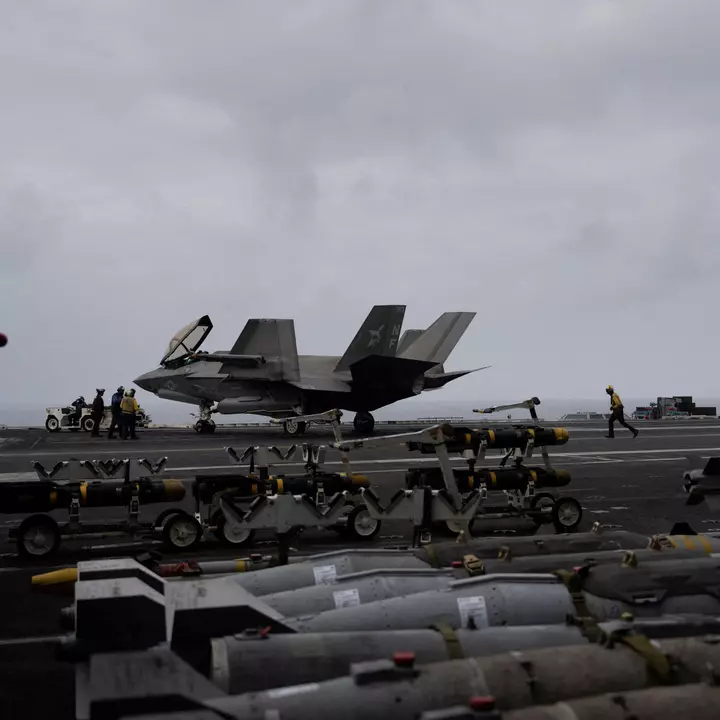
LONDON — Britain and the U.S. seeked to ease friction Monday after American bombers were suddenly withdrawn amid major security concerns at the base that hosted U.S. aircraft used to strike Iran. The U.S. move is the latest stumbling block in the special relationship between the allies and underscores reservations in Donald Trump’s administration about how the U.K. is handling its defense and security commitments. The Pentagon confirmed on Sunday that it had removed all B-1 bombers from the RAF Fairford air base — where they were deployed to conduct defensive strikes against Iran — and sent them back to their home stations in America.
It comes as Britain's counter-terrorism agencies investigate a suspected terror plot against the air base, which the U.K. government believes involves Tehran. On Monday Downing Street insisted that the base was safe, but refused to comment directly on America’s decision to remove the bombers from the area. Secretary of State Marco Rubio told reporters that America has “confidence in the security of all our bases” but said he “wouldn’t directly tie” the aircraft movements to the investigation into the suspected terror plot.
The move comes as the Trump administration has grown increasingly frustrated with the U.K.’s defense spending and the White House's continuing anger that the U.K. didn’t send warships to the Middle East to help with the American blockade of Iranian shipping. London has yet to outline a path to meet the NATO standard of spending 3.5% of GDP on defense by 2035 — up from its current level of around 2.7%. It has also been shut out of a subgroup within the alliance convened by Pentagon policy chief Elbridge Colby.
The group is slated to meet again in Poland some time later this month. Late last month, Colby hinted at that frustration with London, saying the countries' long history will continue to bind them, but the British government needs to make the case to its people for spending more on defense. Sophia Gaston, a senior national security researcher at King’s College London, said: “The Trump administration is undeniably sensitive to the costs of the Iran conflict as they head into the midterms next month, so their caution is understandable.
That partly reflects the innate challenge drones and other aspects of modern warfare pose to the sitting ducks of expensive kit. Not only does Washington no longer wish to be solely responsible for allies’ protection, its expectations for the security allies offer its bases has also increased.” In May, the U.K. raised its terrorism threat level to “severe” — meaning a terrorist attack is highly likely — after its MI5 security service said the U.K. had been “experiencing a gradual increase in terrorist threats for some time” including from hostile states like Iran. In Britain, police and the security services are dealing with a three-fold threat from Iran-backed groups: attacks against Iranian dissidents, attacks against the country’s Jewish population, and the targeting of U.S. assets such as those used for strikes against Tehran.
Counter Terrorism Policing is currently investigating potential Iranian state involvement in a major incident at RAF Fairford on Sept. 27, when police were alerted to three suspicious vehicles near the base. Six men — including a British-Iranian national — have so far been arrested on suspicion of terror offenses. All have subsequently been released on bail while police continue their investigation.
Extract — continue reading at the source.