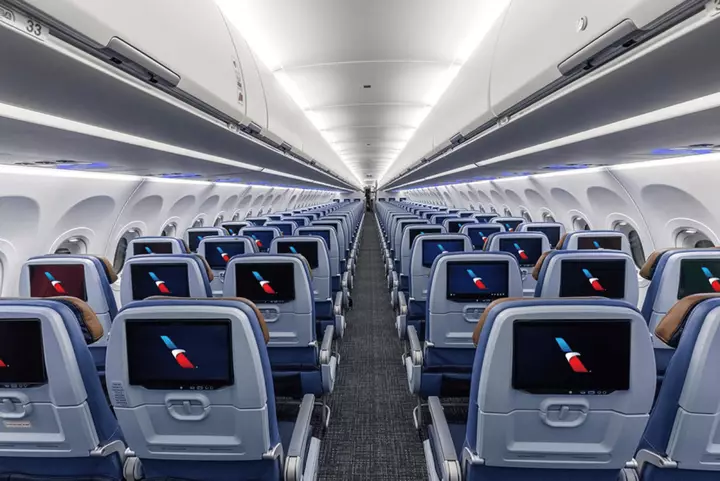
American Airlines is entering what it sees as a new phase of its business, as the airline rethinks how its existing pieces fit together. The airline's Chief Commercial Officer Nat Pieper, who has been in the job for 11 months and is celebrating his 29th year in the industry, repeatedly returns to reliability, he told the crowd assembled at Newsweek's New Destinations conference in September. The airline is investing in its operations even as it works to make the American brand feel more current through new products and technology.
Historically, operations have been a pain point for the company. There’s also a significant economic shift underway inside the airplane. Pieper said that roughly half of American’s revenue now comes from premium products, even though those products account for about 30% of the airline’s seats as premium revenue is growing faster than non-premium revenue.
That changes the calculation for an airline. The question is no longer simply how many seats it can put on an airplane. It’s which seats customers will pay more for and the experience surrounding those seats.
Pieper sees travelers increasingly buying an experience rather than transportation alone. The journey begins before the aircraft and extends beyond it. That helps explain the investment in lounges and Flagship Suites business-class.
The network presents a different kind of challenge. Airlines have obvious incentives to make connections as short as possible. But a network designed around the shortest connection can become vulnerable when weather or other operational disruptions hit.
Dallas, the home of American Airlines, illustrates the problem. Pieper said severe weather can shut down the ramp and create disruptions that continue through the rest of the day. American’s response has been to reconsider how the hub is structured rather than assume that faster connections are always better.
Extract — continue reading at the source.