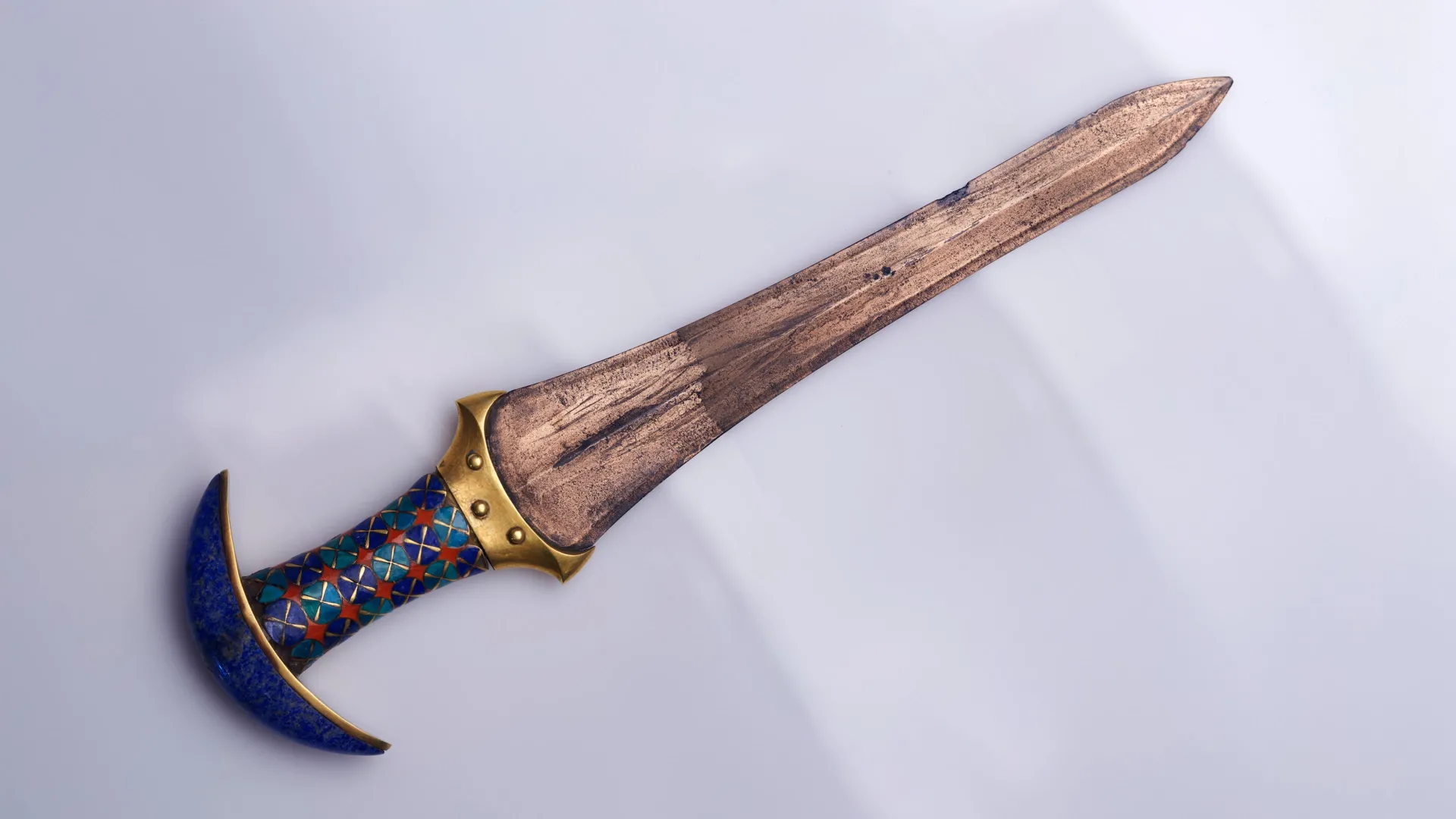
For years, archaeologists have debated why some ancient Egyptian princesses were buried with weapons. The bows, arrows, daggers, and maces found in their tombs were often interpreted as ceremonial objects rather than equipment the women had actually used. A new examination of royal mummies from Egypt's Middle Kingdom now suggests that at least some of these women were physically trained to handle such weapons.
"Members of the royal family, especially the women, were active participants in skilled, physically demanding activities such as archery and hunting," said Dr. Zeinab Hashesh, lead author of the article in Frontiers in Environmental Archaeology. "This conclusion is supported by the way their bones developed to sustain heavy muscle use, which corresponds directly to the weapons discovered in their tombs." The research focused on six royal mummies originally uncovered during the 1890s at Dahshur, an Egyptian burial complex containing pyramids and shaft tombs.
The remains later disappeared from scholarly attention for many years before being identified again in the Egyptian Museum during a curation project in 2020. Four of the six individuals were sisters and daughters of the pharaoh Amenemhat II. They had been placed in matching underground burial chambers.
Princess Ita was buried beside Princess Khenmet, while Princess Itaweret was interred alongside an unidentified woman who has tentatively been identified as Princess Sathathormeryt. Their tombs contained objects more commonly associated with male burials, including bows and arrows. Princess Ita's coffin also held an especially ornate dagger.
Similar royal objects were found with the two other individuals included in the investigation, Princess Noub-Hotep and King Hor. All six bodies had been carefully mummified, but preservation was incomplete. Their soft tissues had deteriorated into powder, while portions of the skeletons were also missing.
The princesses' skulls, for example, were lost during the early 1900s. Even so, enough skeletal material survived in good condition for researchers to estimate age at death, height, and sex. The bones also provided evidence of past injuries, illnesses, and other aspects of the individuals' health.
Extract — continue reading at the source.


