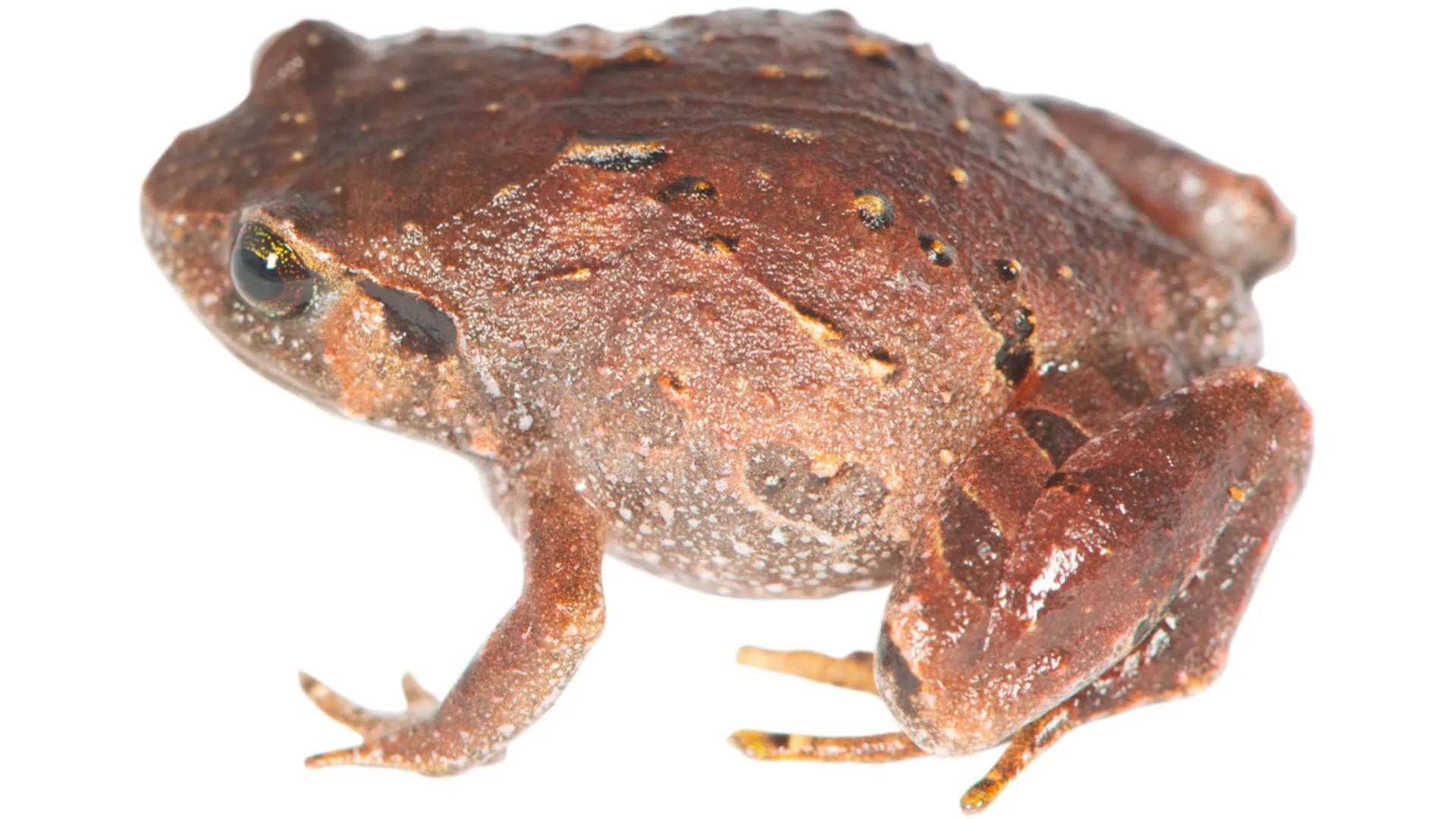
An international research team has identified seven previously undescribed species of Madagascar's elusive diamond frogs (Rhombophryne), adding new evidence that this unusual amphibian group is far more diverse than scientists once realized. Accurately identifying species and understanding where they live are essential for measuring biodiversity and protecting it. To sort out the identities of these frogs, researchers combined field observations, museum specimens, and advanced DNA analysis.
The work revealed previously hidden species diversity and helped resolve a taxonomic problem that had remained unsettled for years. By determining which frogs belong to which species and mapping where they occur, the researchers have also created a stronger scientific basis for conservation in Madagascar, where many forests are rapidly disappearing. "Diamond frogs have been hiding their diversity beneath our feet," said Dr.
Scherz, Curator of Herpetology at the Natural History Museum Denmark and lead author of the study. "Many species spend most of their lives beneath the leaf litter, and even when they emerge they can look deceptively similar," he added. Diamond frogs are some of Madagascar's most distinctive amphibians.
Certain species are extremely round and resemble the rain frogs found in mainland Africa, spending much of their time concealed beneath the forest floor. Other species have long legs and live among moss, while some are sturdier frogs adapted to life on the ground. Most diamond frogs look brown at first, but several species have vivid markings that remain hidden until the frogs move.
These can include bright orange flashes or bold white and black patterns on the thighs and lower back. Researchers think these markings may help startle predators. Because these frogs are so difficult to find and observe, diamond frogs remain among the least studied vertebrates in Madagascar.
The research effort began more than twelve years ago, when scientists repeatedly encountered frogs that clearly appeared to represent species that had never been formally described. Identifying them was not simple, however, because researchers had trouble matching older species names with the genetic lineages found in modern specimens. "When I started this project twelve years ago, we already knew there were several species waiting to be described, and almost every expedition to Madagascar revealed another one.
Extract — continue reading at the source.


