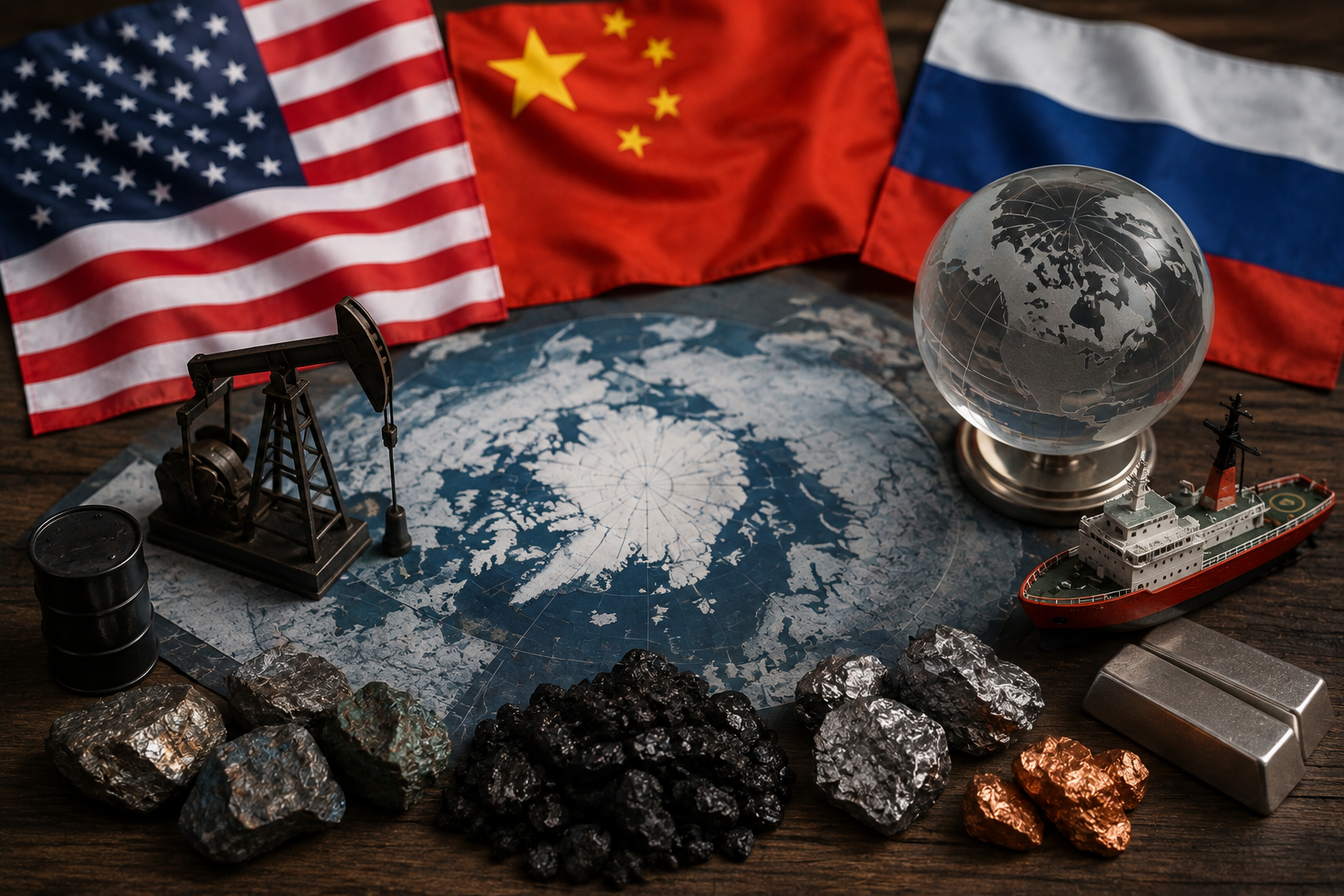
For a long time, the Arctic was associated with the "dead land" of the North and was not considered a place suitable for economic activity or human life. Today, however, it is increasingly seen as a valuable and strategically important region. This shift is largely connected to the natural resources hidden beneath its surface.
Climate change and the melting of Arctic ice are only making these resources easier to access. Interest in the Arctic increased sharply in 2009 after the United States Geological Survey estimated that the region contained 13% of the world's undiscovered oil reserves and 30% of its undiscovered natural gas. The Arctic is also a vast storehouse of rare-earth elements, nickel, gold, and other materials that are extremely important for the defense industry and modern technology.
Shrinking ice cover and technological advances are making the extraction of these resources increasingly possible, intensifying competition over them. Over the past ten years, global warming has renewed international interest in the Arctic. According to the US National Oceanic and Atmospheric Administration, the period from October 2024 to September 2025 was the warmest recorded in the Arctic in the past 125 years.
This contributed to ice loss, with the area covered by ice reaching a record low for these northern latitudes. These changes could expand shipping and support the development of alternative transport and logistics corridors. Around 60 countries are currently expressing ambitions related to the development of the Arctic.
The world's major powers, particularly Russia, the United States, and China, are showing the greatest interest. It is important to emphasize that the Arctic does not belong to any single state. Under international law and the United Nations Convention on the Law of the Sea, the land, islands, and coastal waters of the region are divided among eight Arctic states: Russia, Canada, the United States, Norway, Denmark through Greenland, Iceland, Finland, and Sweden.
Last year, the Arctic frequently appeared in international news. First, President Donald Trump began actively discussing his desire to buy Greenland, which is located in the Arctic, and to make Canada part of the United States. Later, during US-Russian negotiations concerning the war in Ukraine, proposals for mutual cooperation in the Arctic unexpectedly emerged.
Extract — continue reading at the source.