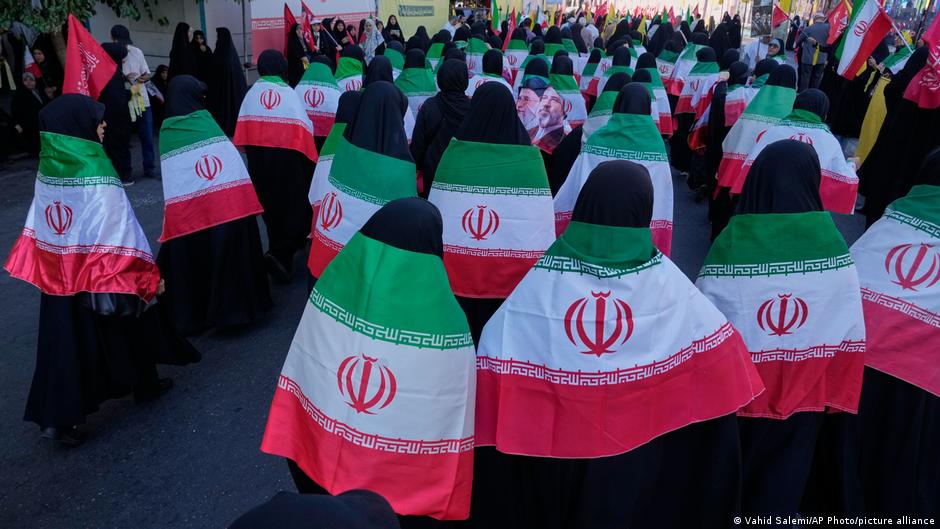
Women appearing in public without wearing a hijab has become an increasingly common sight across Iran, marking one of the most visible social changes since the 2022 "Woman, Life, Freedom" protests, which were sparked after a woman died in police custody after she was arrested for allegedly wearing her headscarf improperly. Authorities have been unable to restore the level of street enforcement that existed before the protests. But the relative retreat of so-called "morality police" patrols does not mean the compulsory hijab has disappeared.
Now, authorities and conservative groups are experimenting with different ways to resist that change without necessarily recreating the same street confrontations that helped fuel the 2022 protests. Judiciary chief Gholamhossein Mohseni Ejei recently called for action against what he described as social "abnormalities," "indecency" and "nudity," urging prosecutors to coordinate with police, intelligence bodies and government institutions. At the same time, supporters of hijab mandates have circulated online campaigns encouraging people to avoid businesses run by women who do not follow the state dress code and instead patronize women who do.
The result is a more fragmented form of enforcement, moving in some cases from police patrols toward workplaces, businesses and access to everyday services. To view this video please enable JavaScript, and consider upgrading to a web browser that supports HTML5 video The online campaigns call for what supporters describe as "conscious purchasing," encouraging consumers to support hijab-observing vendors. A female lawyer in Tehran told DW that such campaigns risk deepening social divisions rather than encouraging adherence to a social norm.
"This is a deliberate attempt to categorize people by identity and put them against one another," she said under condition of anonymity for safety concerns. She argues that encouraging economic pressure against people solely because of their appearance goes beyond an individual's right to choose where to shop. "When economic sanctions are imposed on them [the regime], they call it pressure, injustice and economic warfare," she said.
"But when they use the same logic domestically to force part of society to change its behavior, it becomes 'support for values.'" She also questioned the assumption that women who conform to one particular dress code uniquely represent Iranian social values. "The reality of Iranian society is much more complex than that," she said. Accounts posted by Iranian women suggest that dress-code enforcement can also appear in everyday services, with some women reporting on social media being denied access to clinics and banks for not wearing a headscarf.
Shirin Shams is an exiled Iranian political activist and director of the Women's Revolution Organization, which advocates for secularism, women's liberation, and human rights in Iran. She told DW the recent campaigns targeting women who ditch the compulsory hijab are an attempt to revive social divisions that were weakened during the "Woman, Life, Freedom" movement. "The Islamic Republic has tried for years to divide women according to their clothing," the Germany-based activist said.
Extract — continue reading at the source.