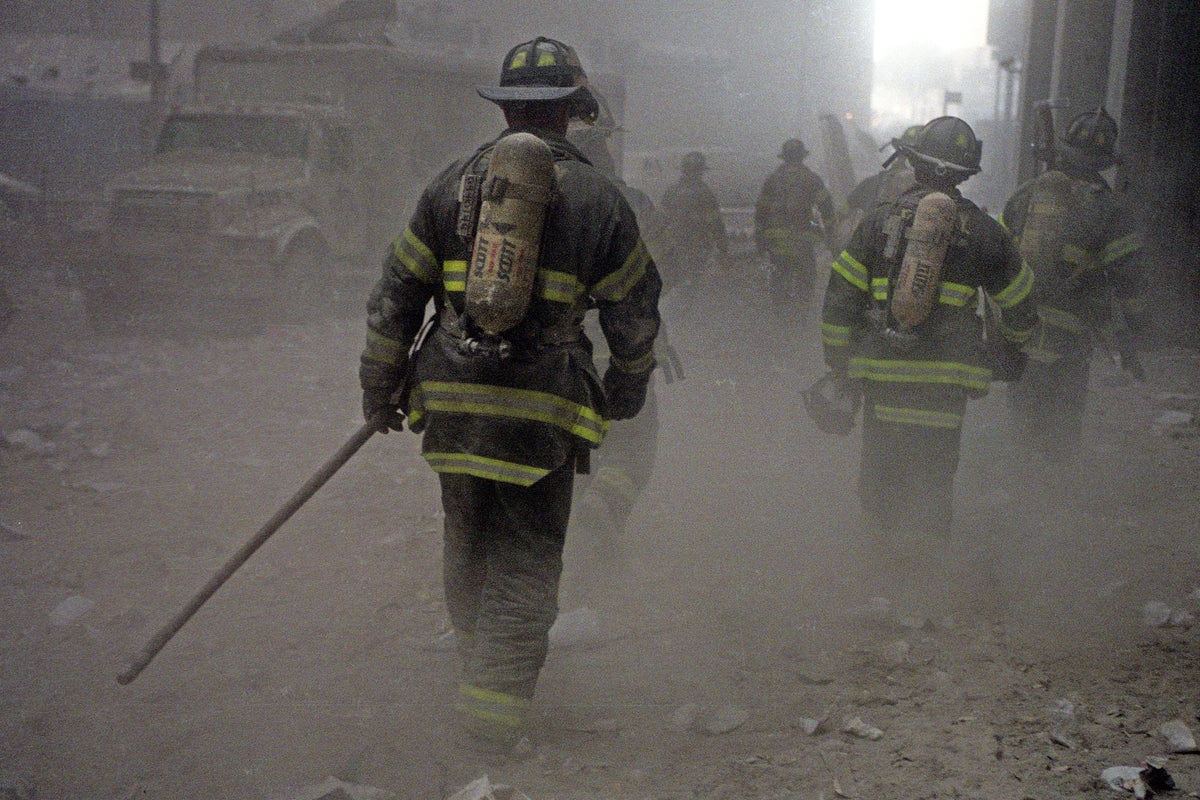
More than 170,000 pages of newly released records, never before shown to the public, reveal that New York City officials knew of potential dangers from exposure to Ground Zero toxins in the aftermath of the September 11, 2001 terror attacks — despite repeated assurances to the public that the air was safe to breathe. Over the two decades that followed, thousands of first responders and other New Yorkers developed lung disease, neurological illnesses and cancers linked to expansive recovery efforts and their lives in the shadow of the attack, as clouds of chemicals, cement dust, asbestos and other toxic debris lingered in the air and in buildings. According to the World Trade Center Health Program, more than 9,000 people have died from 9/11-related illnesses, including 600 firefighters — exceeding the nearly 3,000 people killed in the attacks themselves and the more than 300 firefighters who died in the rescue efforts.
At least 49,000 people have been diagnosed with cancers related to the World Trade Center attack and its aftermath, according to the 9/11 Memorial. The documents — released by Mayor Zohran Mamdani’s administration to resolve years of protracted litigation from 9/11 Health Watch — contain only a fraction of the air quality reports that were taken at Ground Zero. But the tranche includes previously undisclosed internal memos that suggest city officials knew of the dangers and anticipated thousands of possible lawsuits as they sought to limit the city’s legal liability.
The documents include the so-called “Harding memo” from October 2001, what advocates have called the “smoking gun.” In the memo, New York City officials under then-Mayor Rudy Giuliani were made aware of the extent of potential liability for thousands of people impacted by the attacks. That memo, from then-City Hall lobbyist Michelle Goldsen to then-Deputy Mayor for Economic Development Robert Harding, warned that the city’s Law Department estimated “35,000 potential plaintiffs” from the attacks. Officials feared the city could be on the hook for “substantial damages to compensate individuals for their loss,” according to the memo.
Officials also predicted “direct effect” lawsuits arising from “public safety officers directing individuals who relied (to their detriment) on the direction.” The city also could be sued for “health advisories [that] caused individuals … to return to the area too soon (causing toxic exposure or emotional harm),” according to the memo, which anticipated a wave of “toxic tort cases that might arise in the next few decades.” Five days after the attacks, Giuliani’s administration told New Yorkers that “the general public’s risk for any short- or long-term adverse health effects are very low.” Roughly two weeks later, the administration said that “the air quality is safe and acceptable.” Several days later, “despite the smoky conditions” surrounding the site, “test results from the ongoing monitoring of airborne contaminants indicate that the levels continue to be below the level of concern to public health,” Giuliani’s office said at the time. Goldsen’s memo suggested that Congress could create a fund to limit the city’s liability burden, or that the city should request “indemnification” from the federal government “for all liability claims.” “This form of relief could also assist the City in the long-term as well by including toxic tort cases that might arise in the next few decades,” the memo says. This alternative would, therefore, still require the City to devote a tremendous amount of time and resources to these cases.” Christine Todd Whitman, the former New Jersey governor who headed the Environmental Protection Agency under President George W.
Bush at the time, told the public that the air was safe to breathe in the days just after the attacks. Whitman, in an interview with The Guardian in 2016, apologized and admitted for the first time she was wrong about that declaration. We did the very best we could at the time with the knowledge we had.” The documents include extensive, months-long correspondence for properties surrounding the World Trade Center, where health inspectors were collecting dust samples from the debris that blanketed neighborhoods for months after the attack.
Records for 15 John St., a building that sits roughly a third of a mile from Ground Zero, indicate asbestos was found on roofs, cable lines and facades surrounding the building. Similar reports for properties across lower Manhattan are stuffed throughout the document dump. A series of documents from a resident on Rector Street, roughly half a mile from the Twin Towers, reveals the frustrating attempts from New Yorkers pushing officials to reinvestigate how maintenance workers and residents were “daily being exposed to this asbestos residue.” World Trade Center dust “has been improperly cleaned up, or only partially cleaned up,” the person wrote in February 2002.
Extract — continue reading at the source.